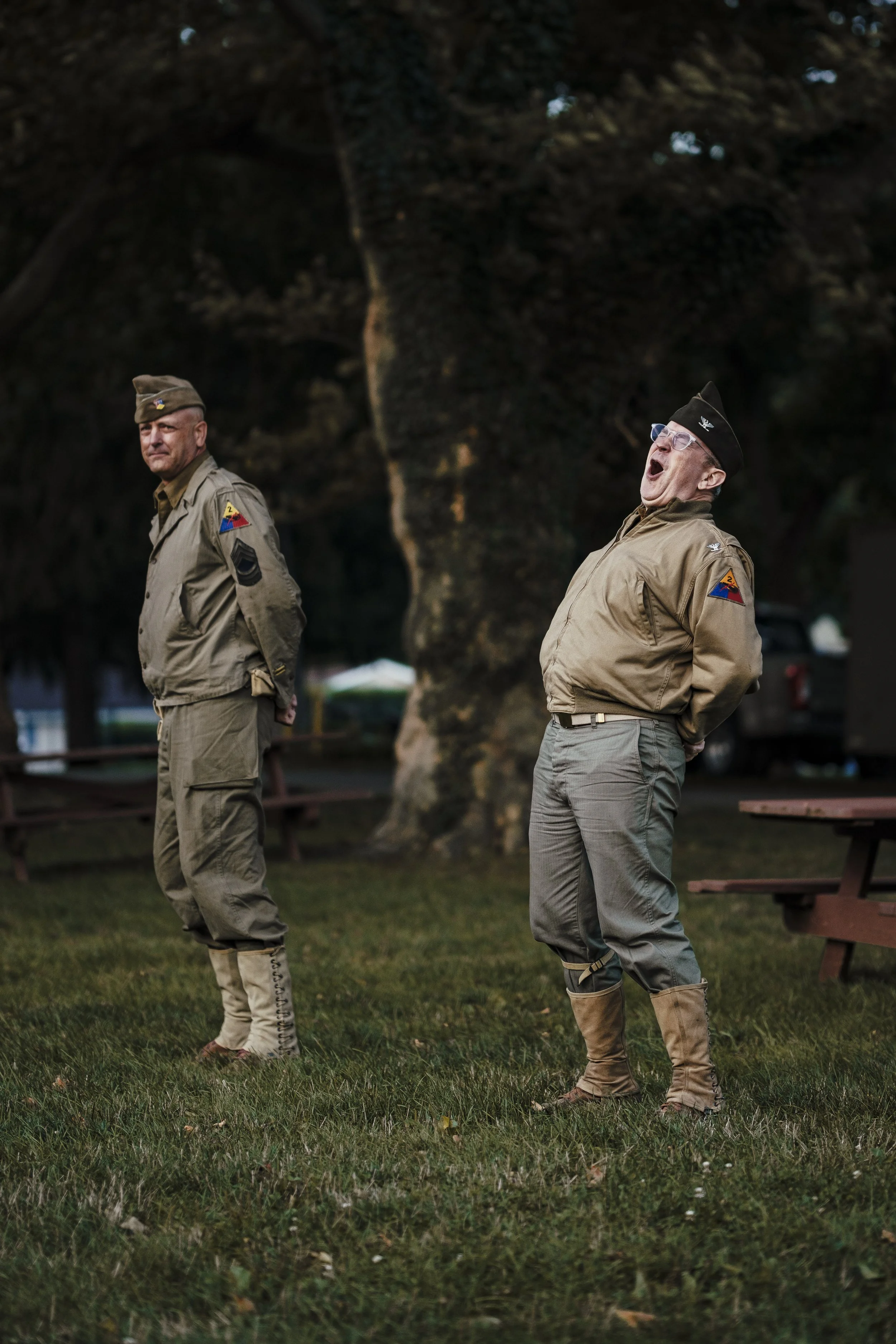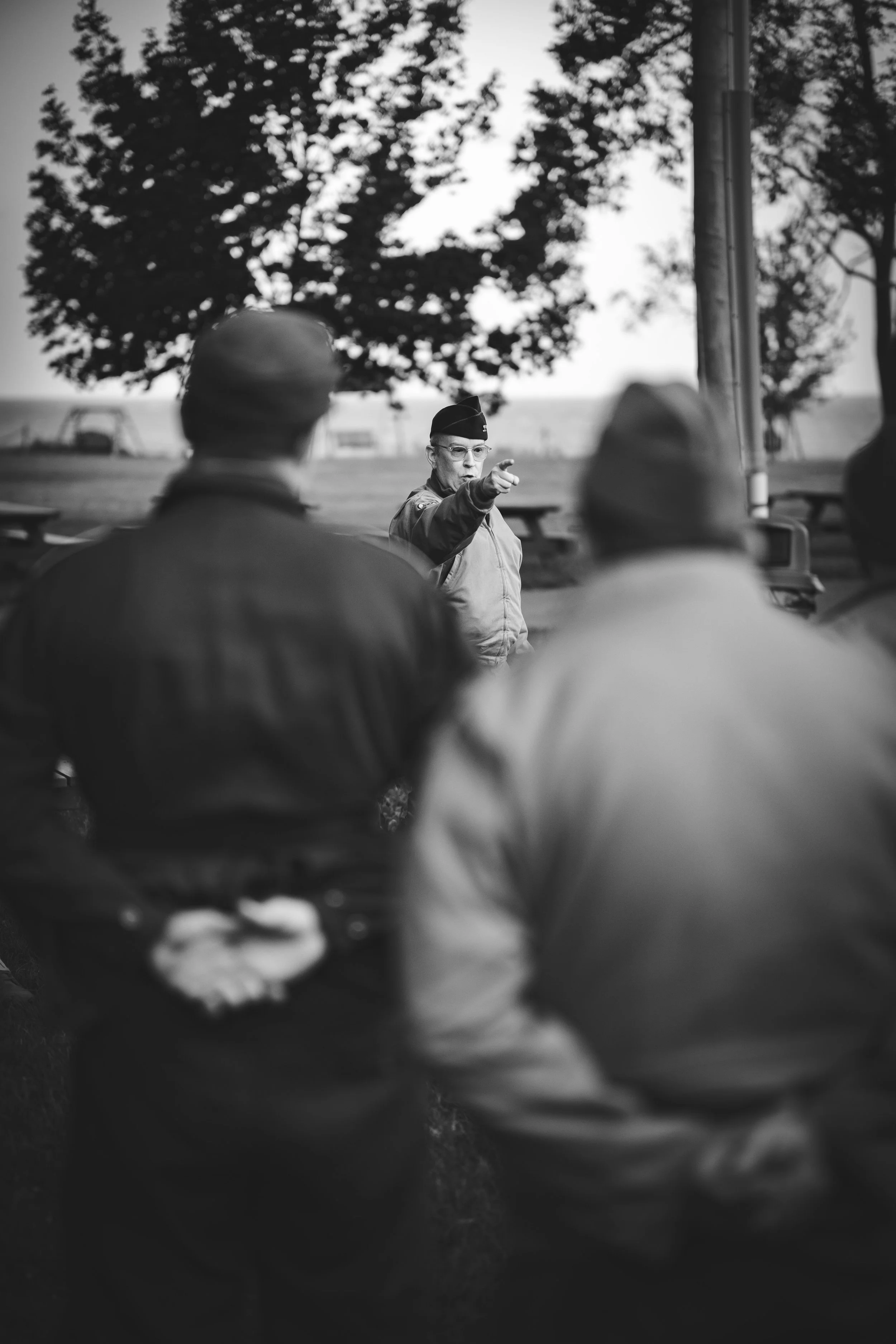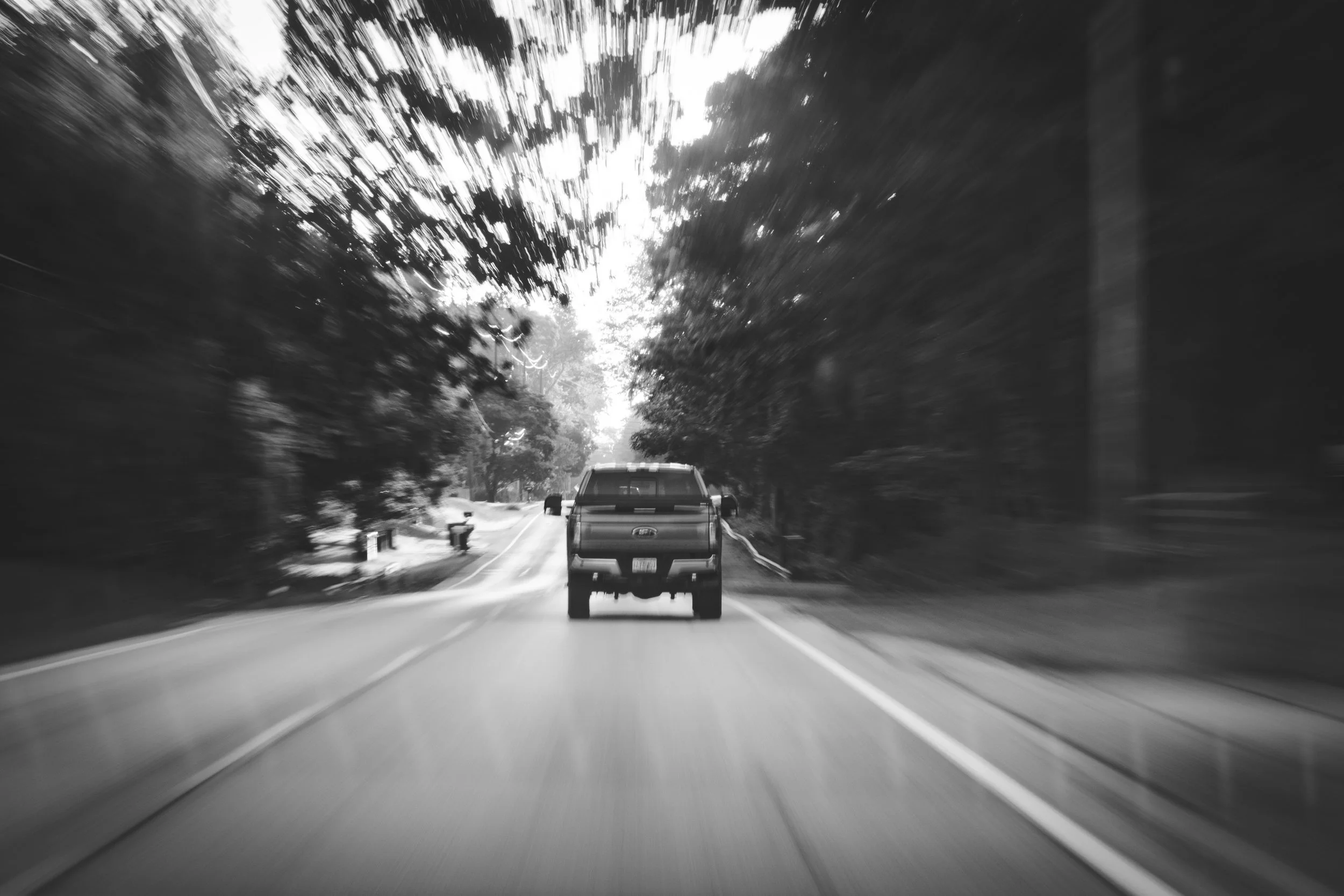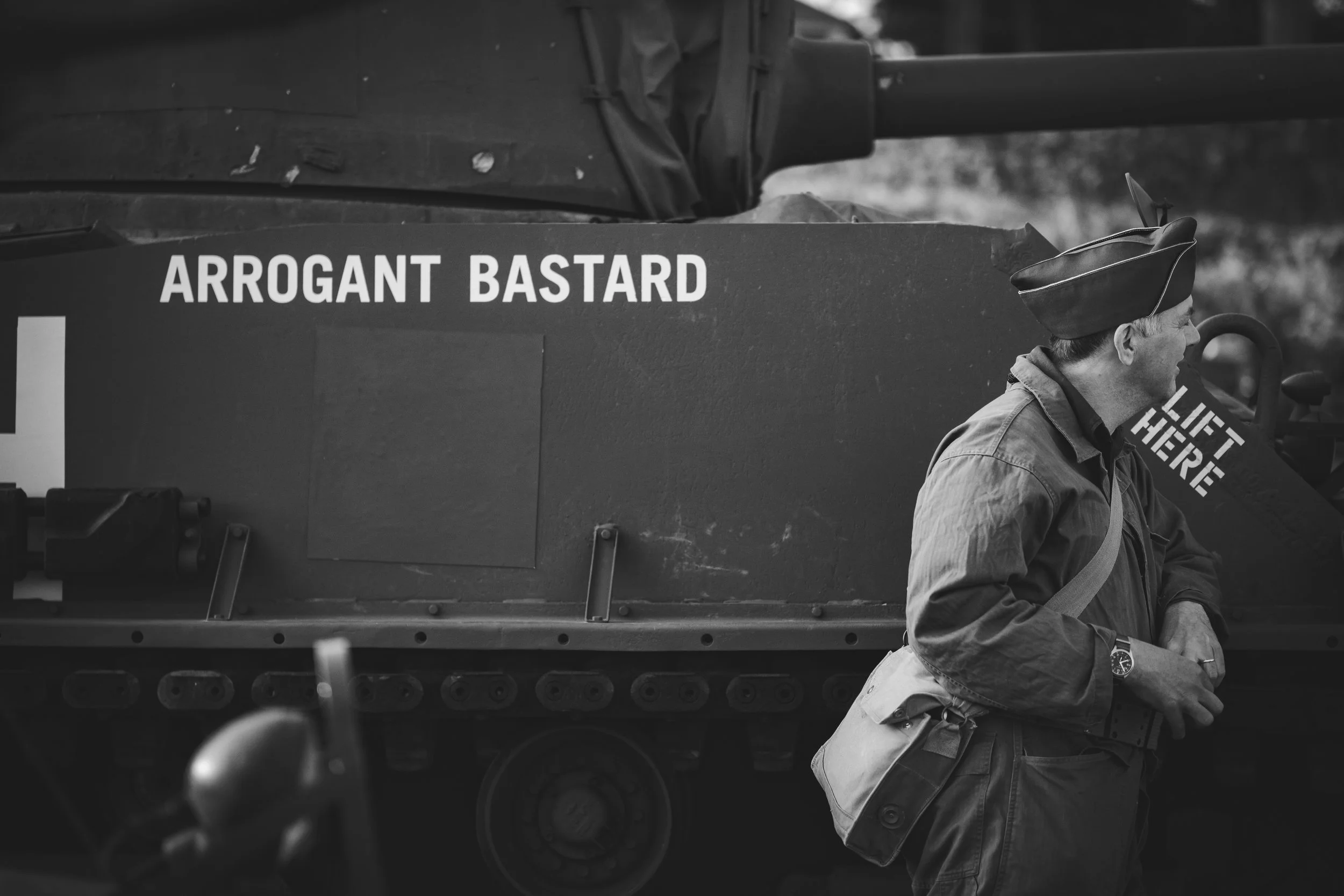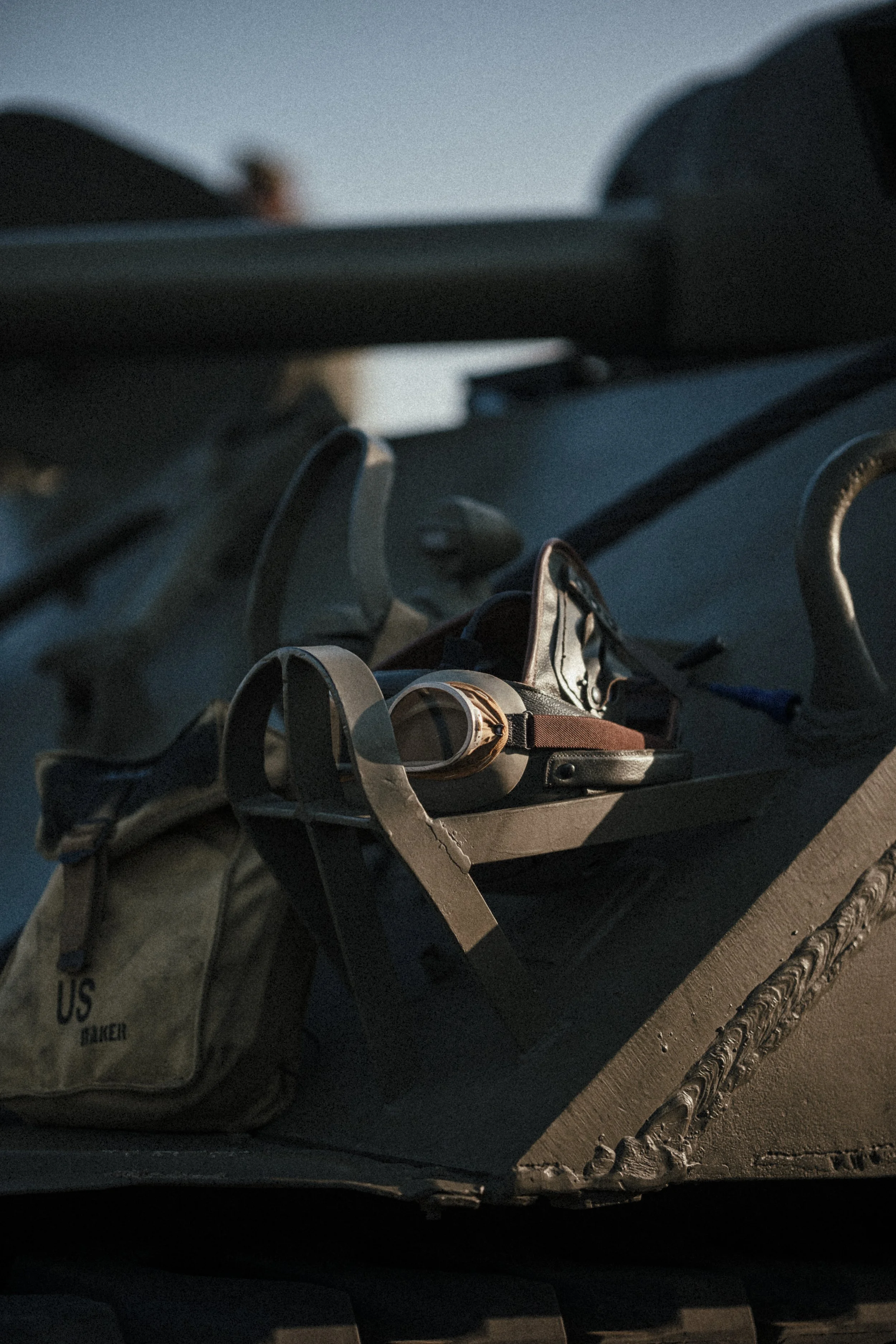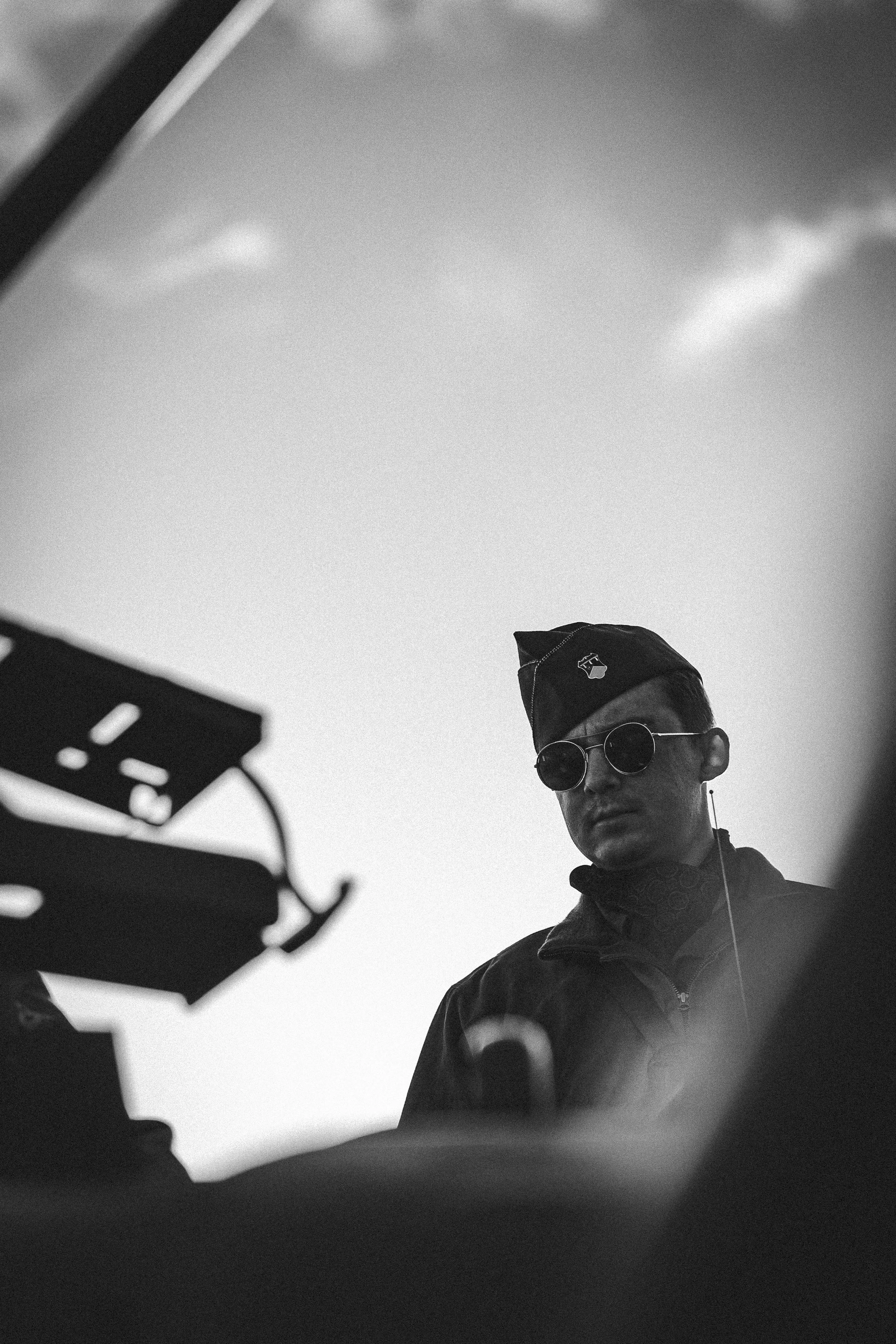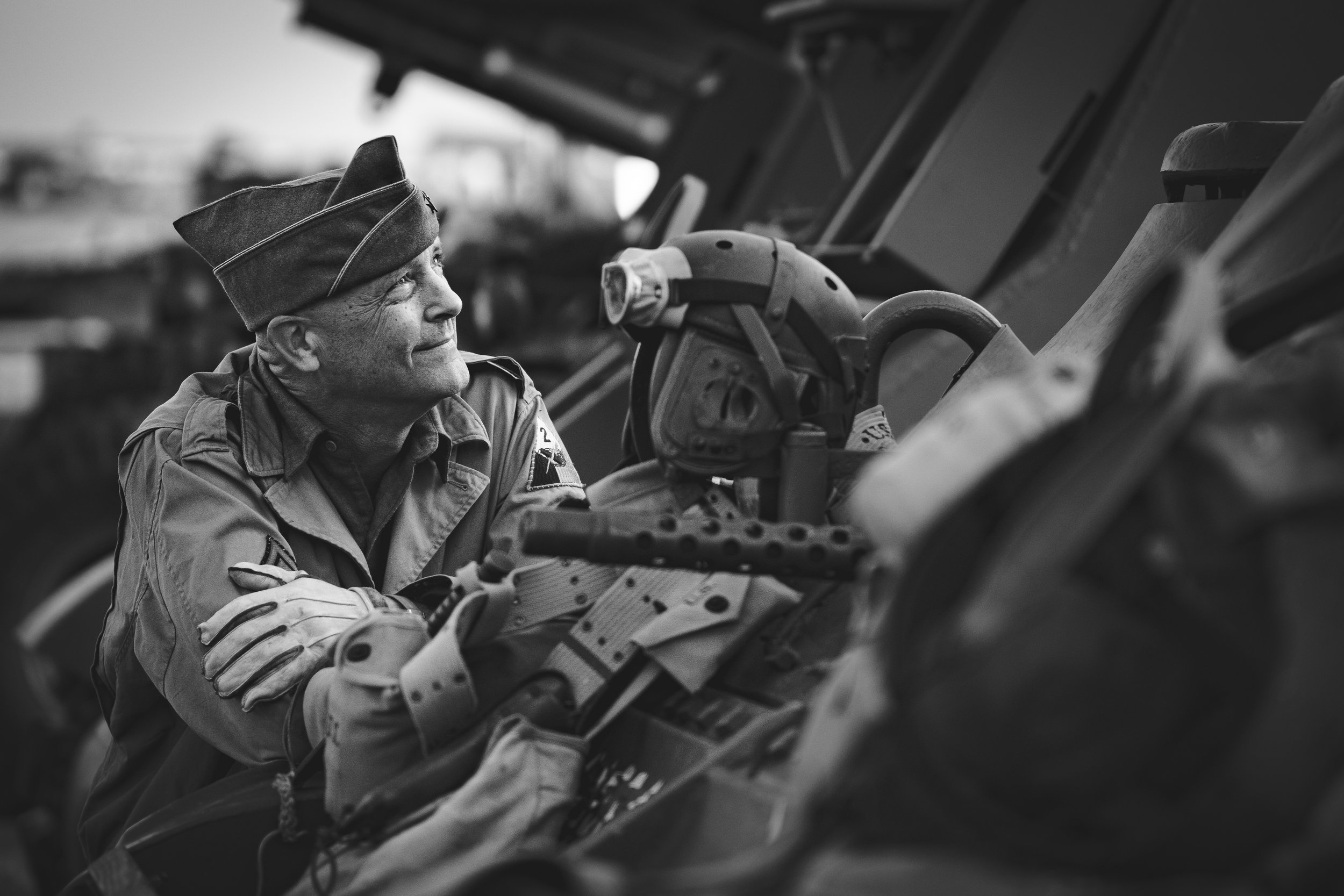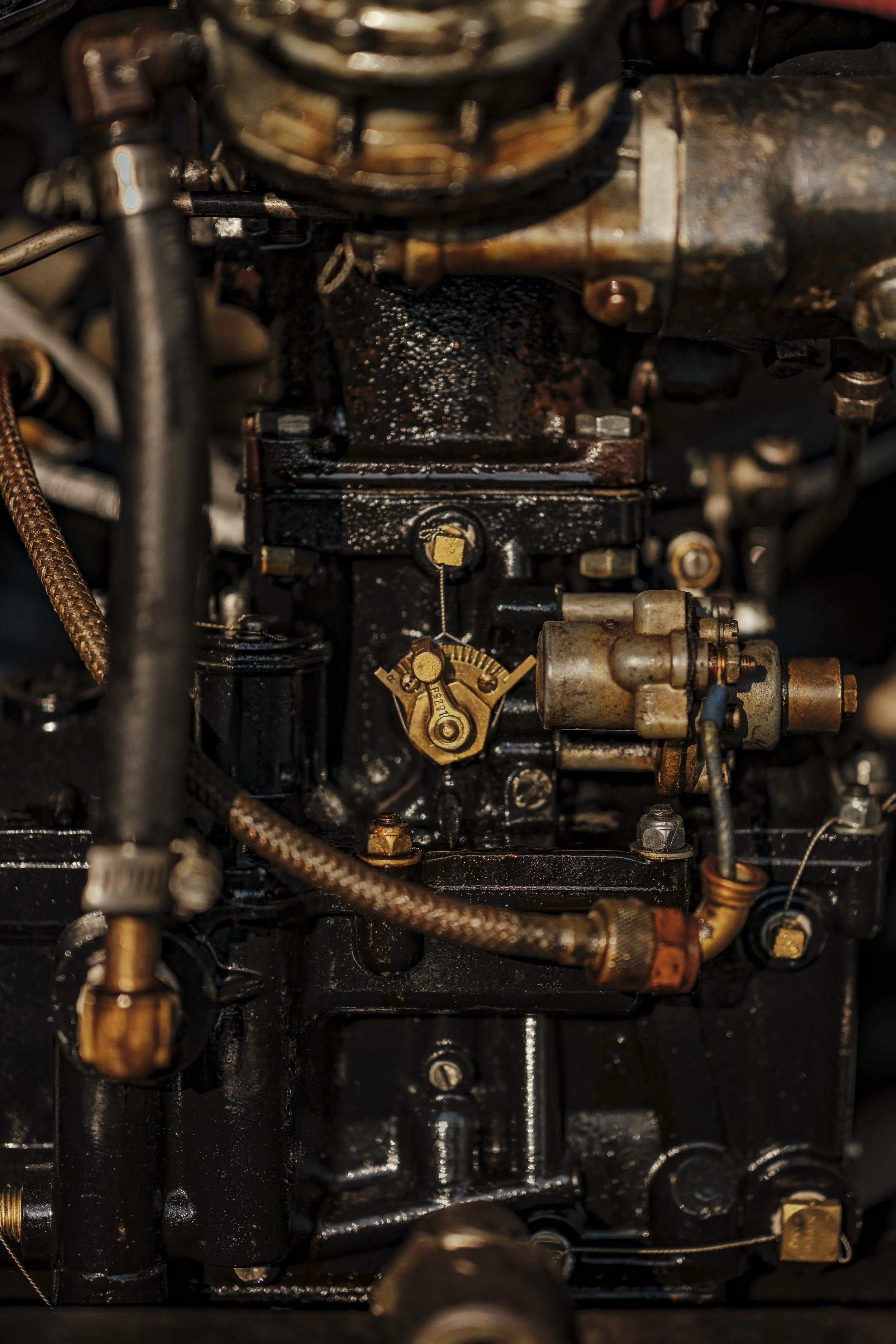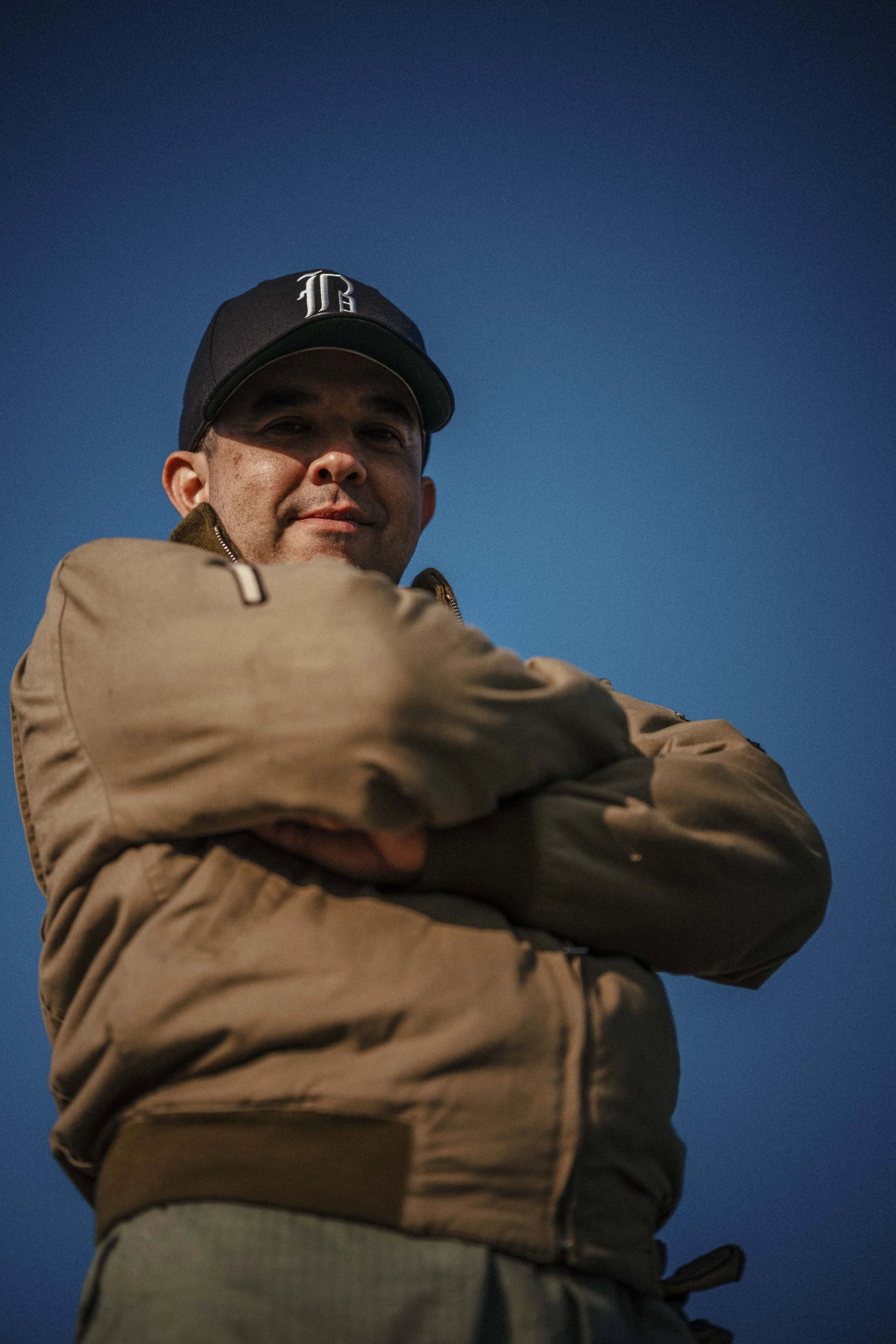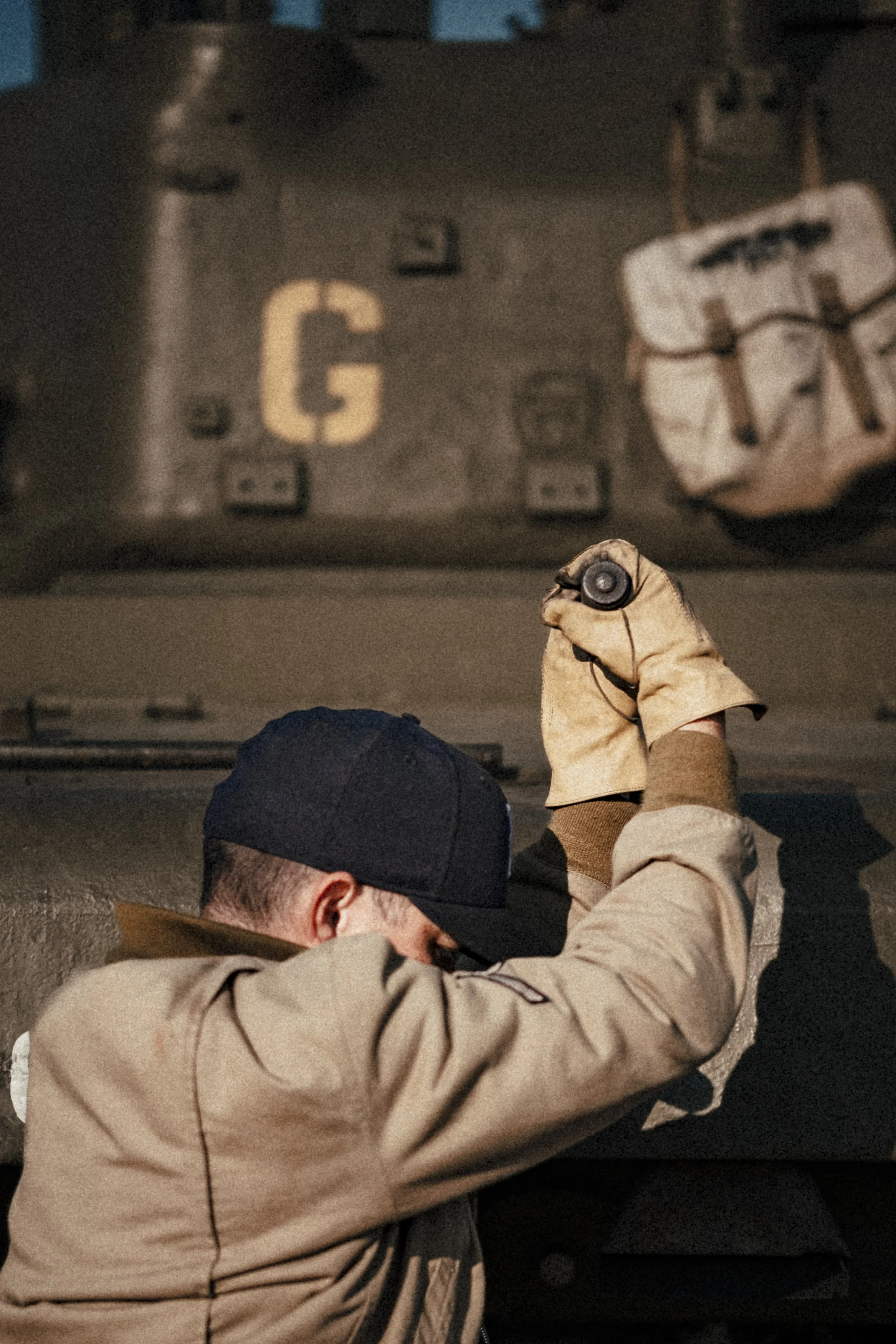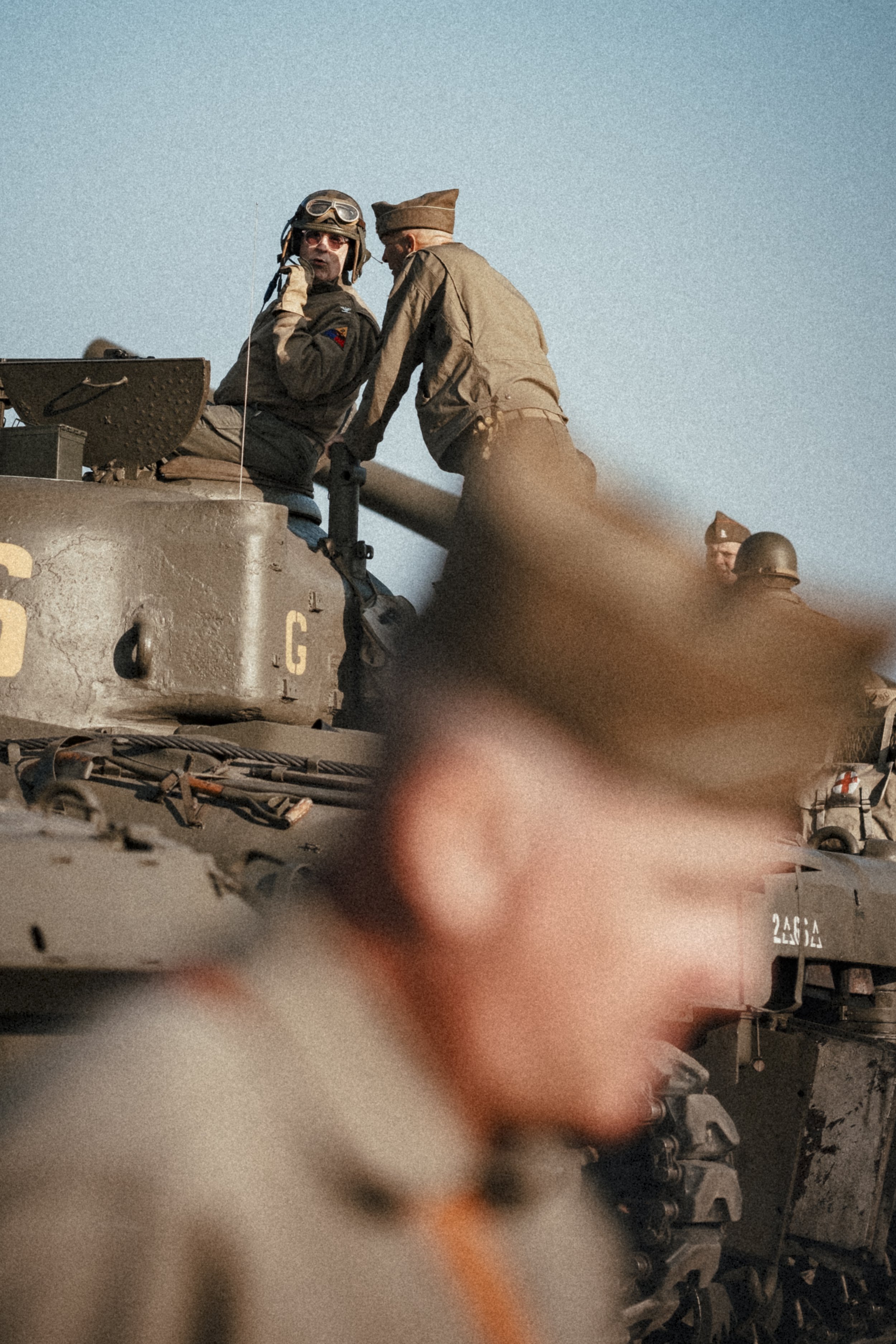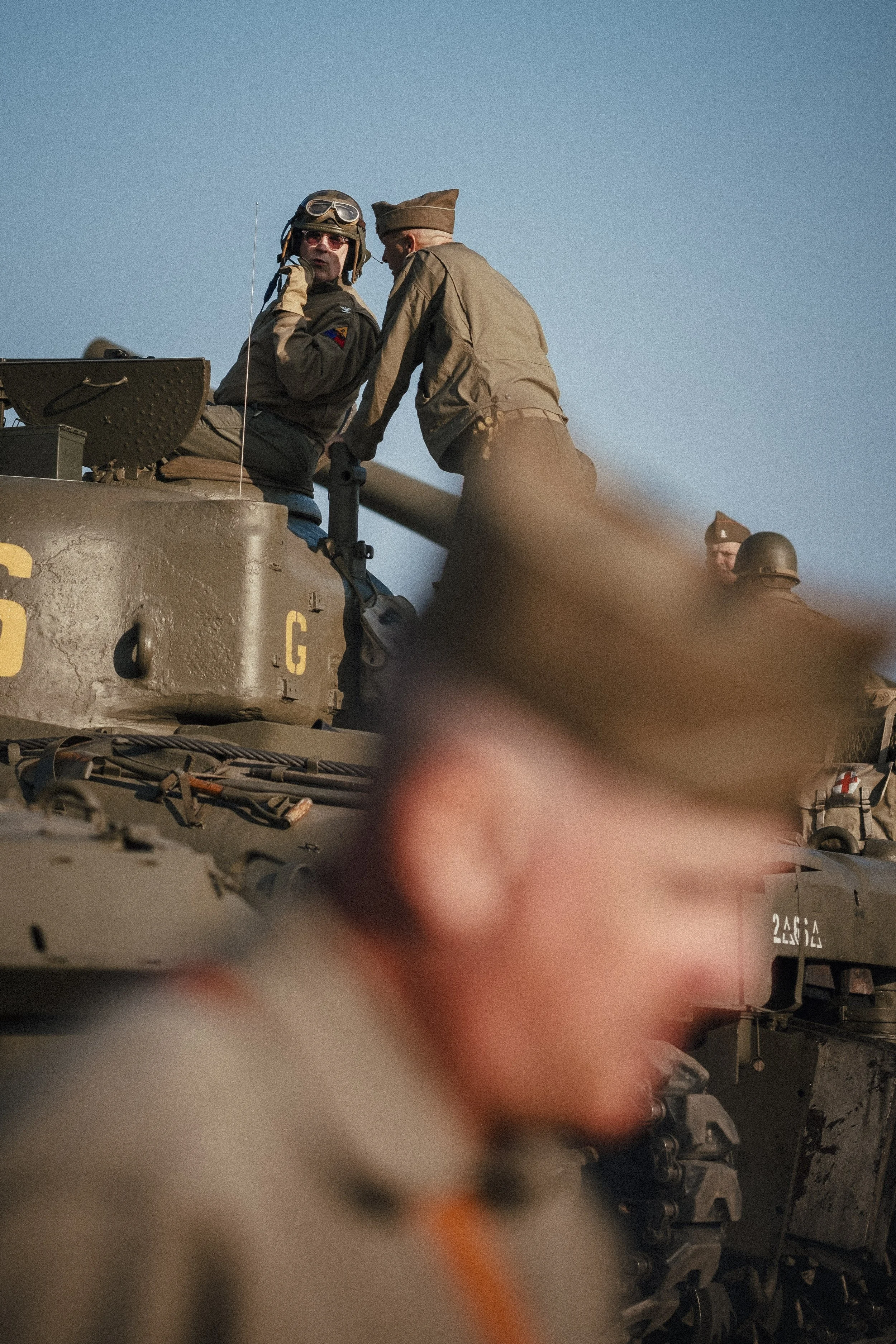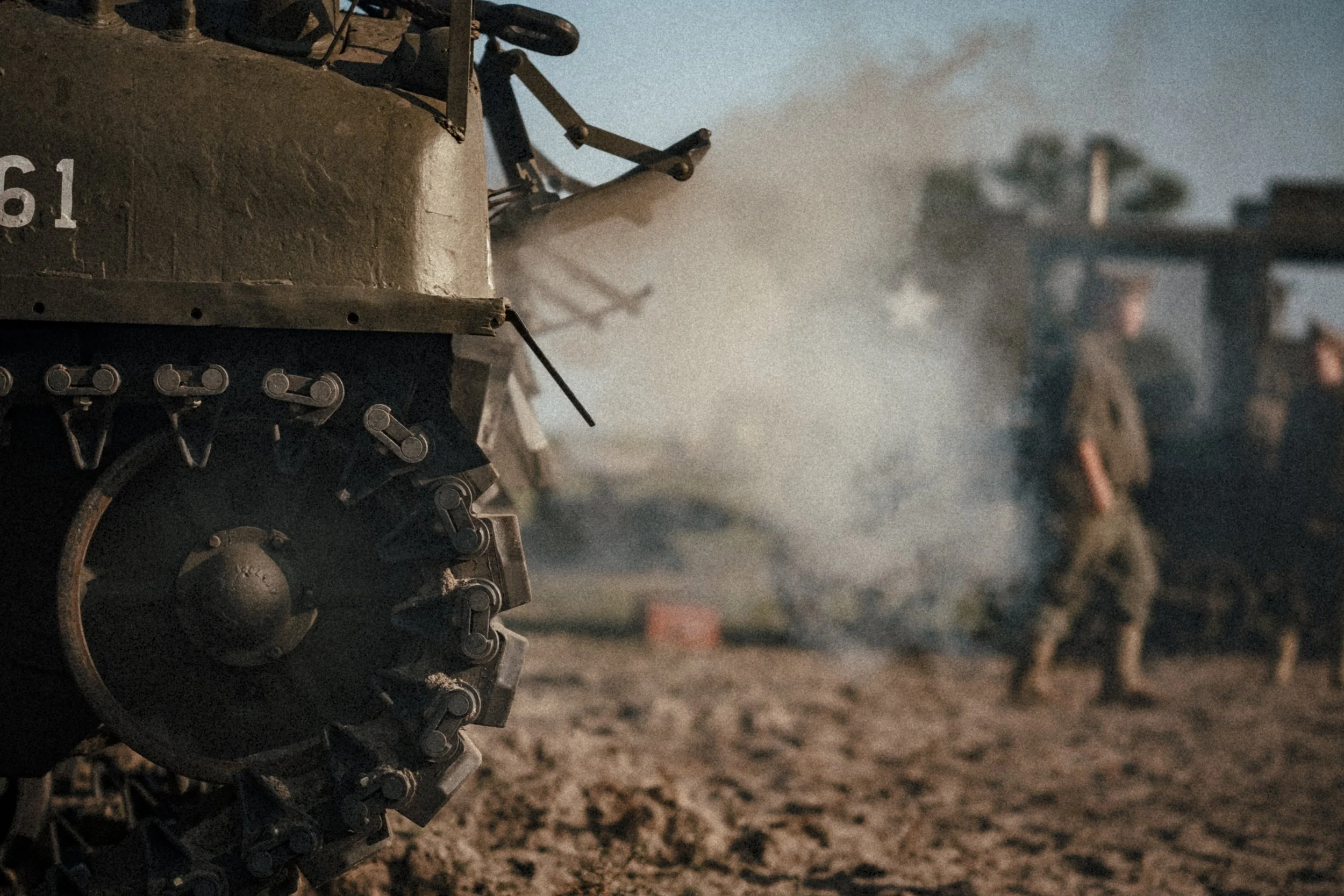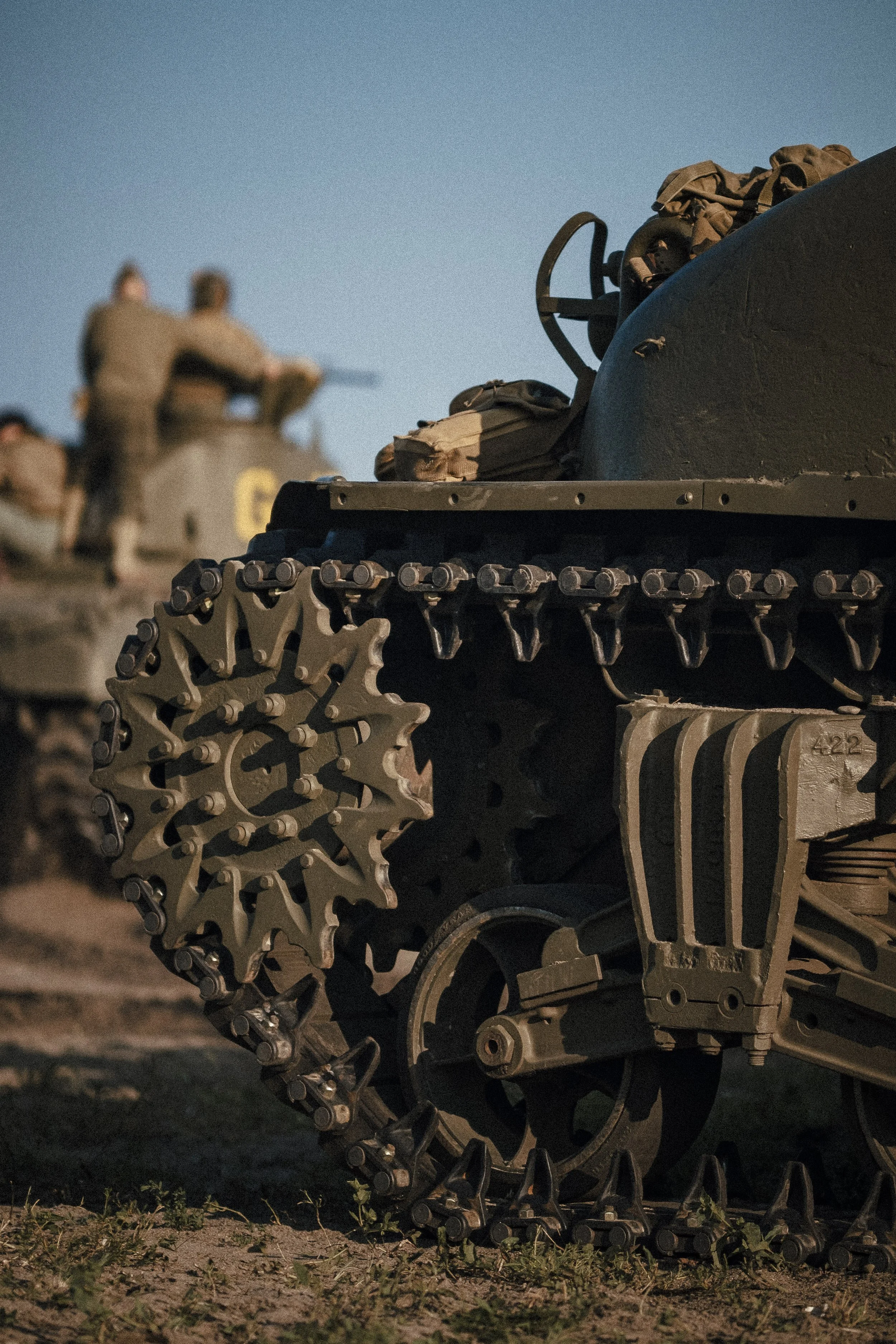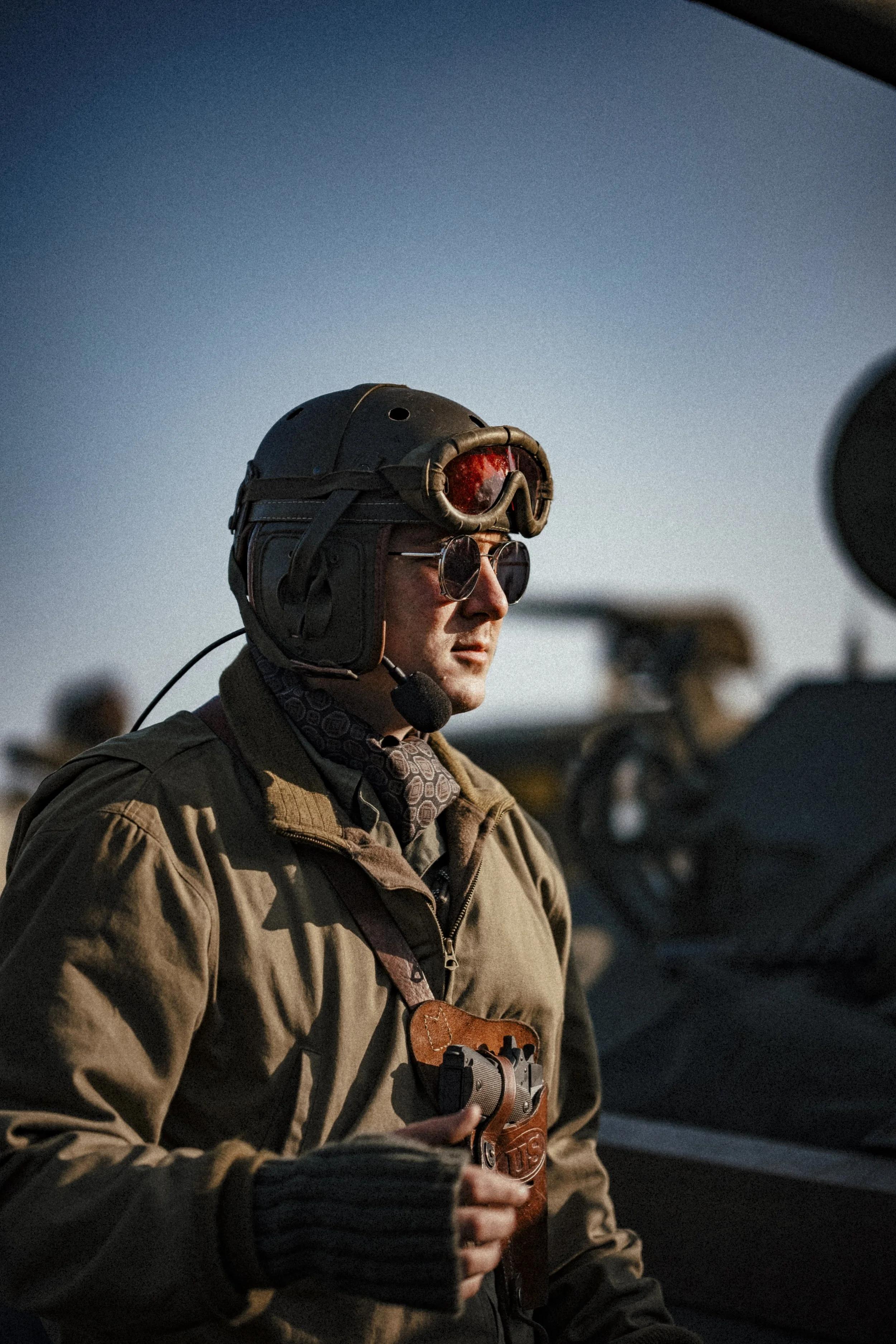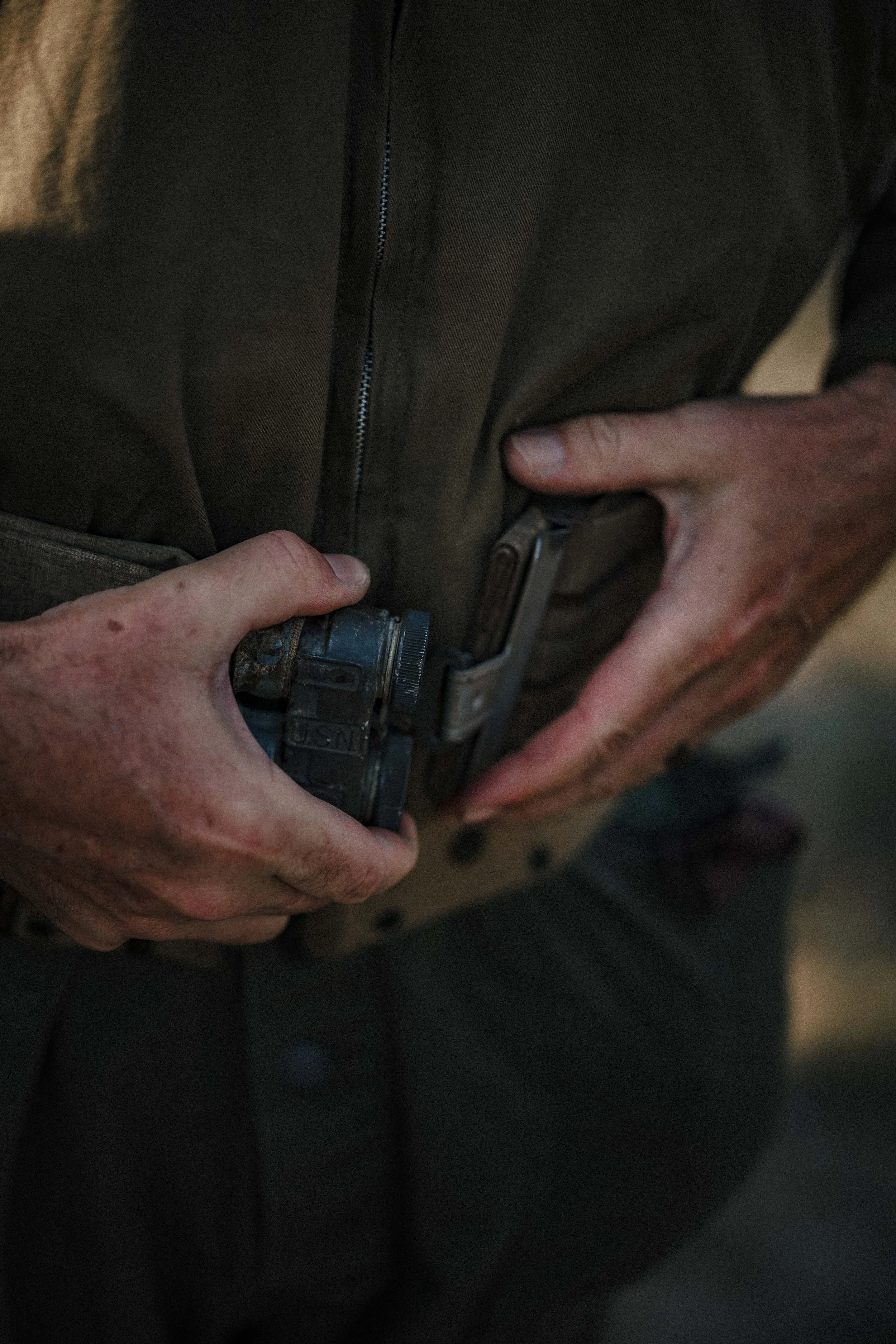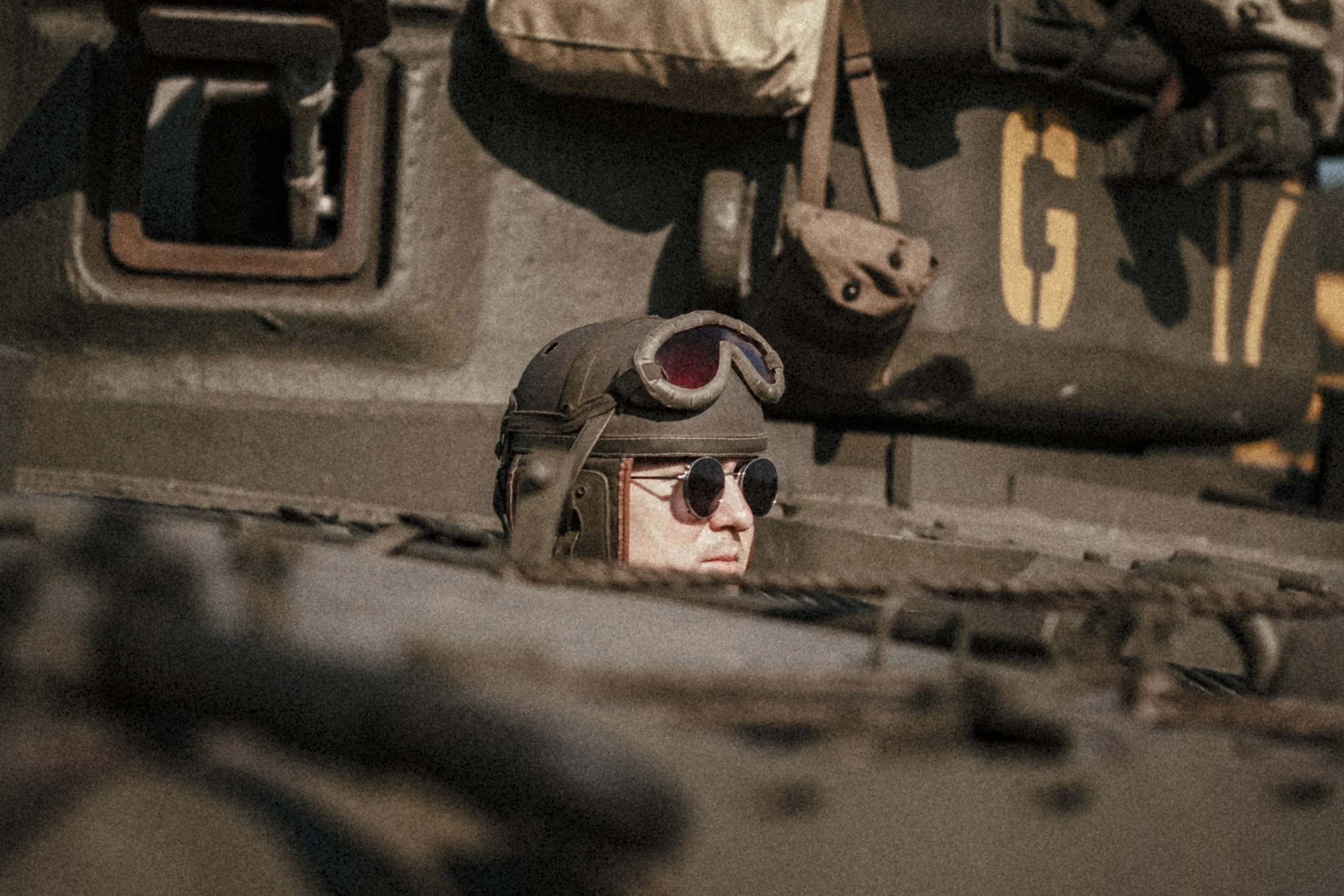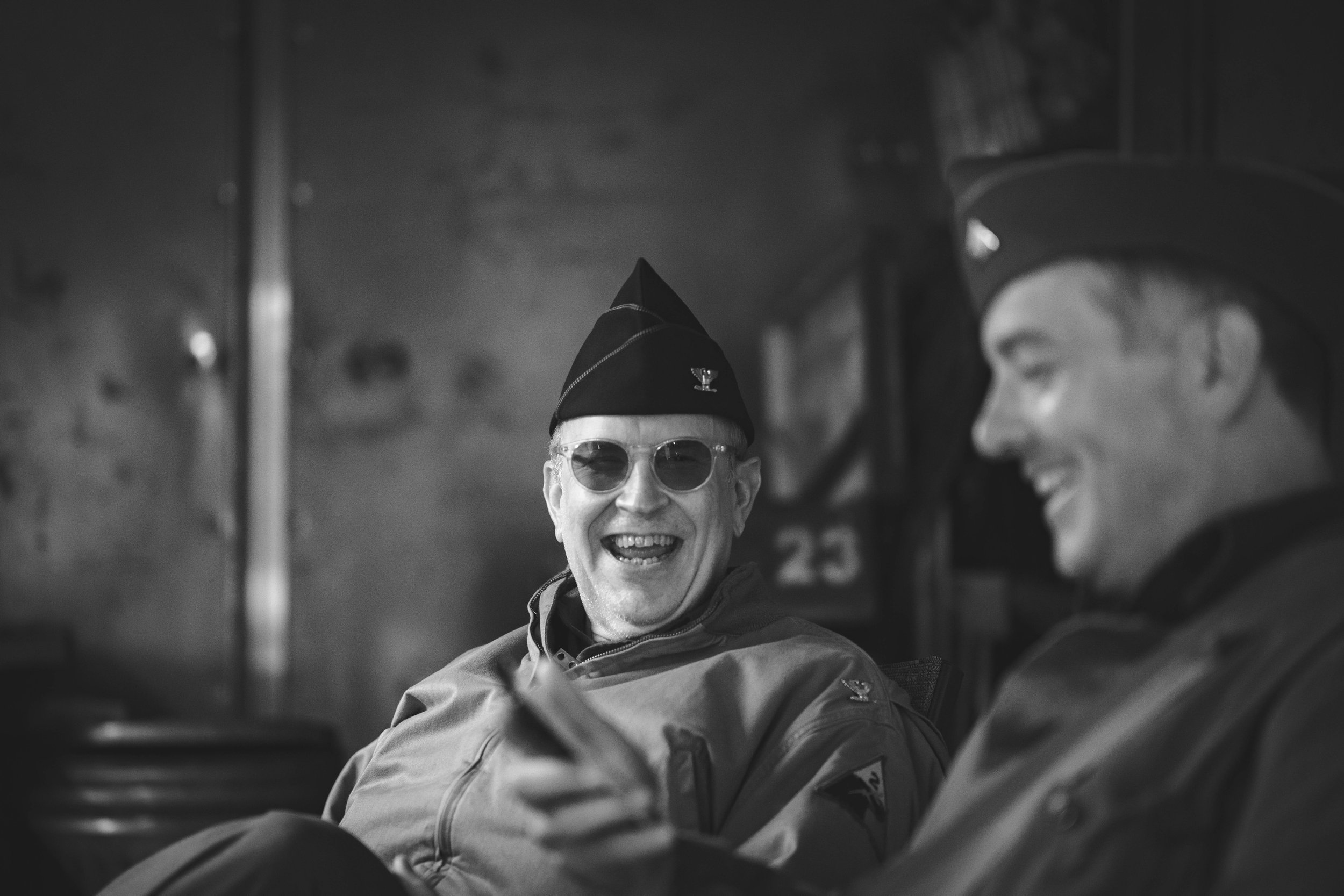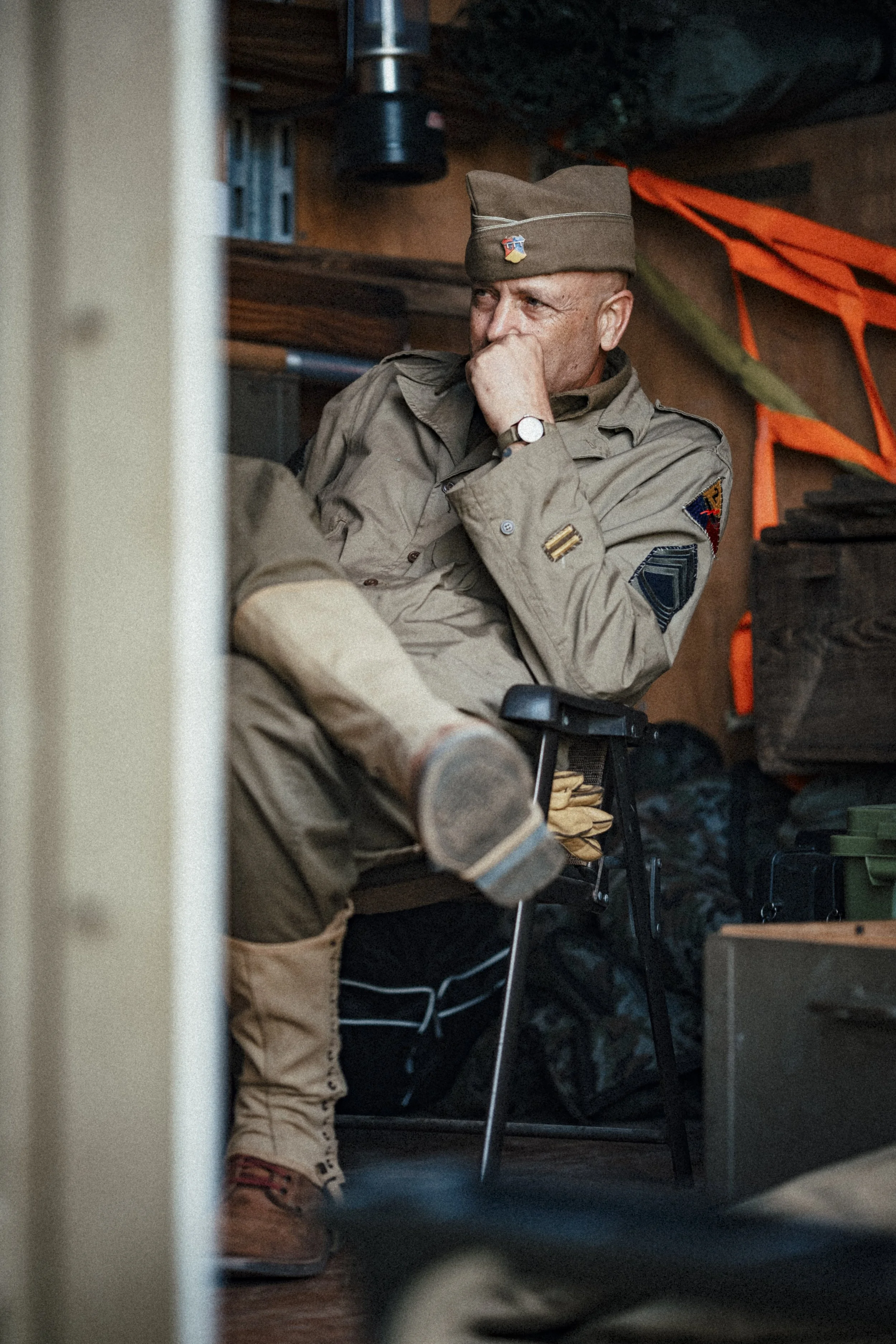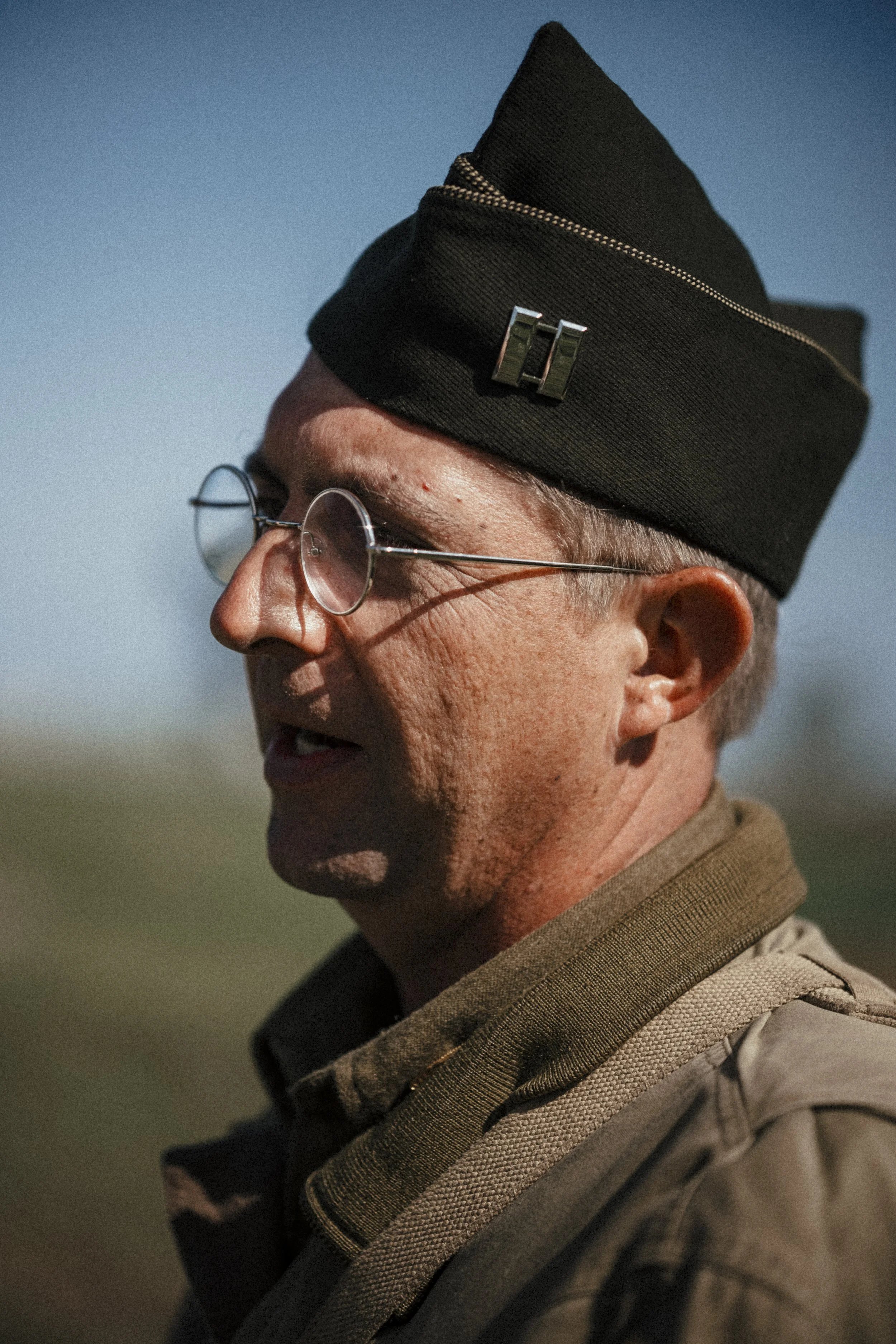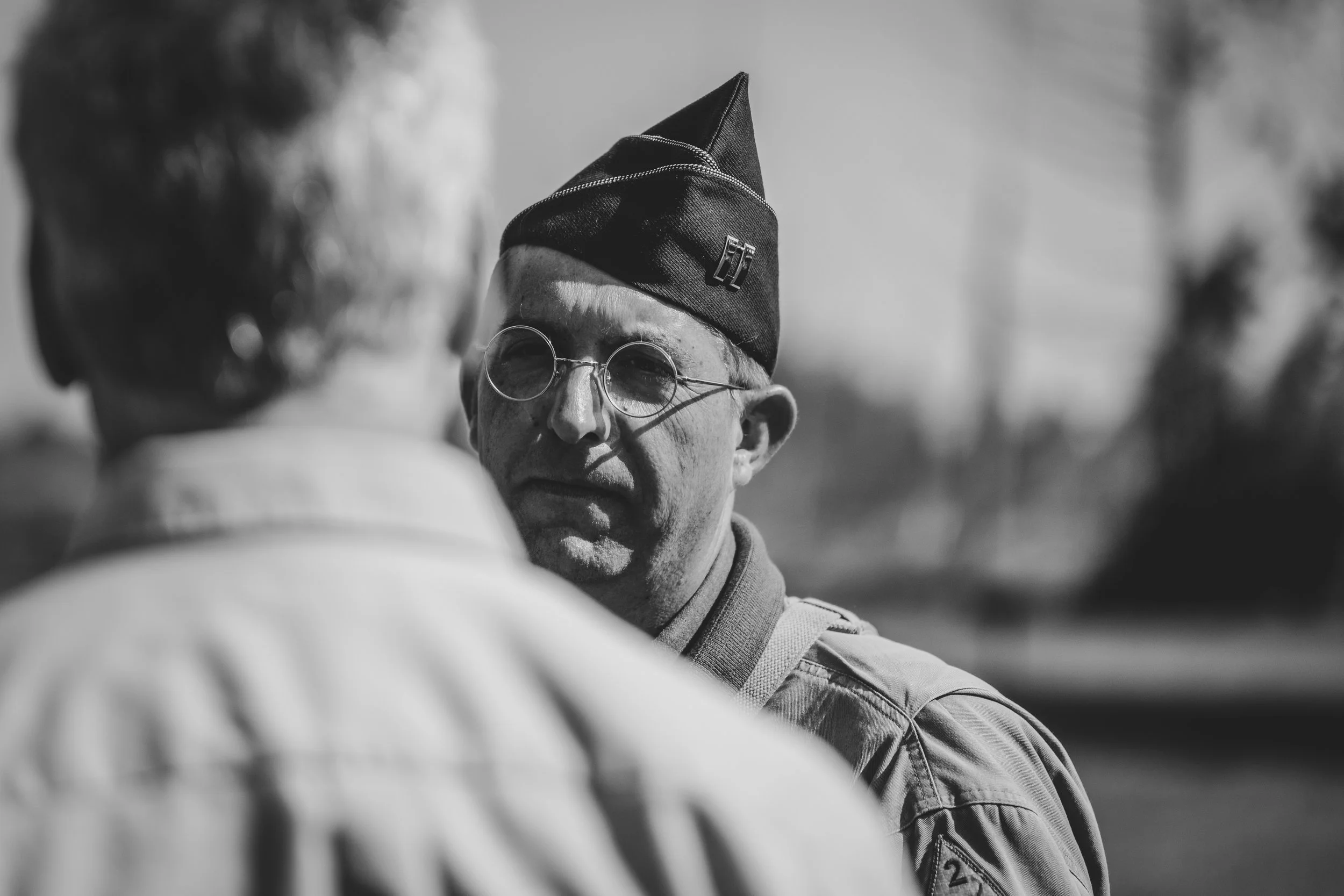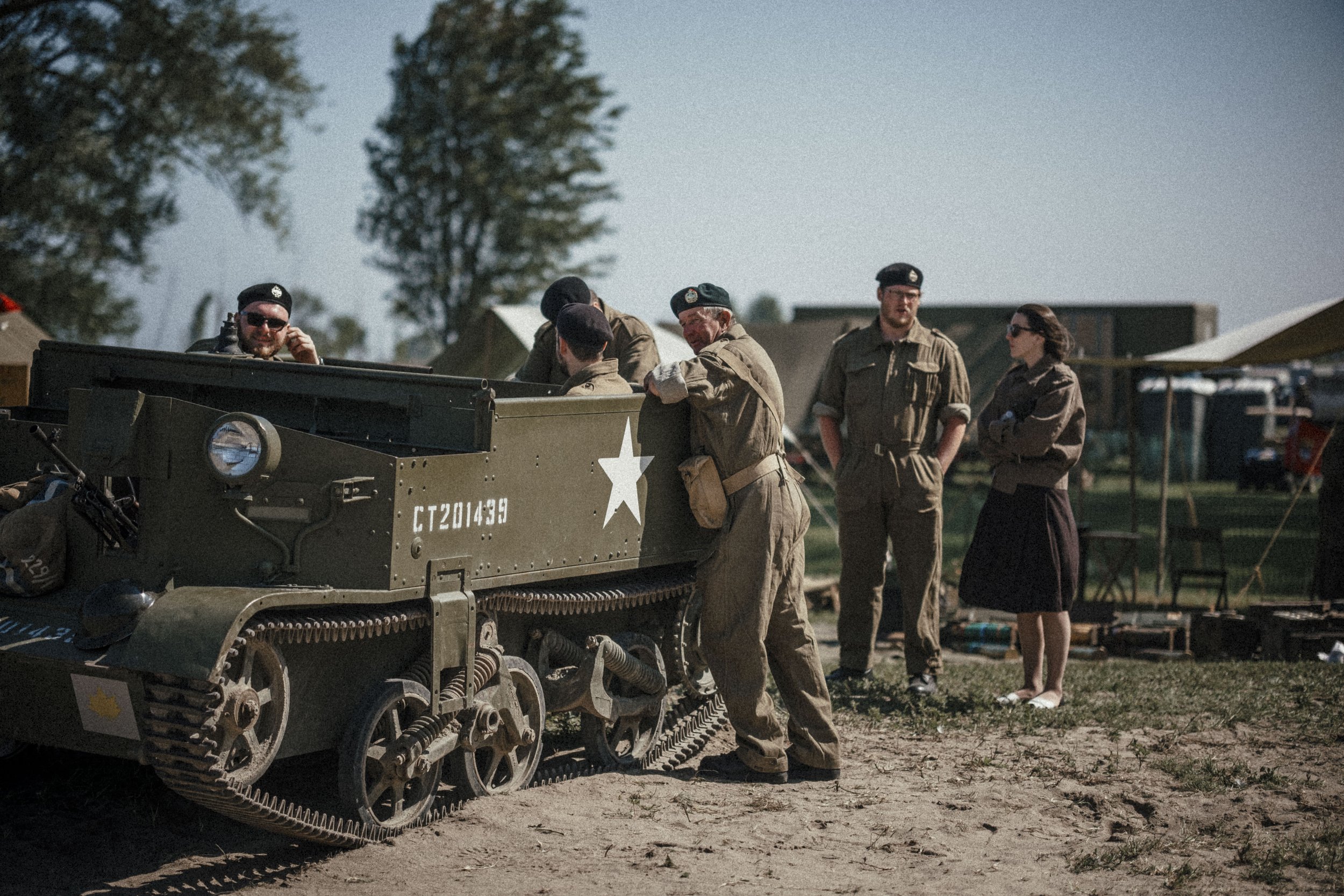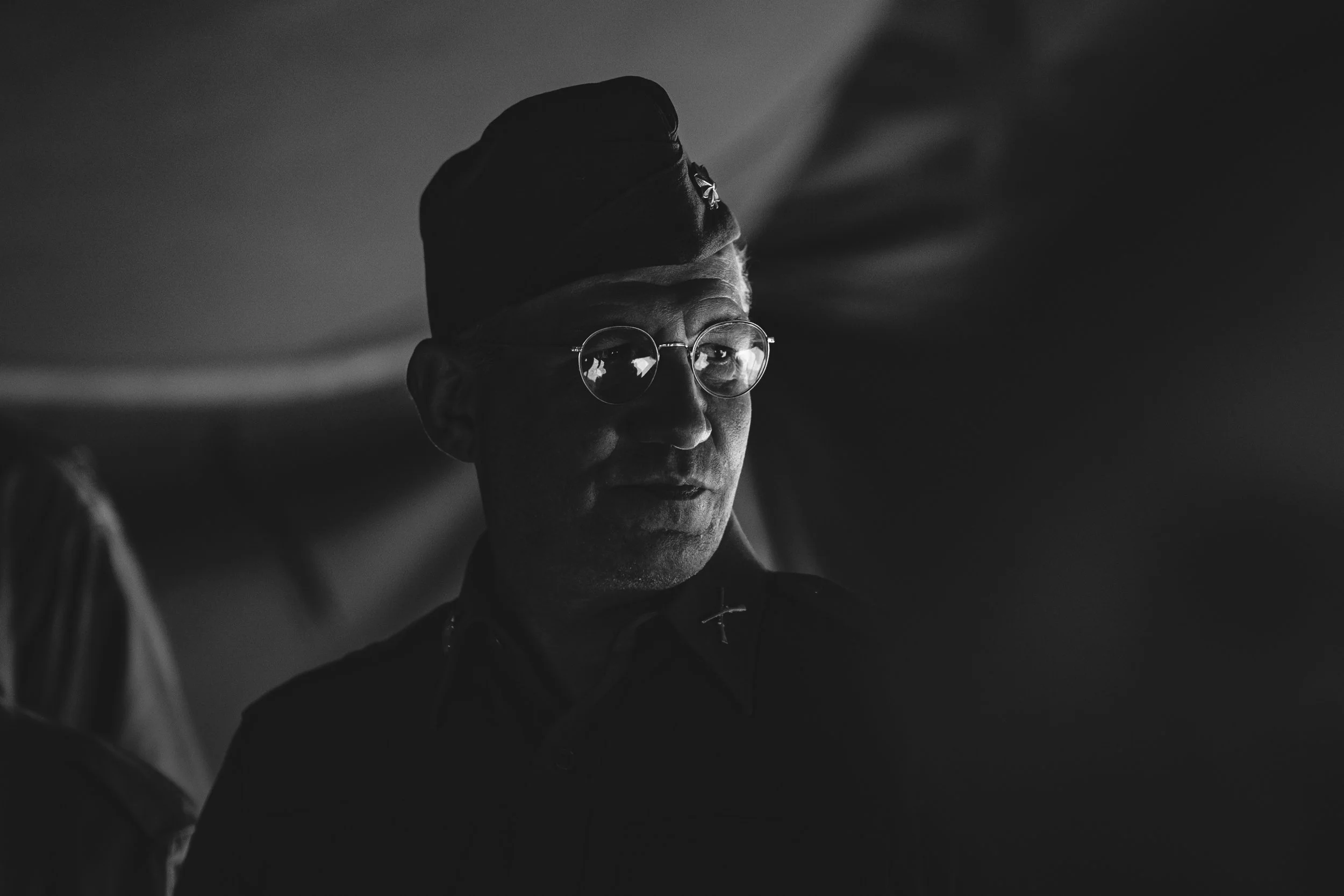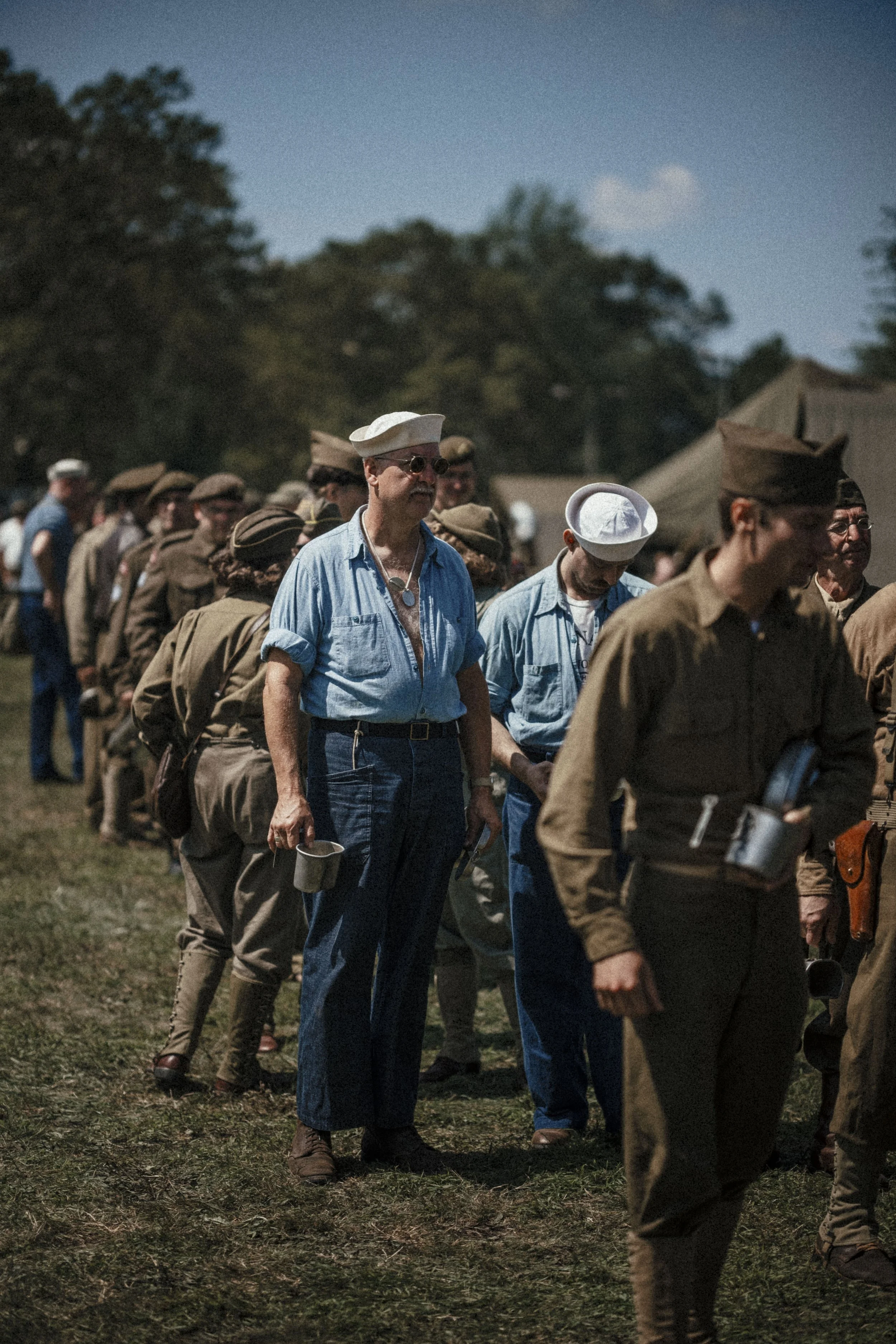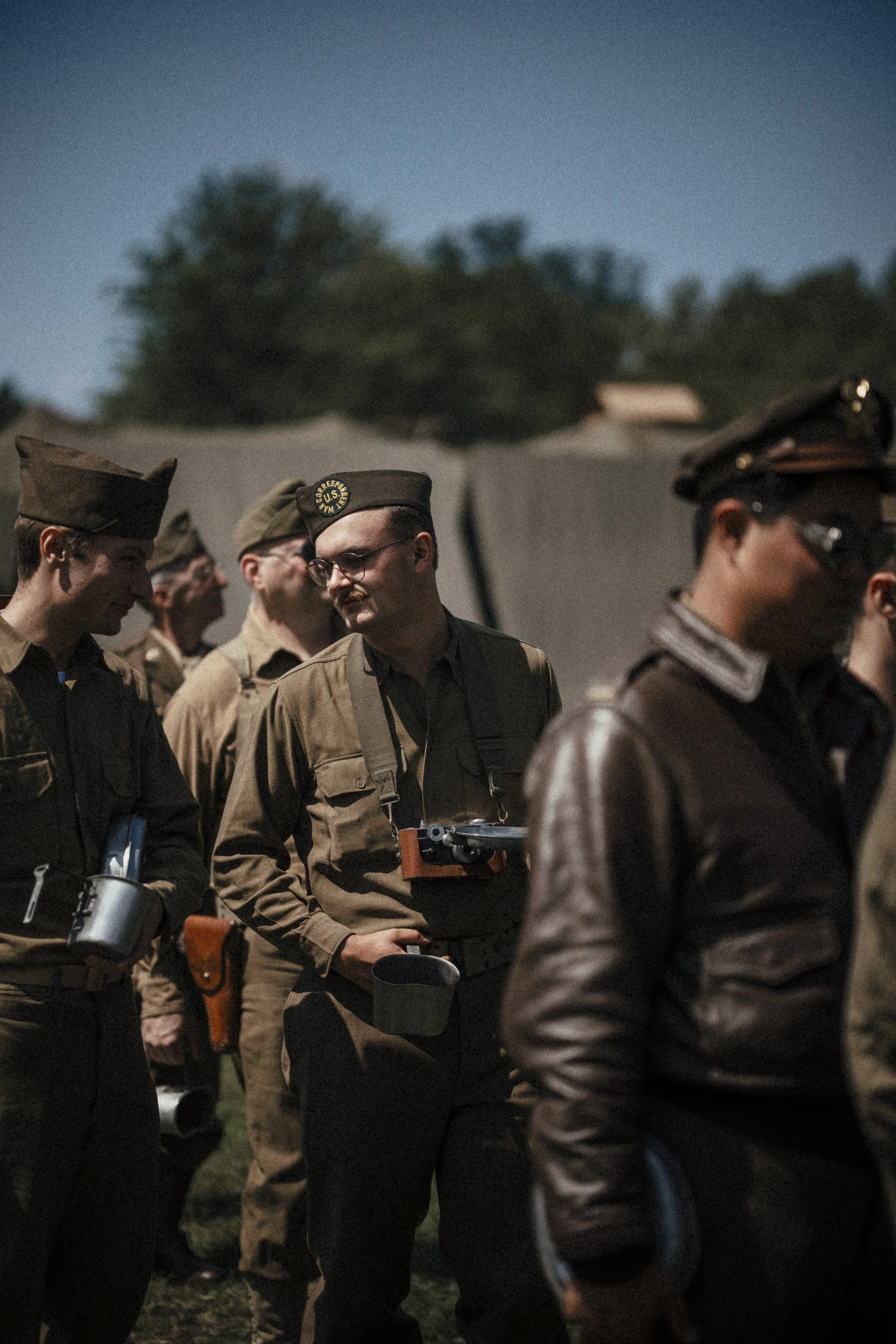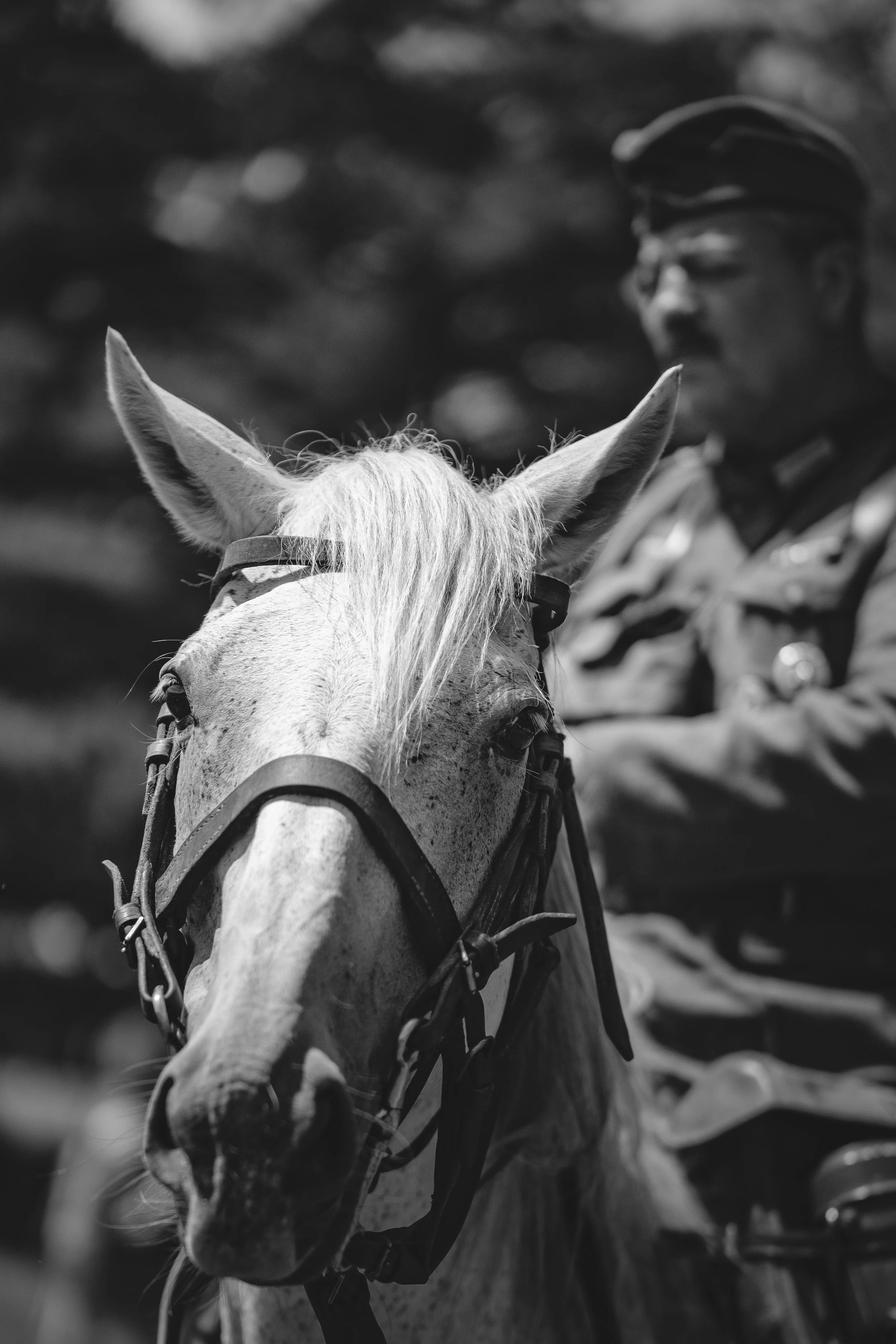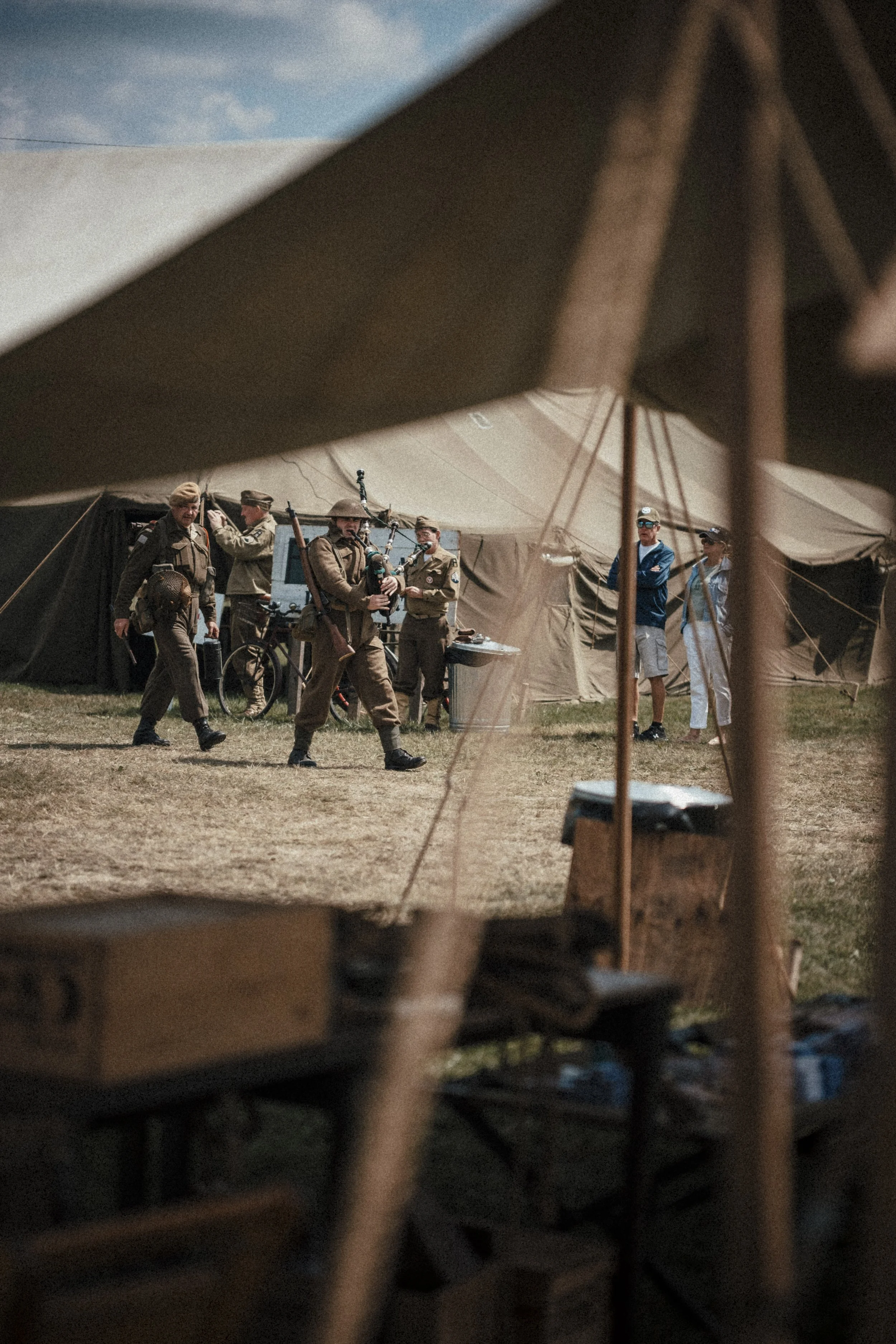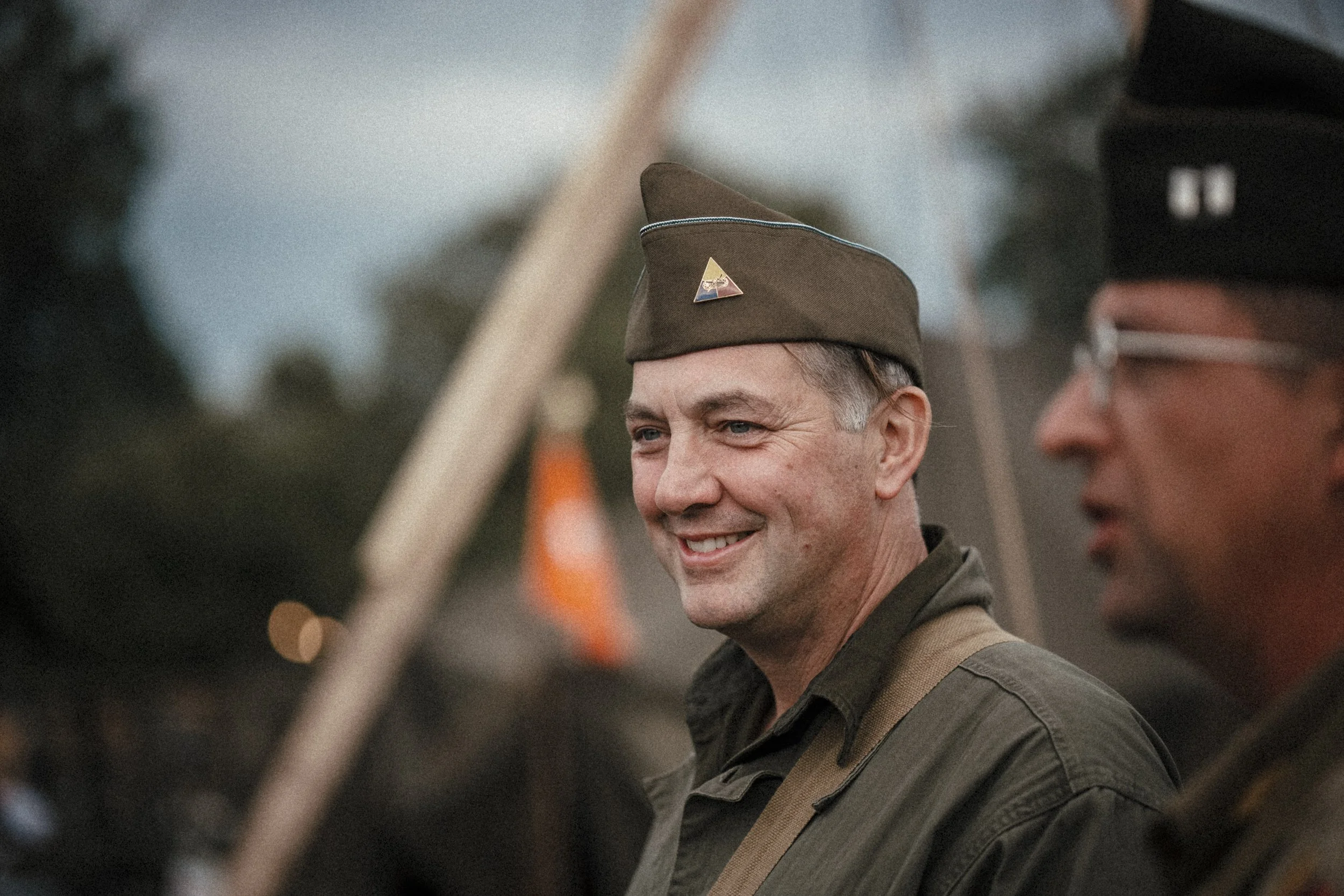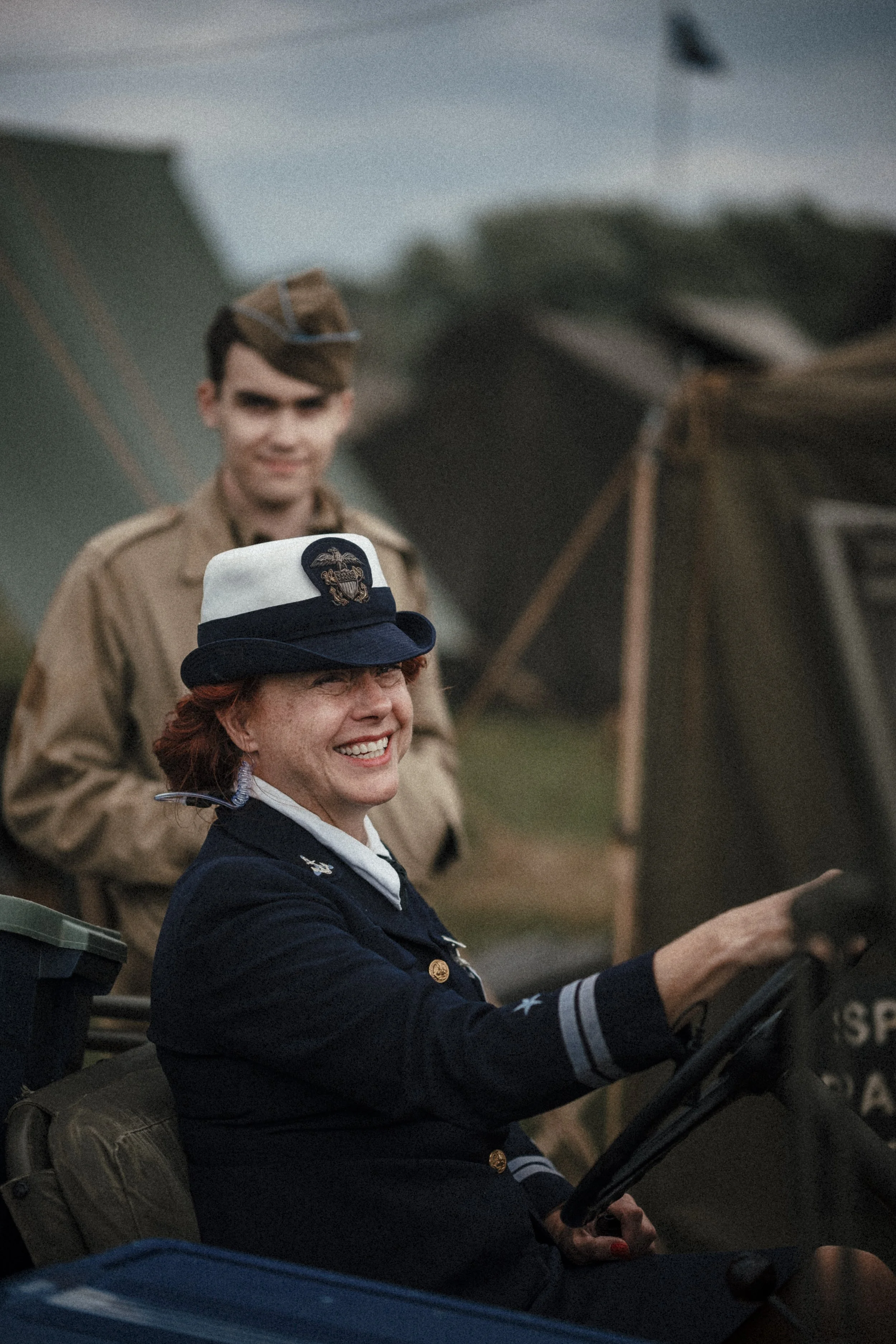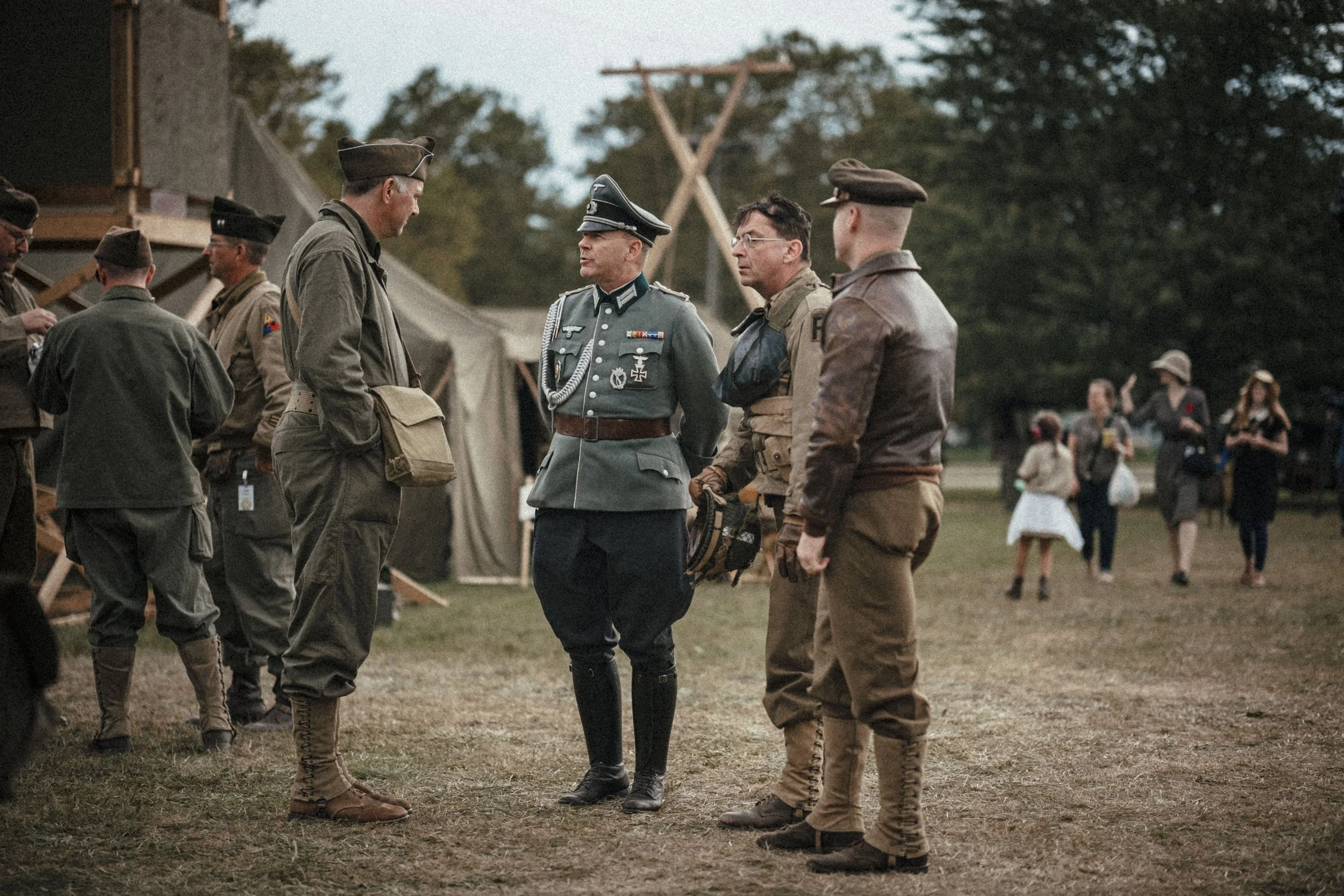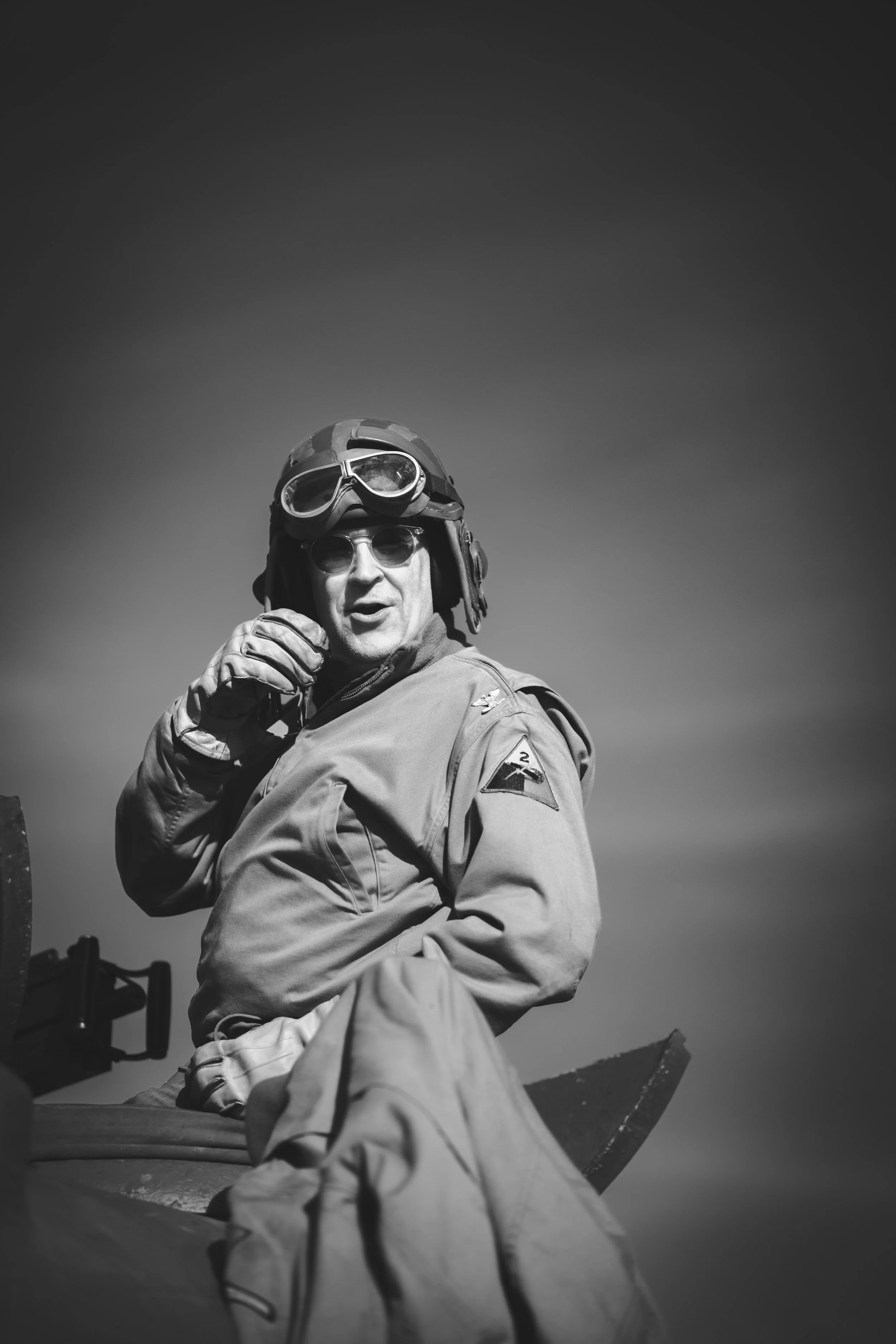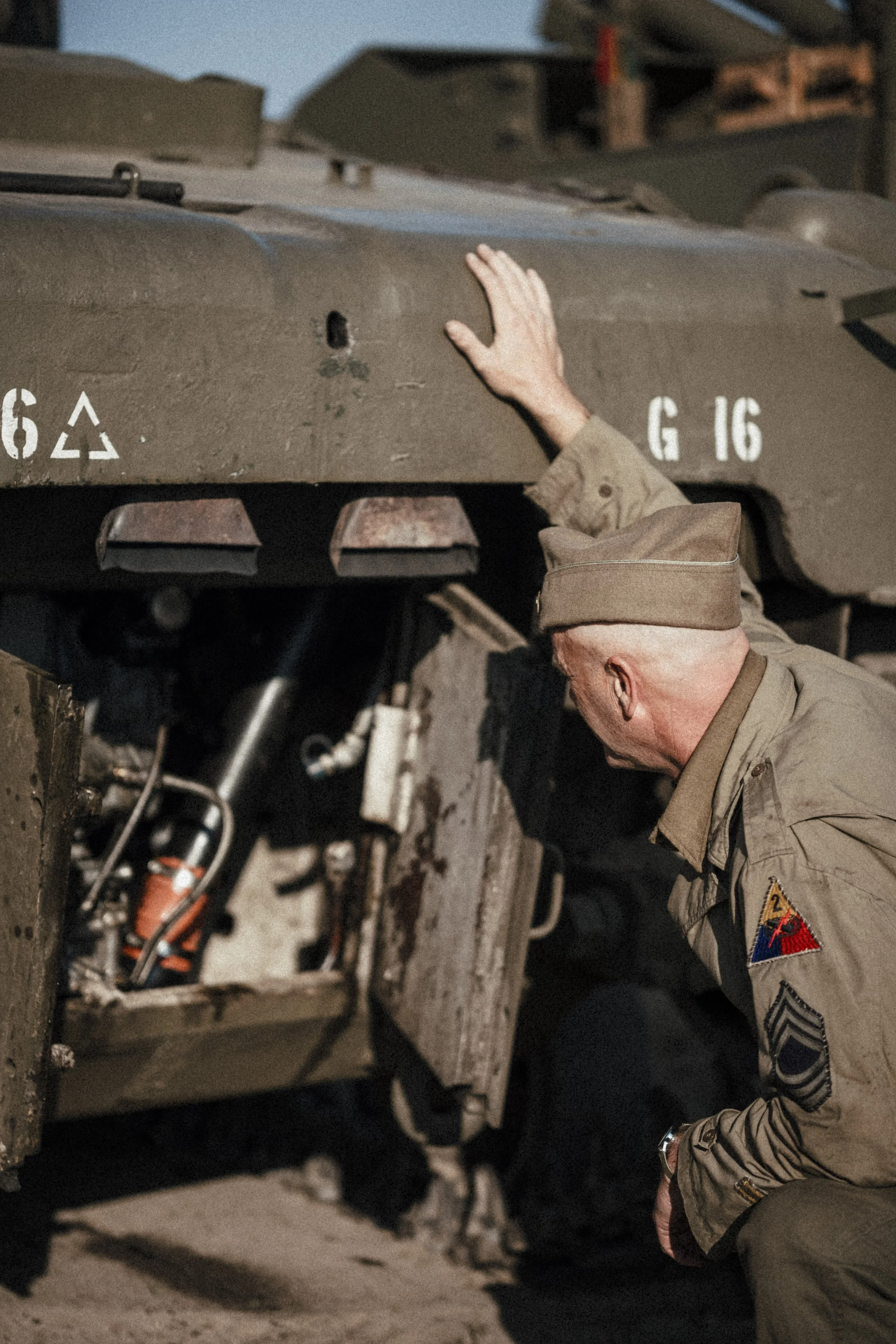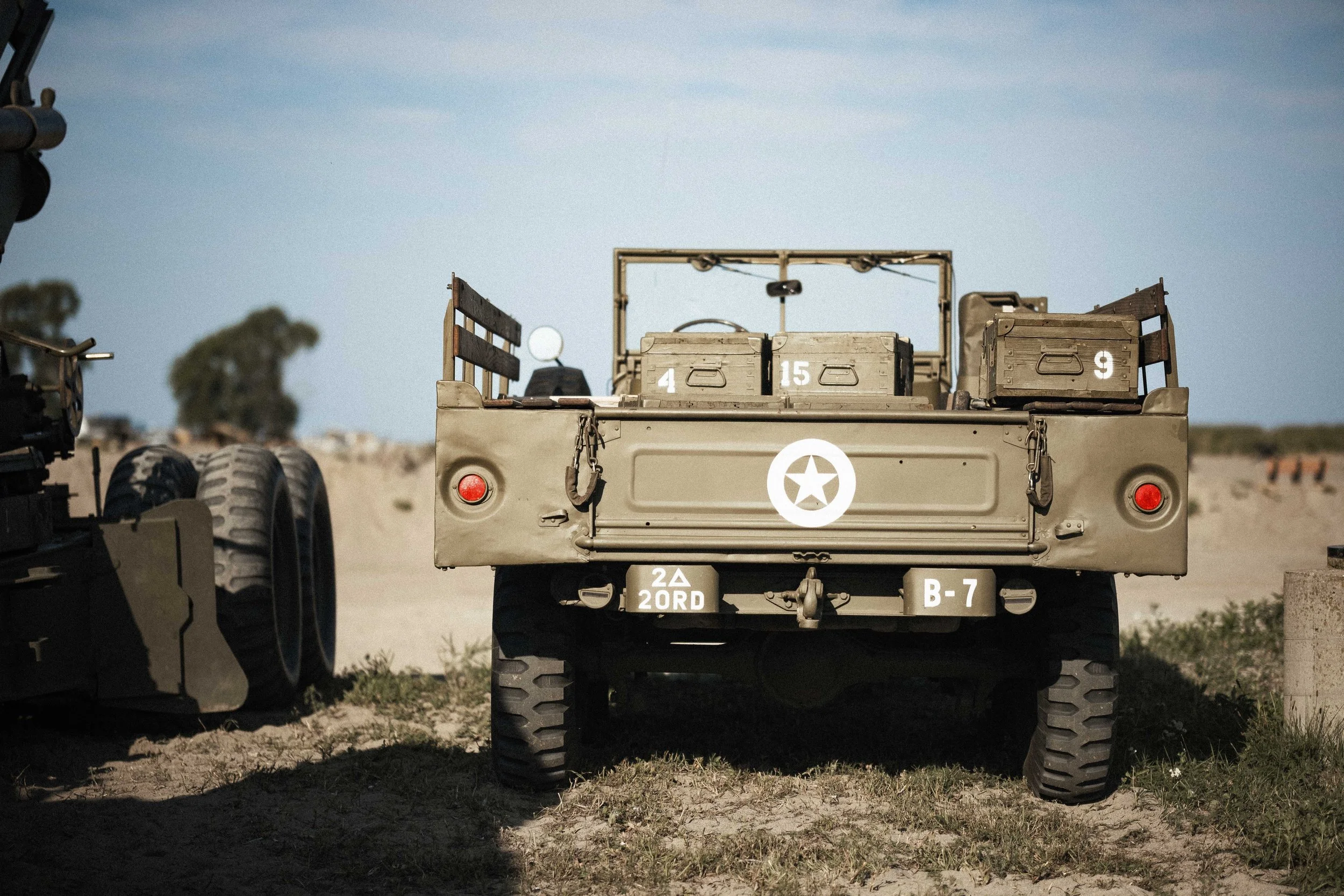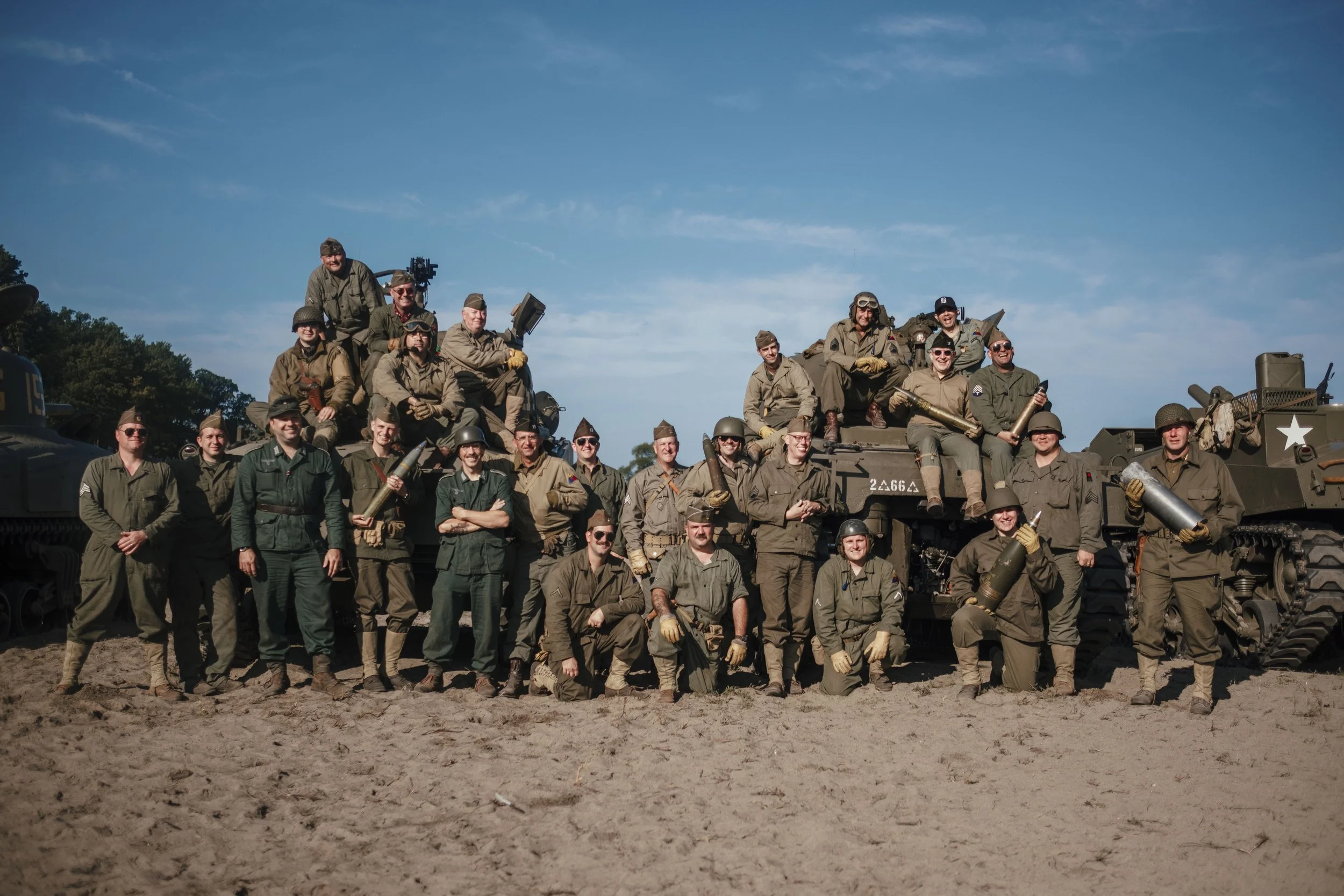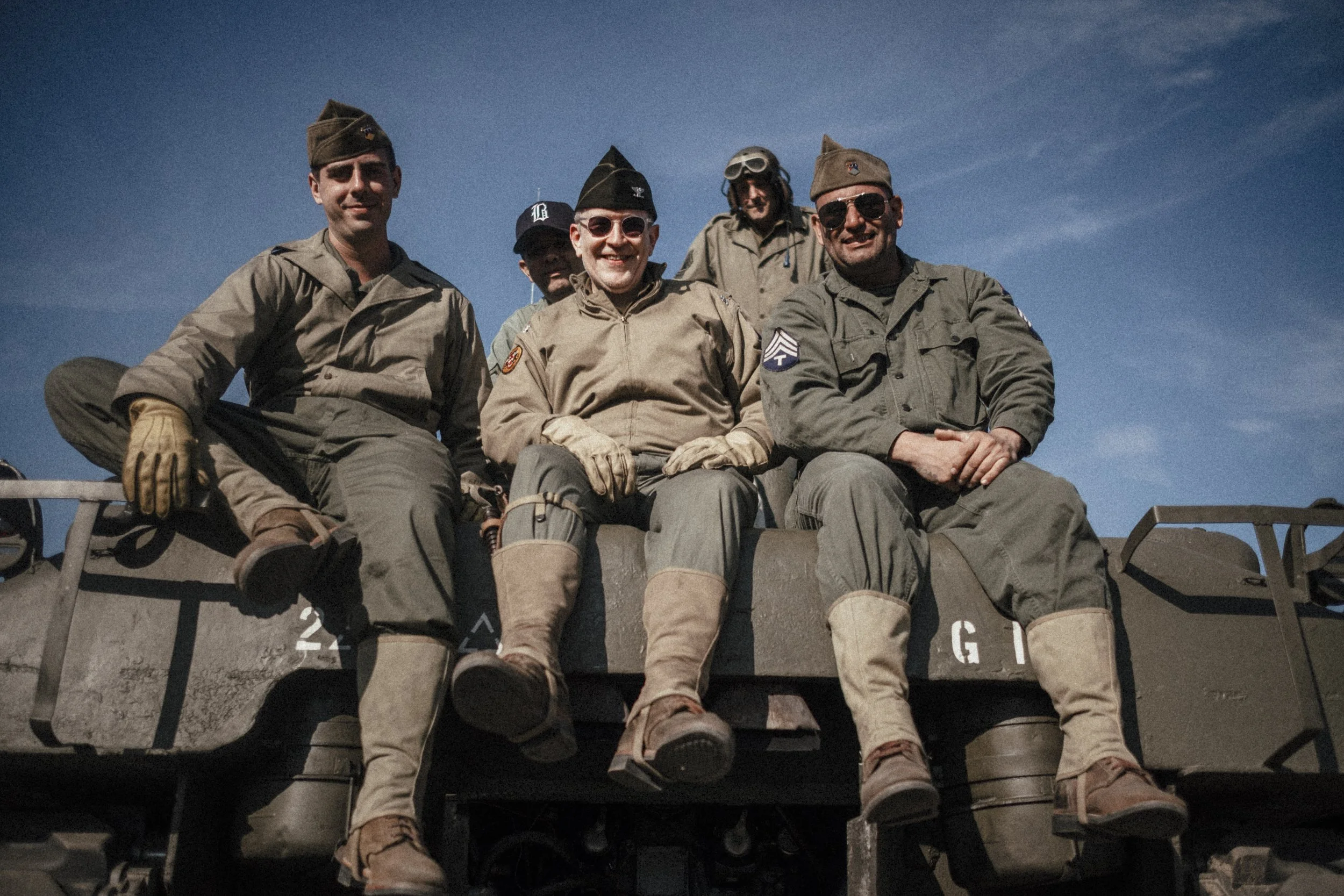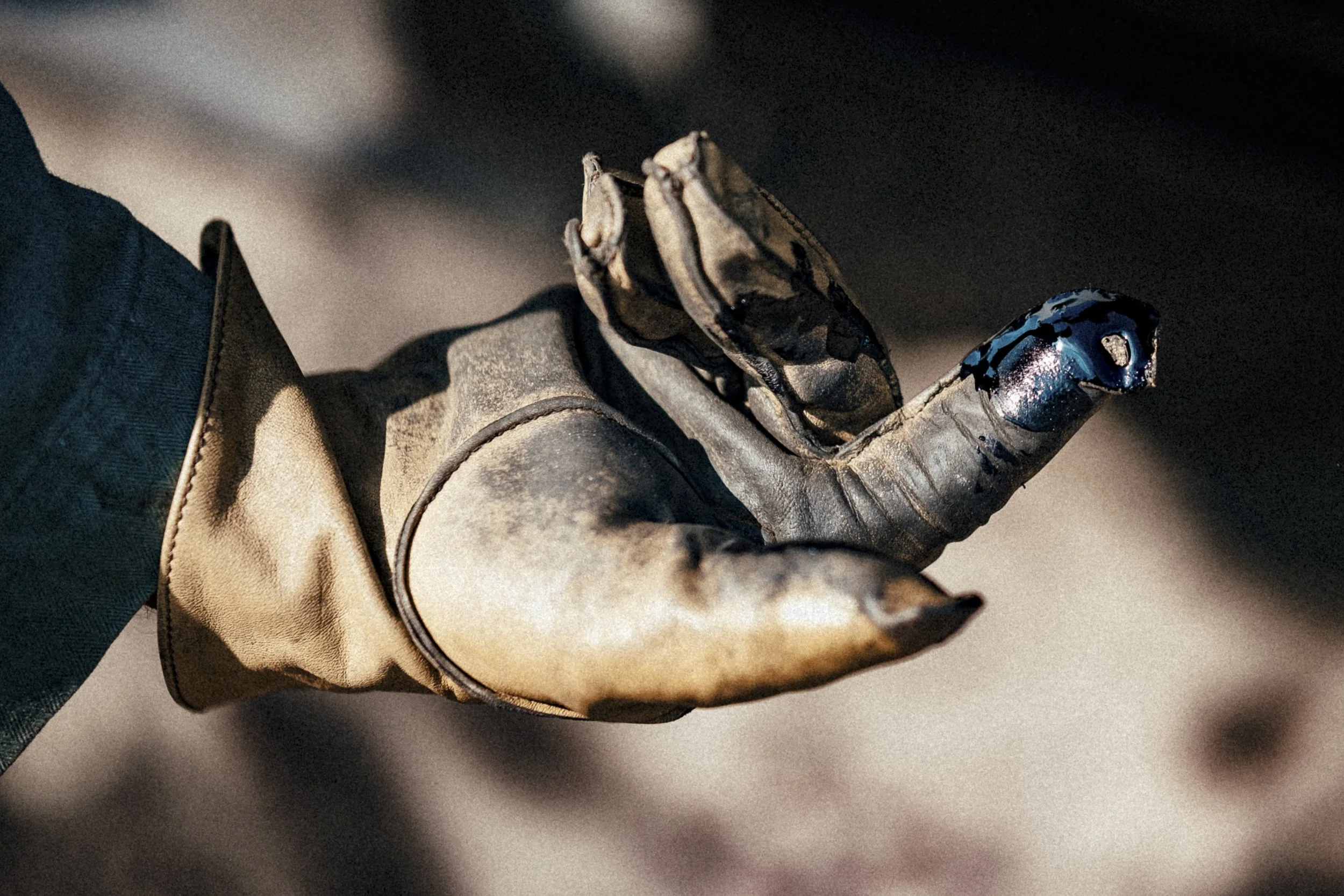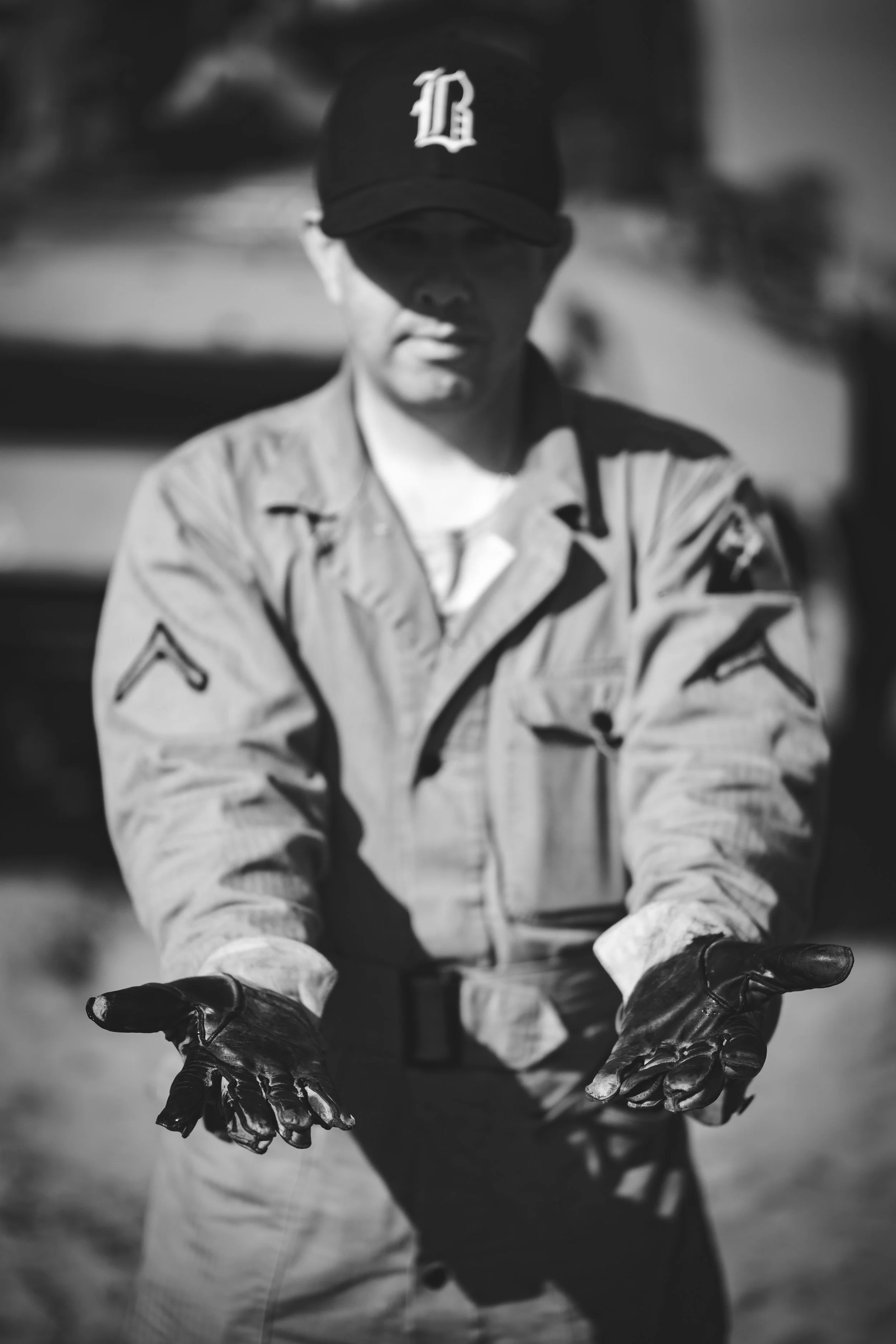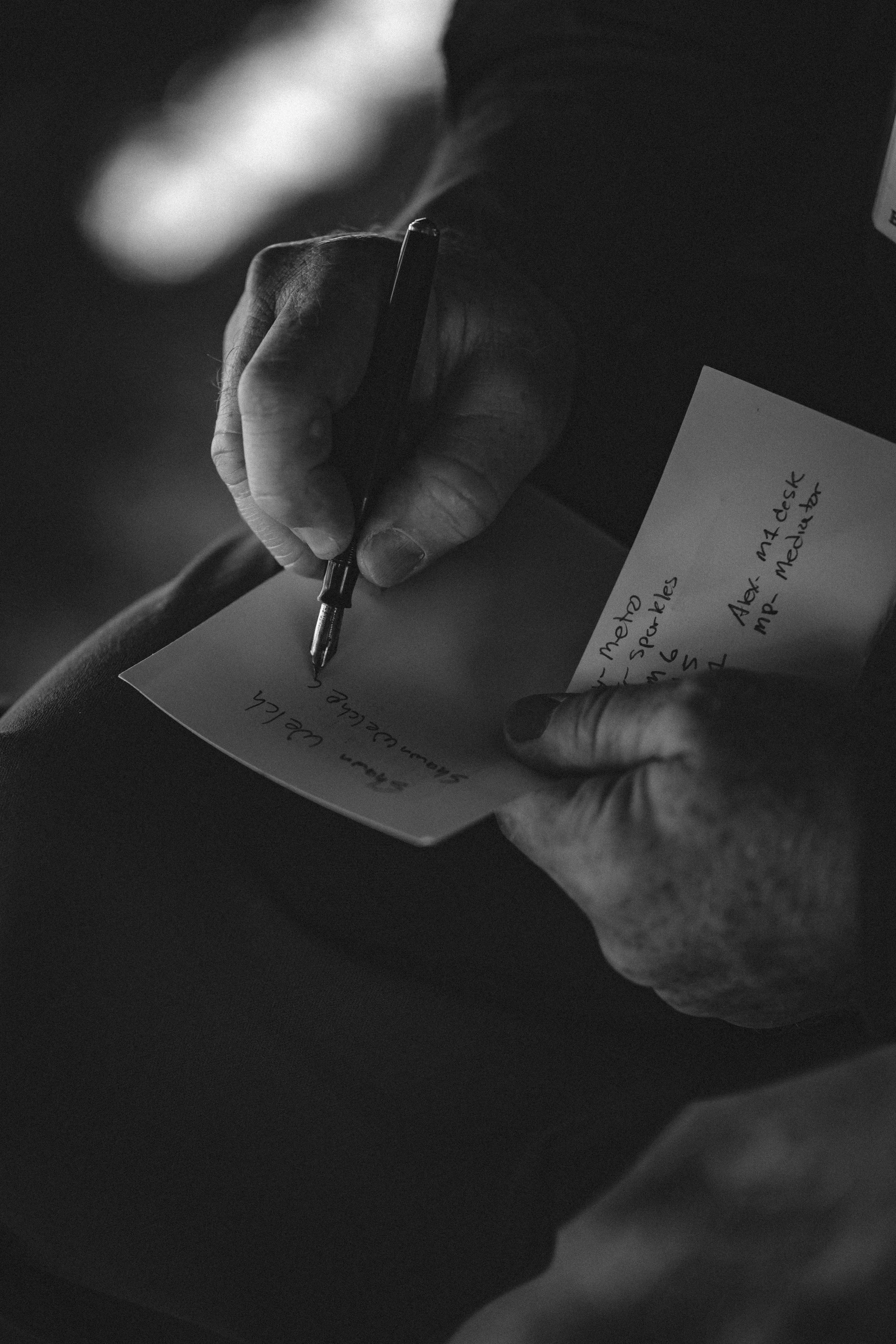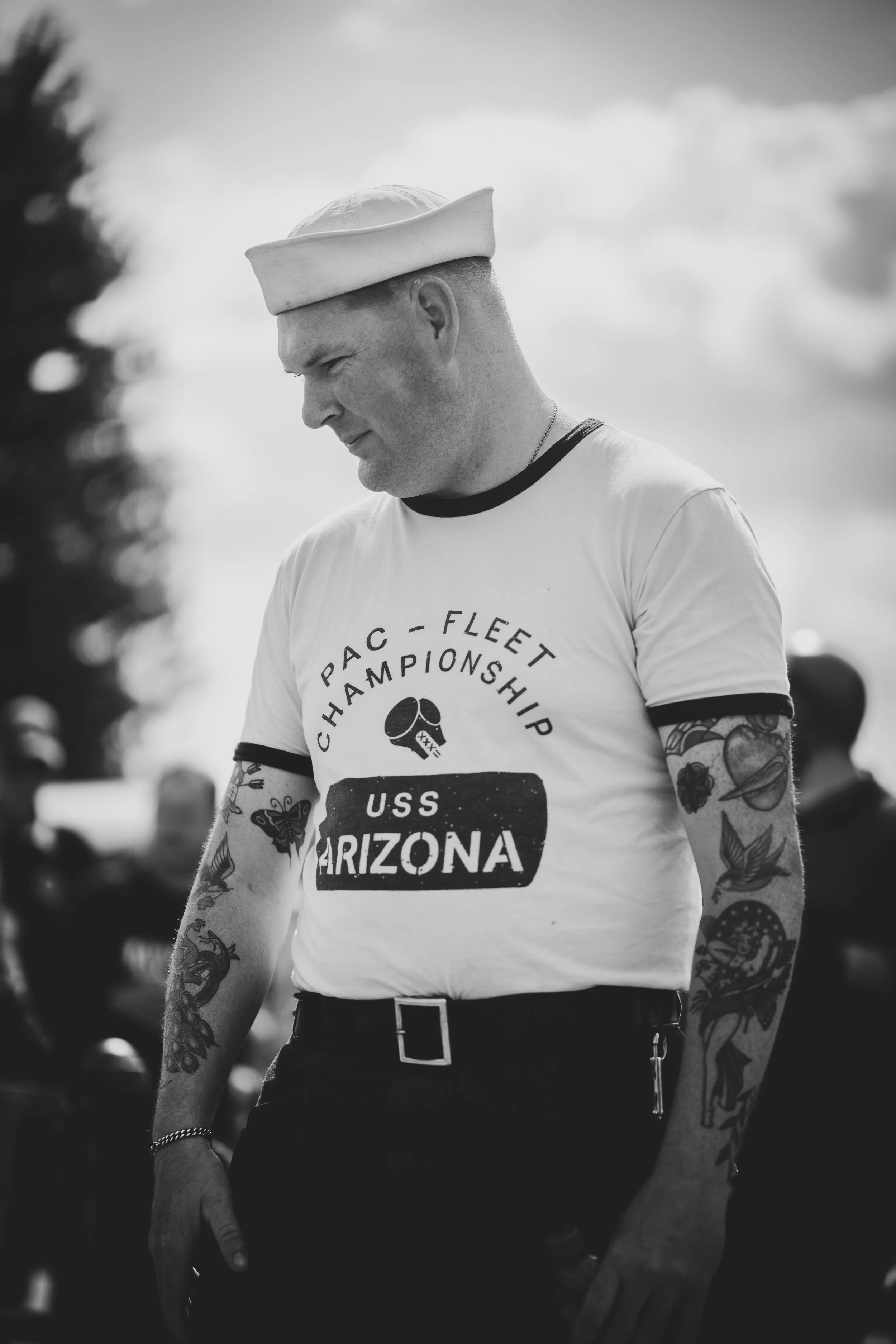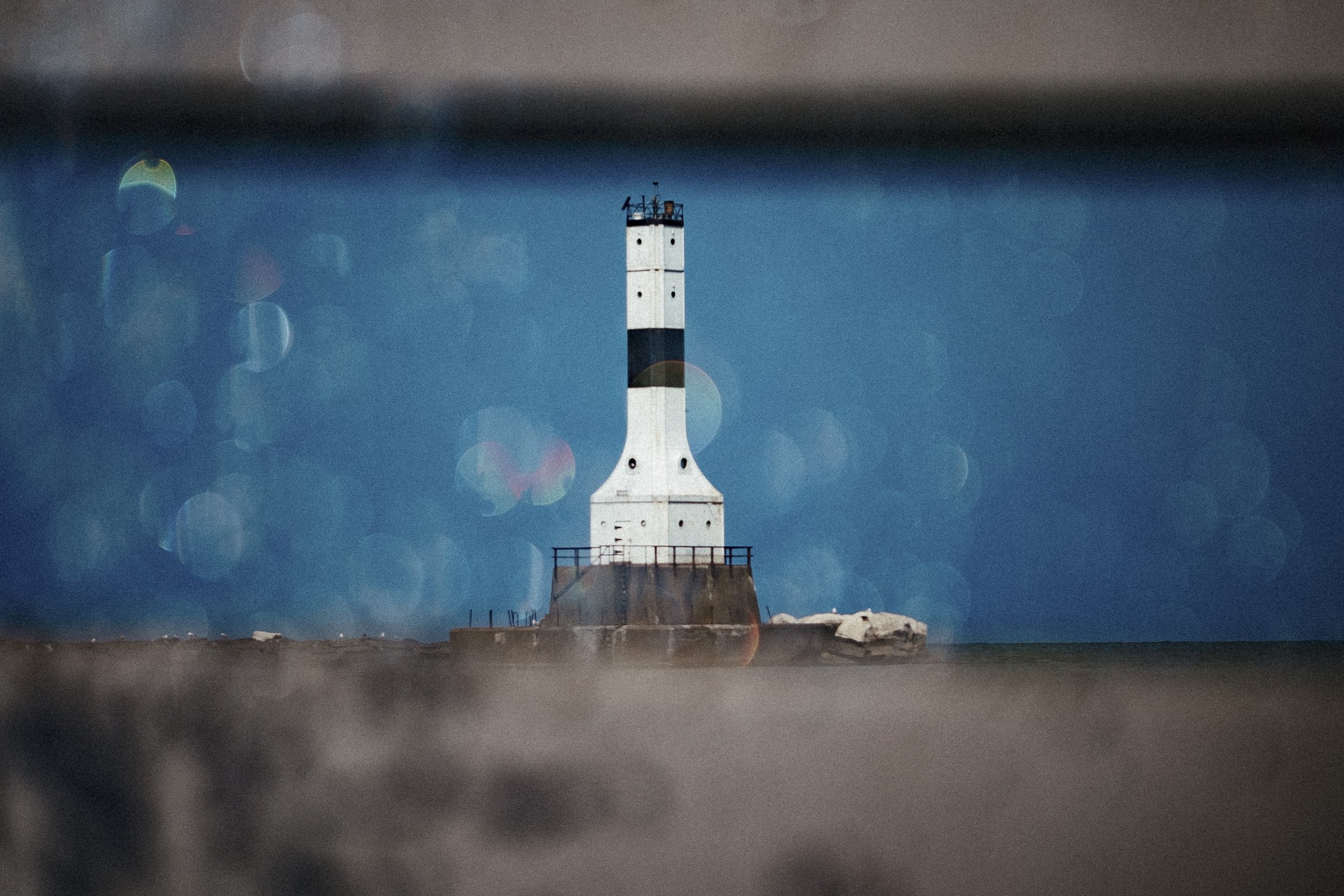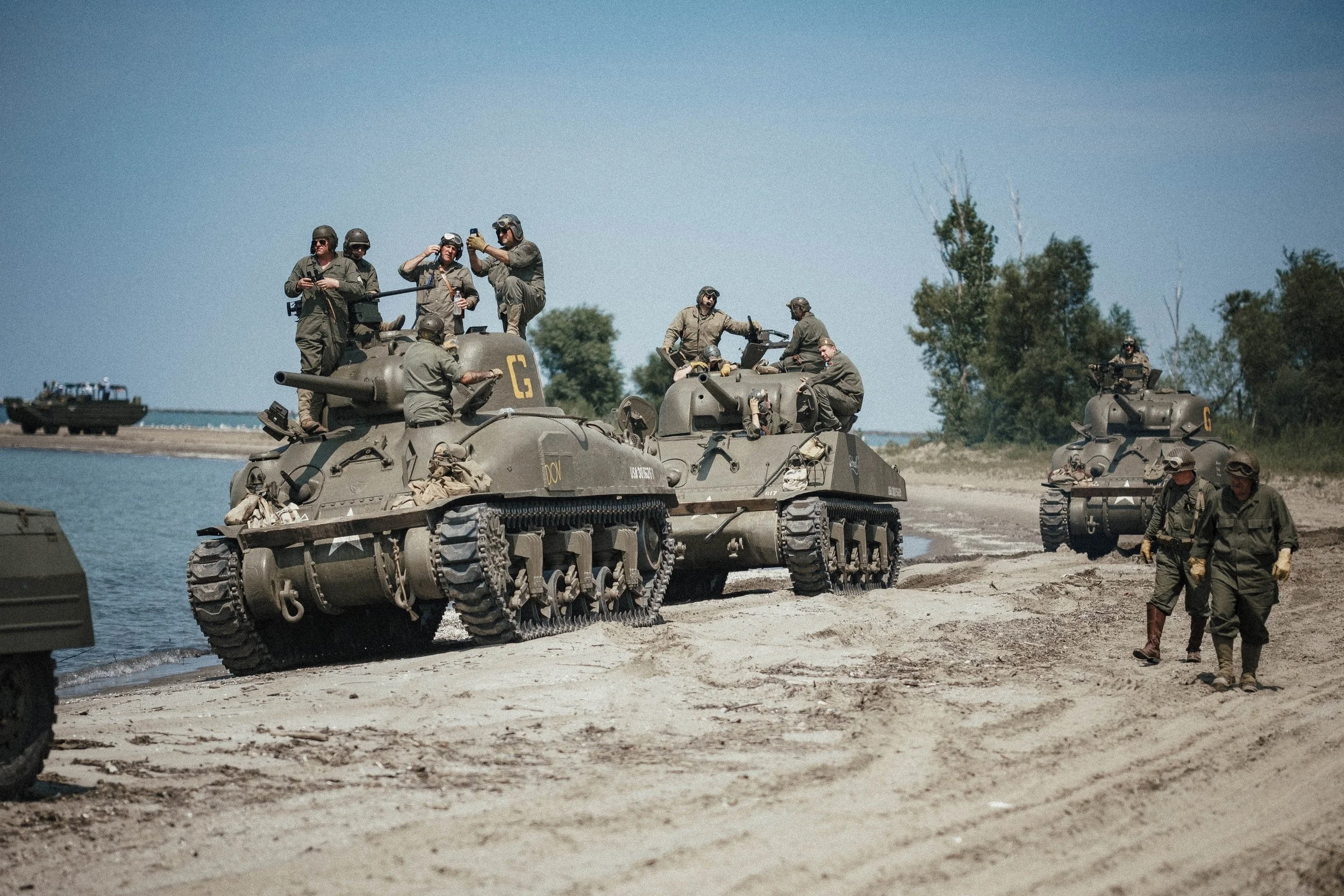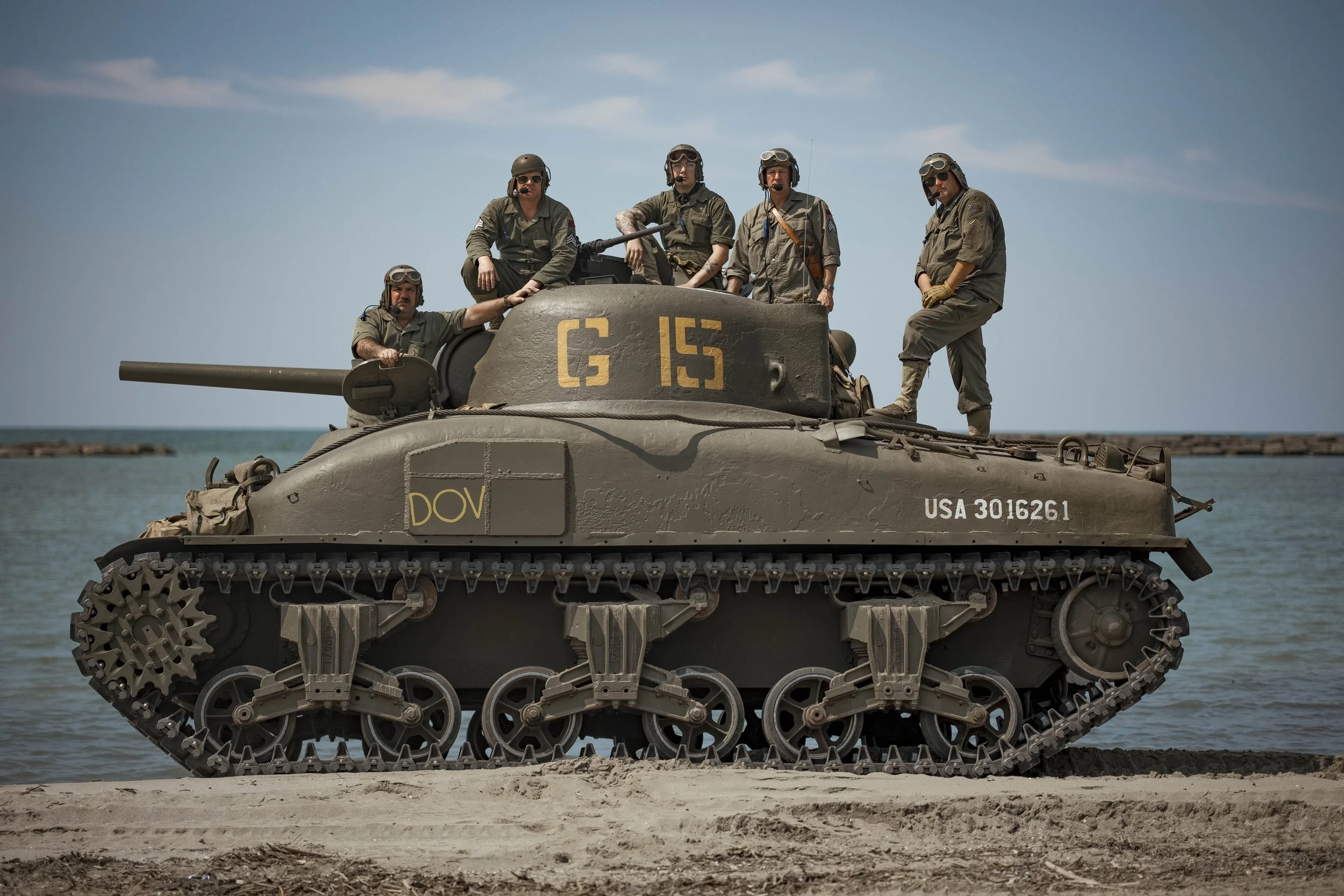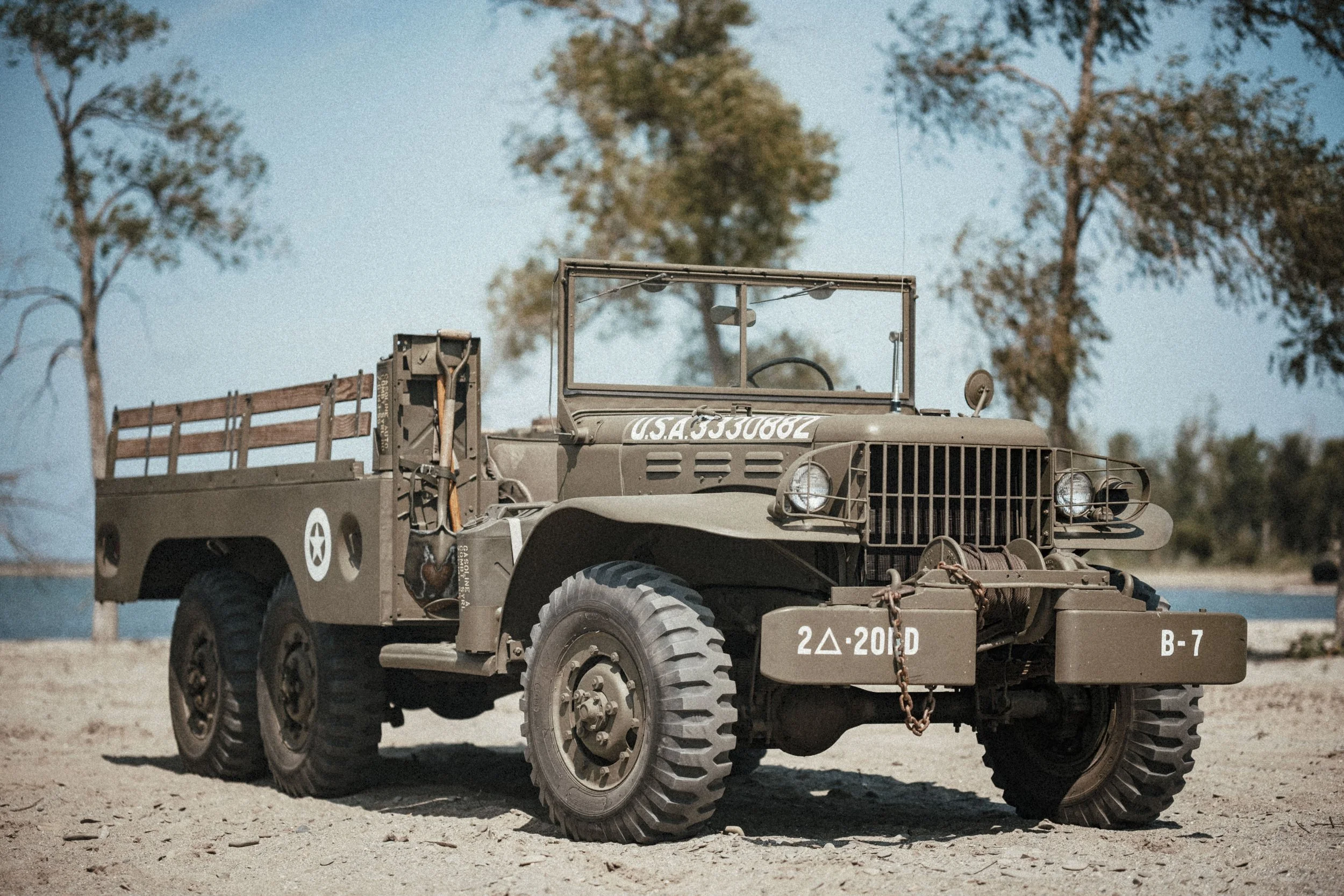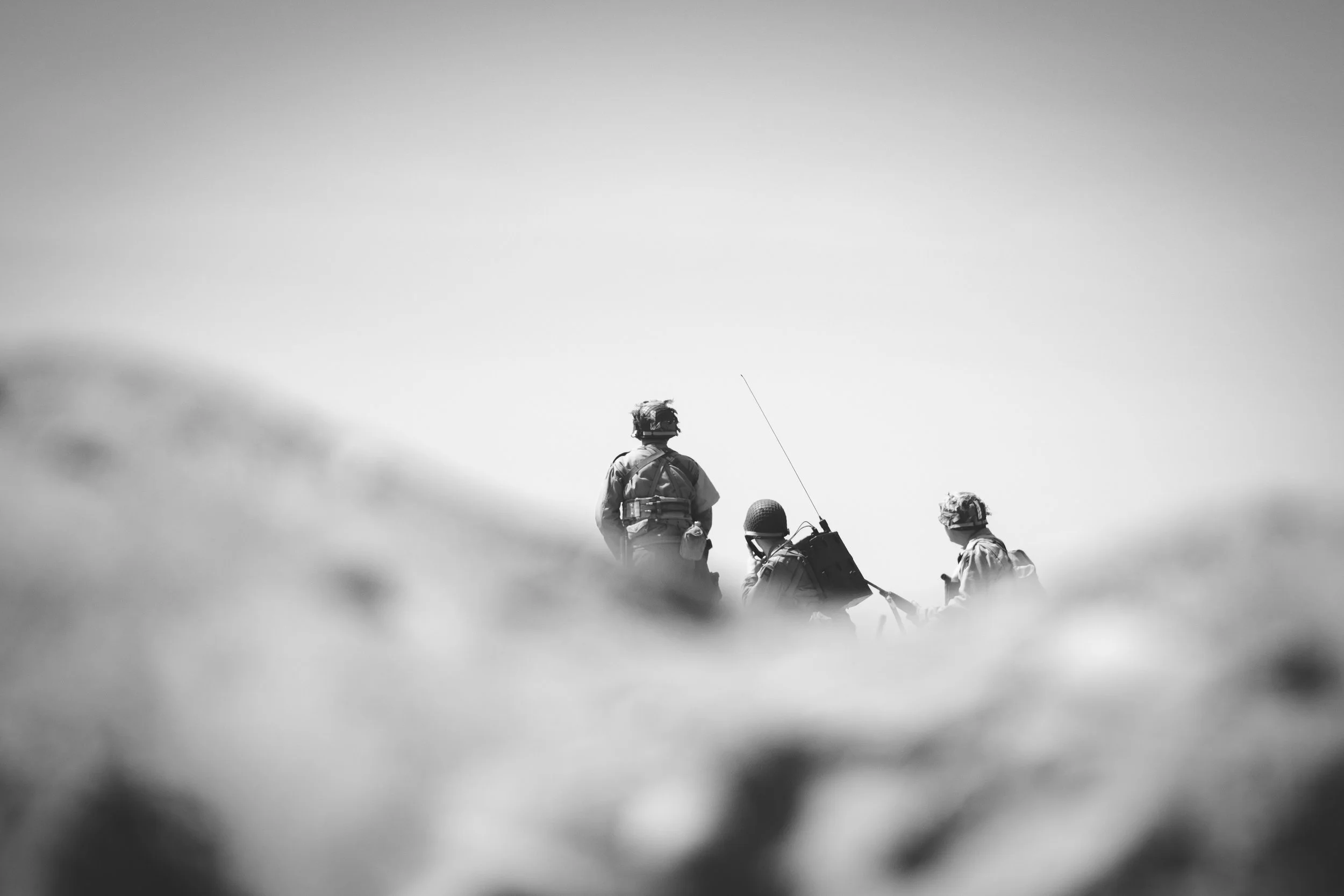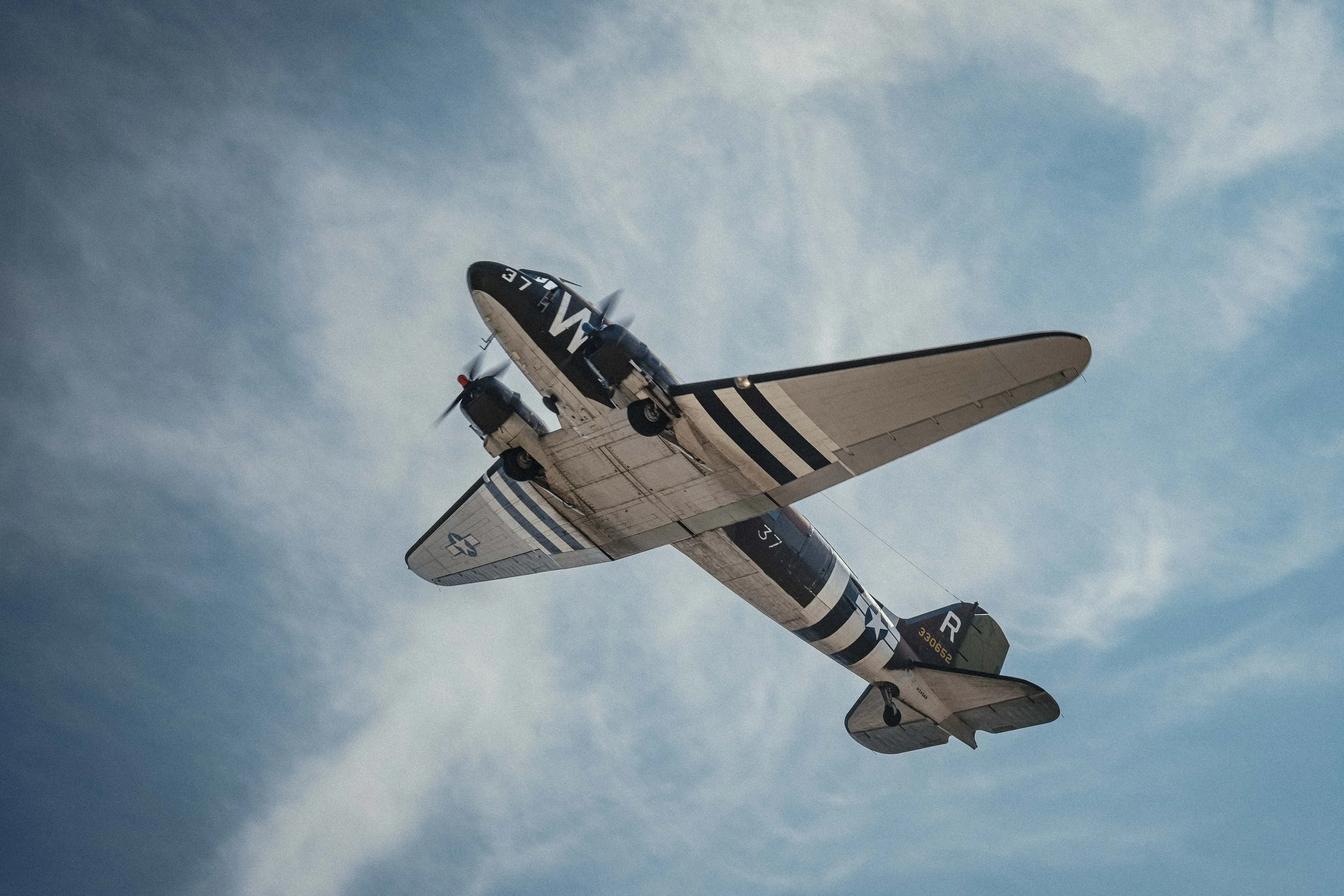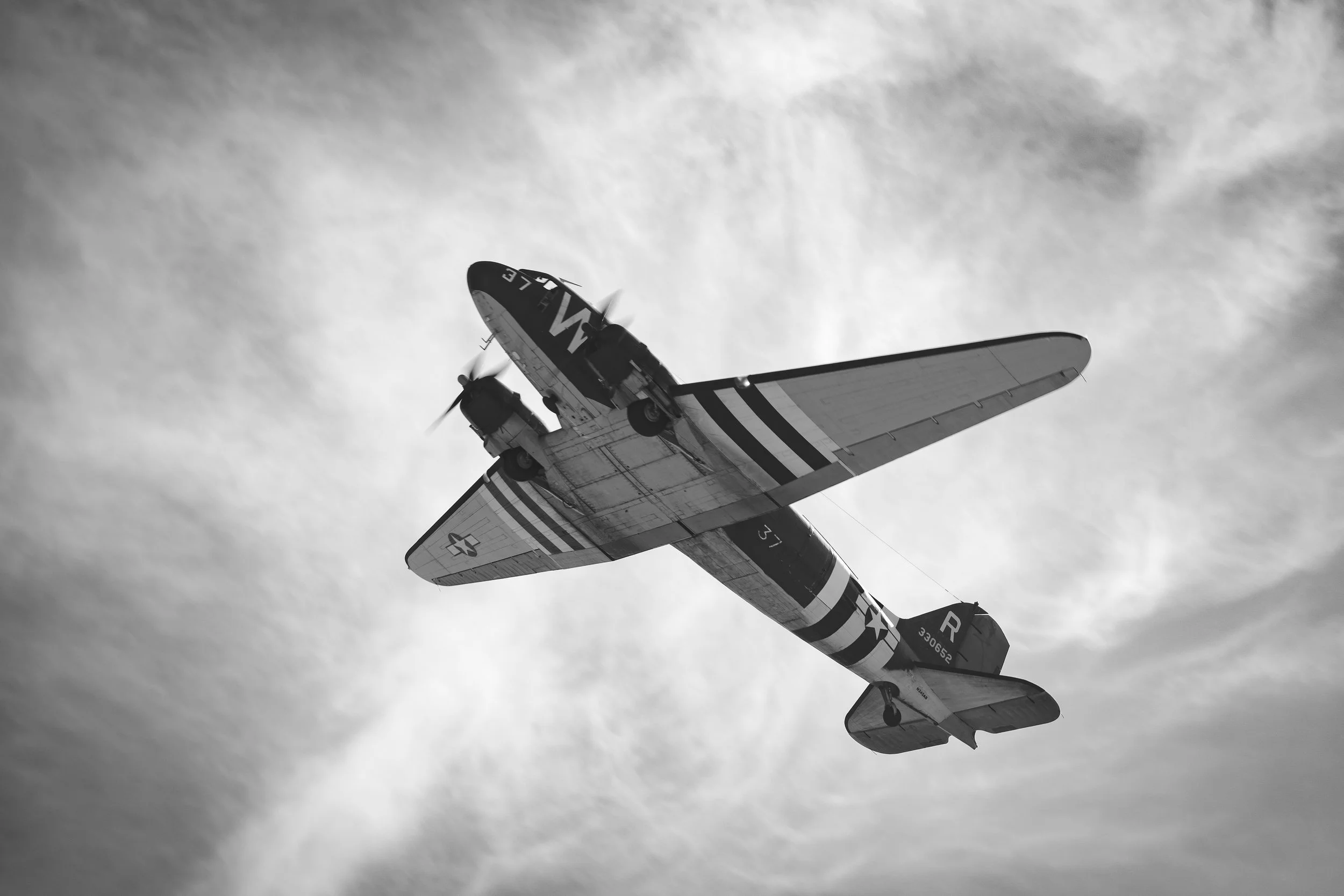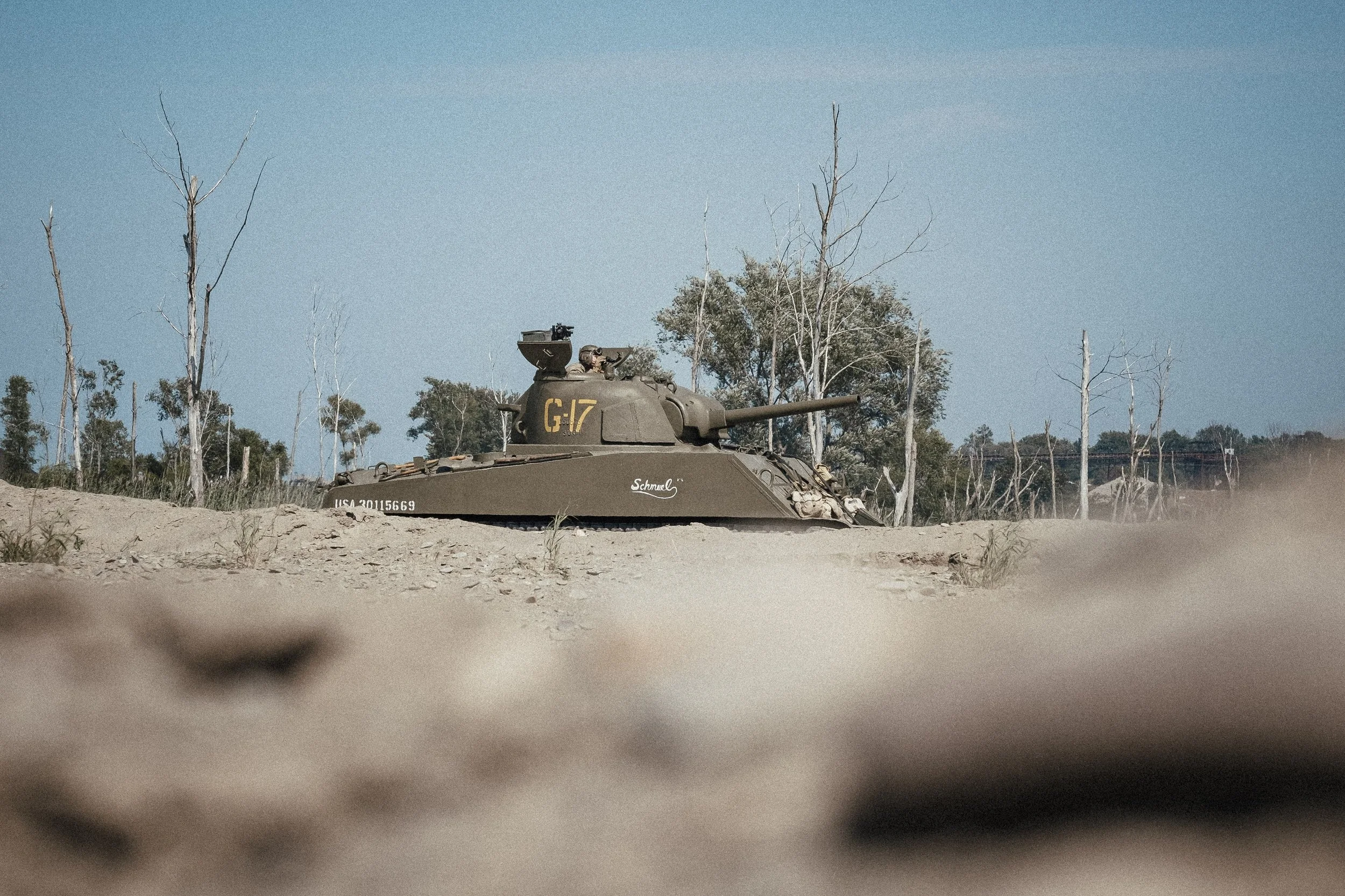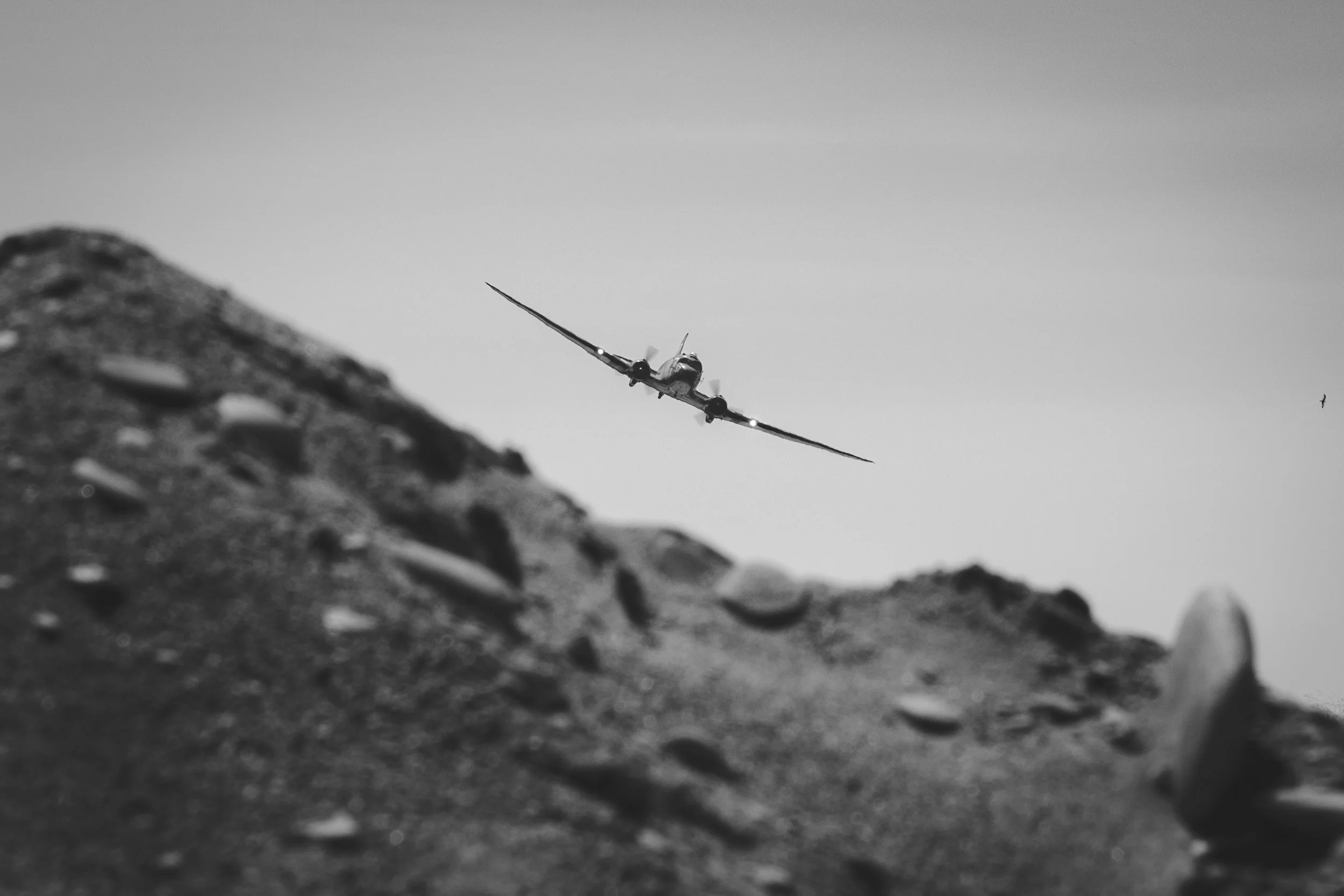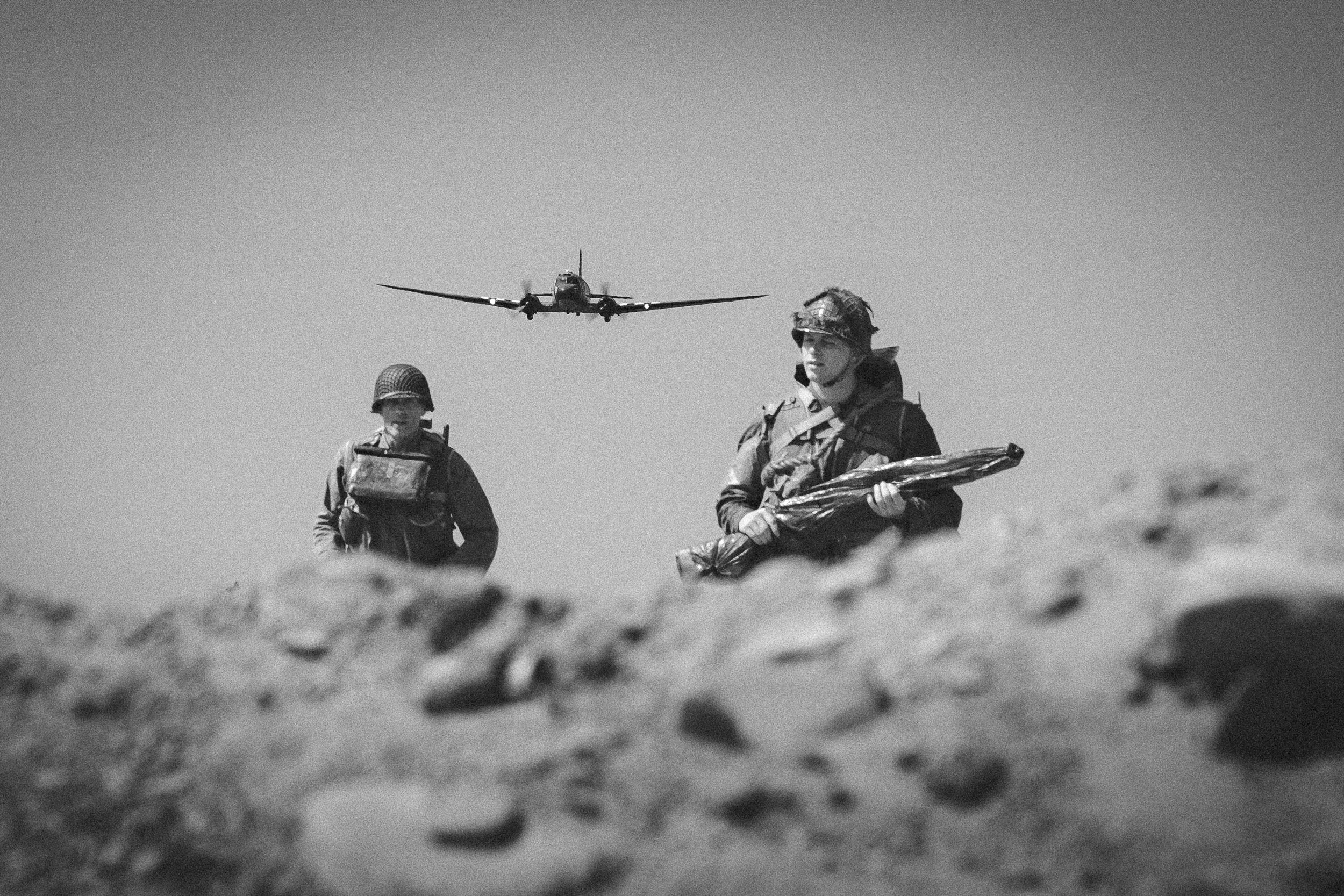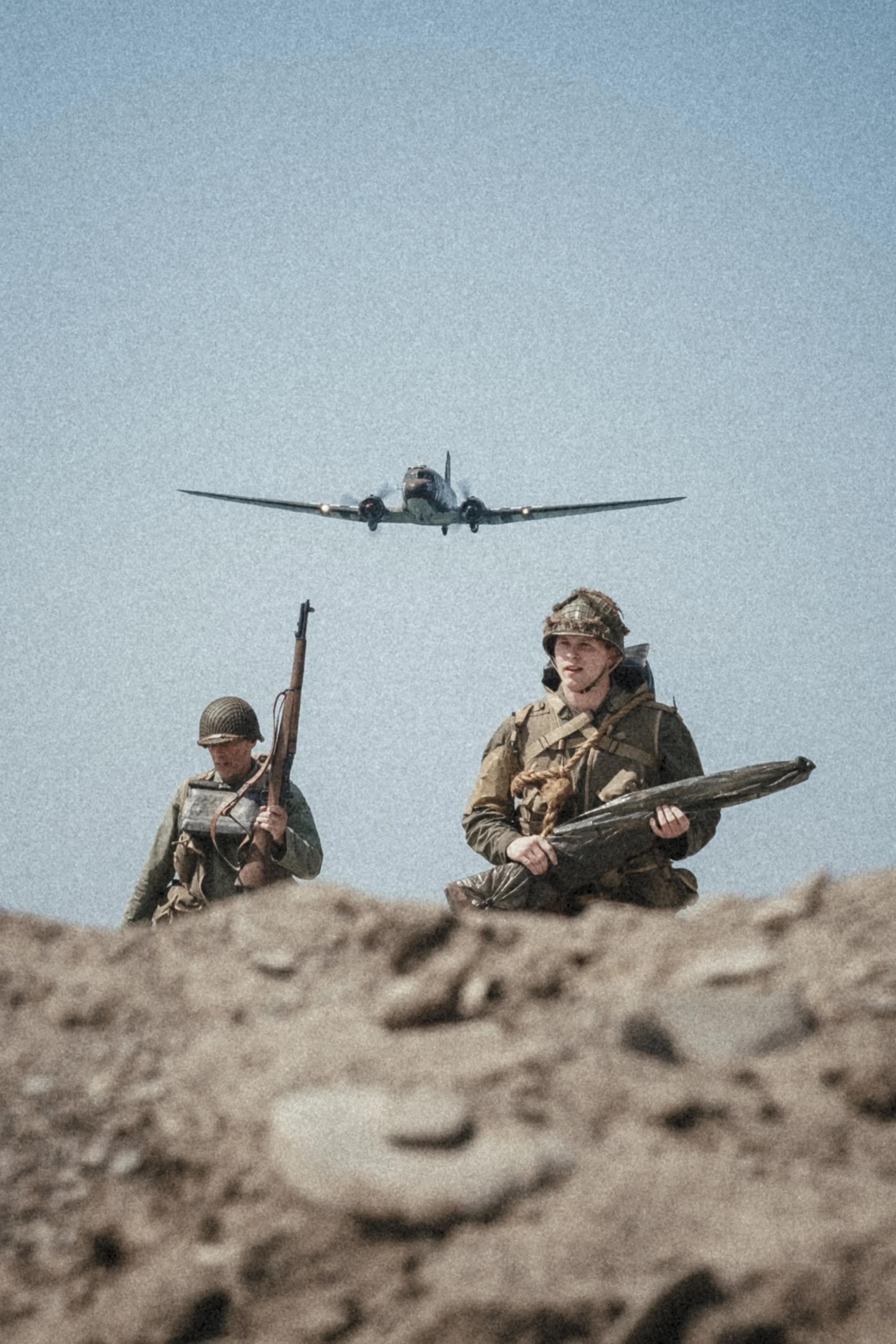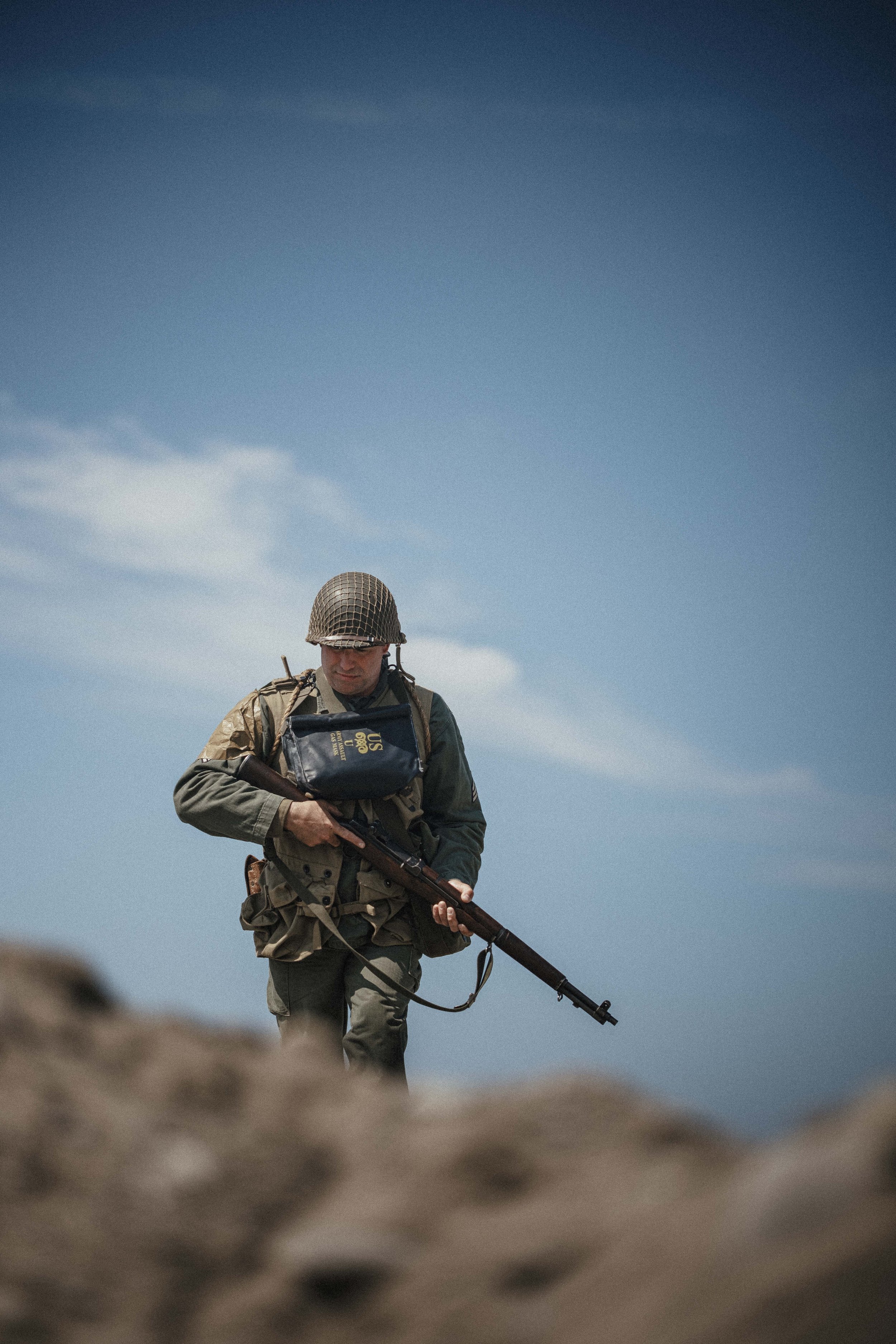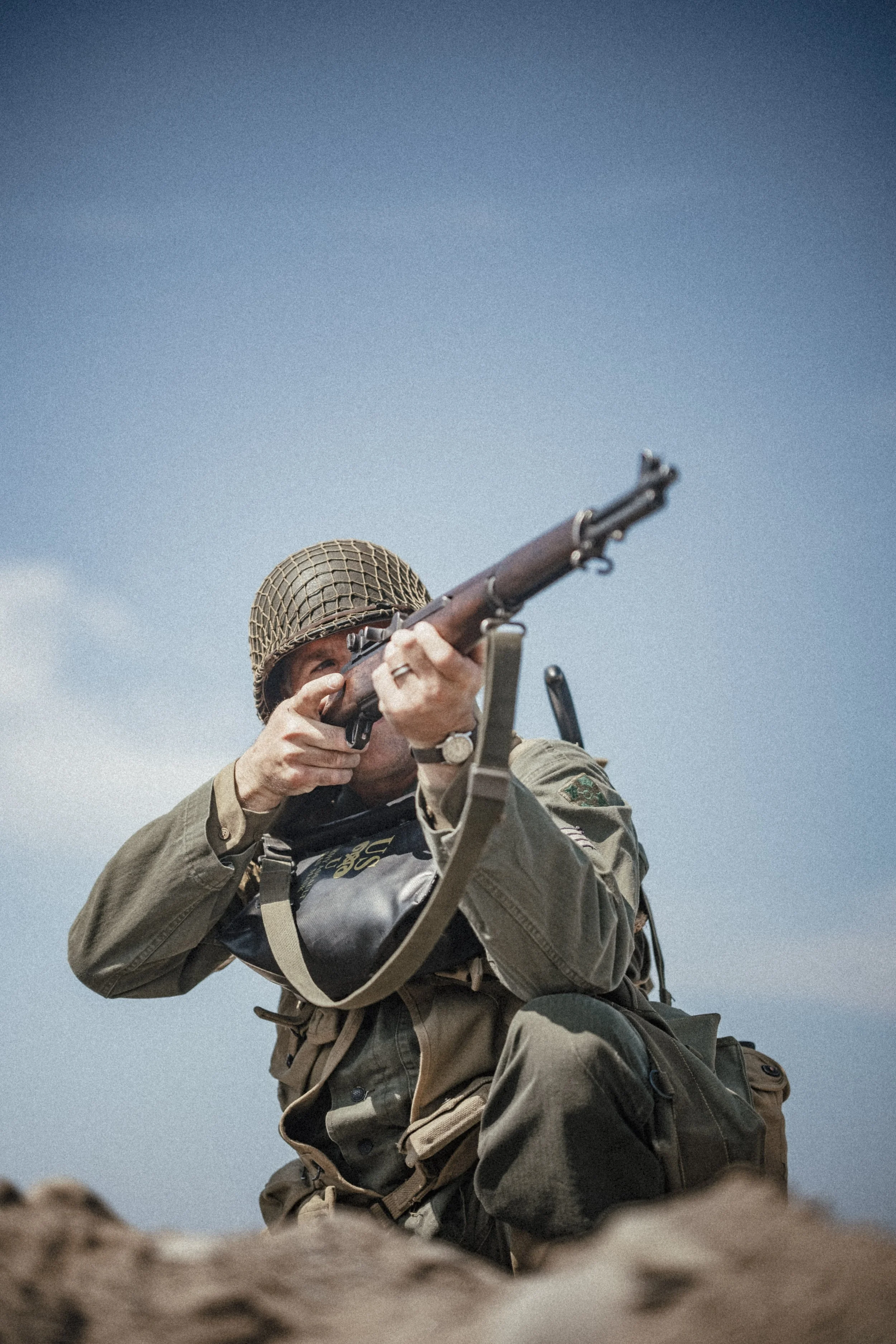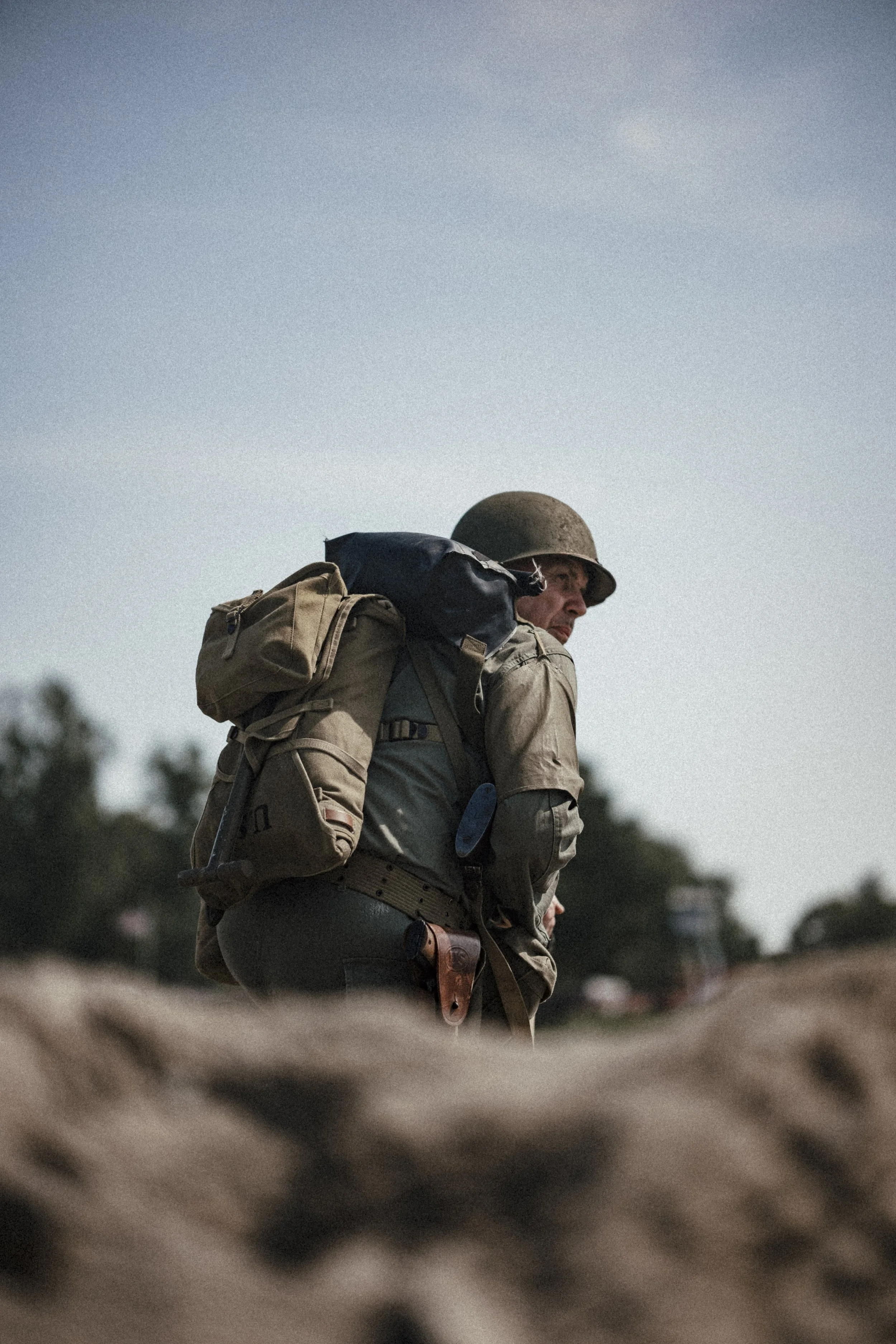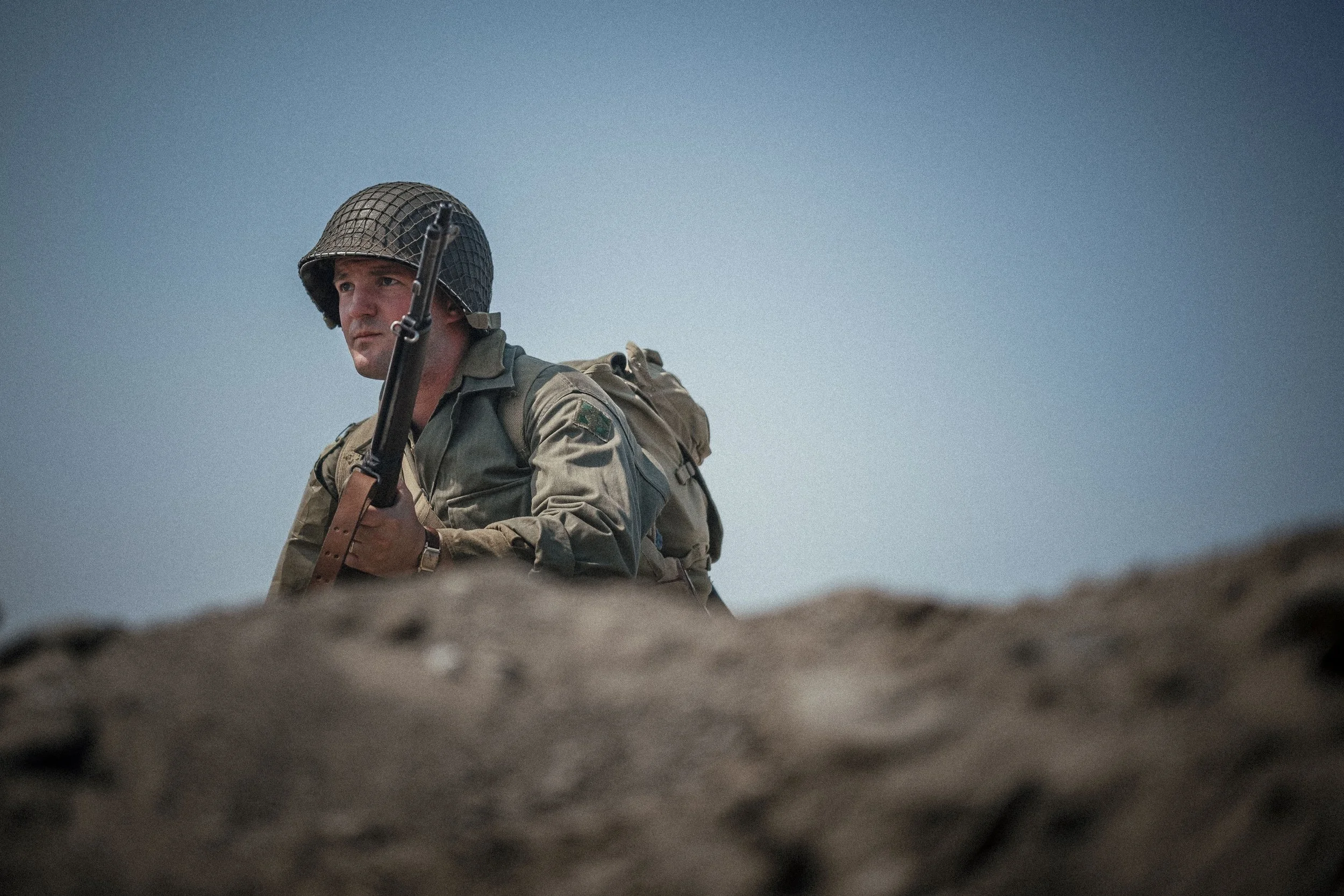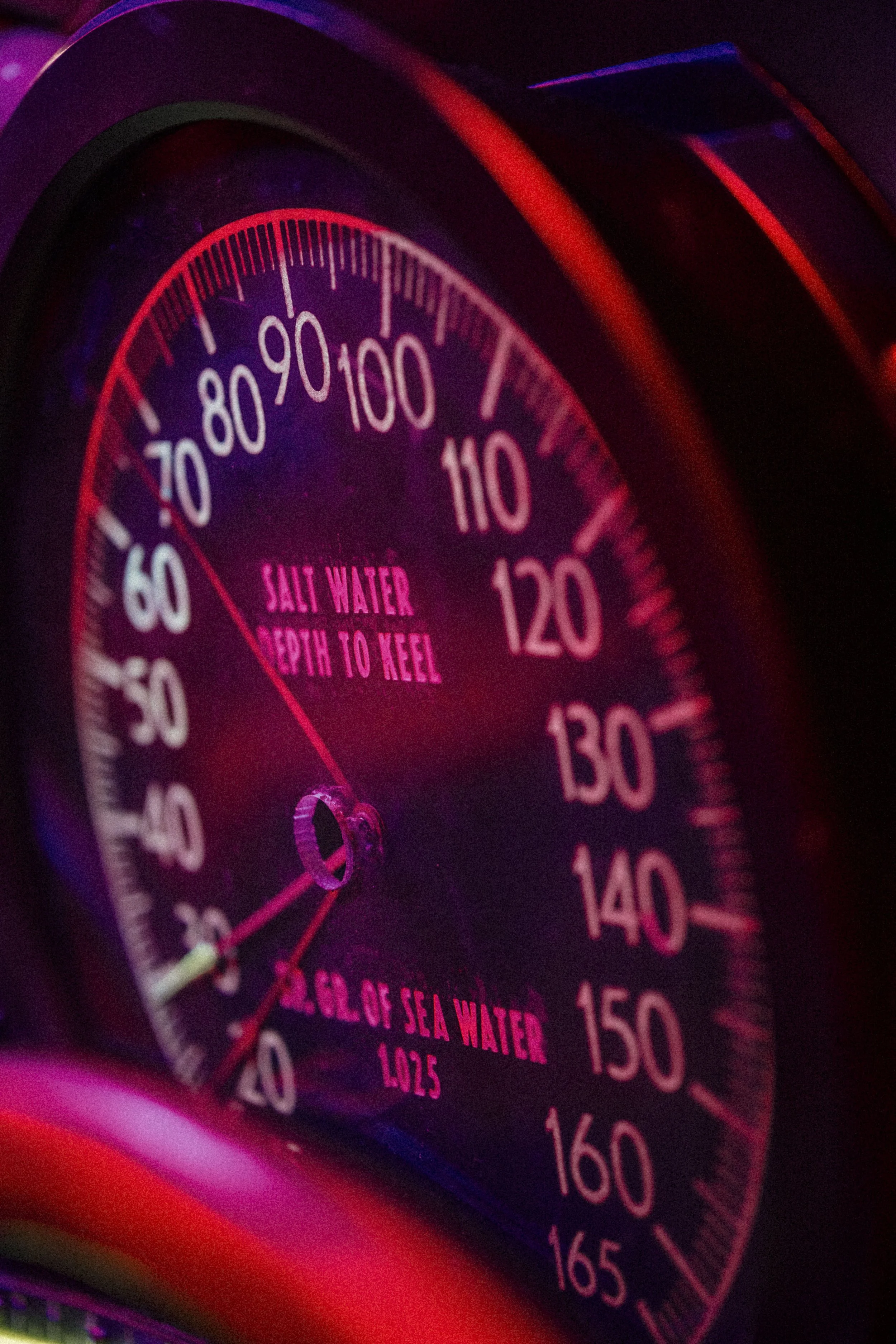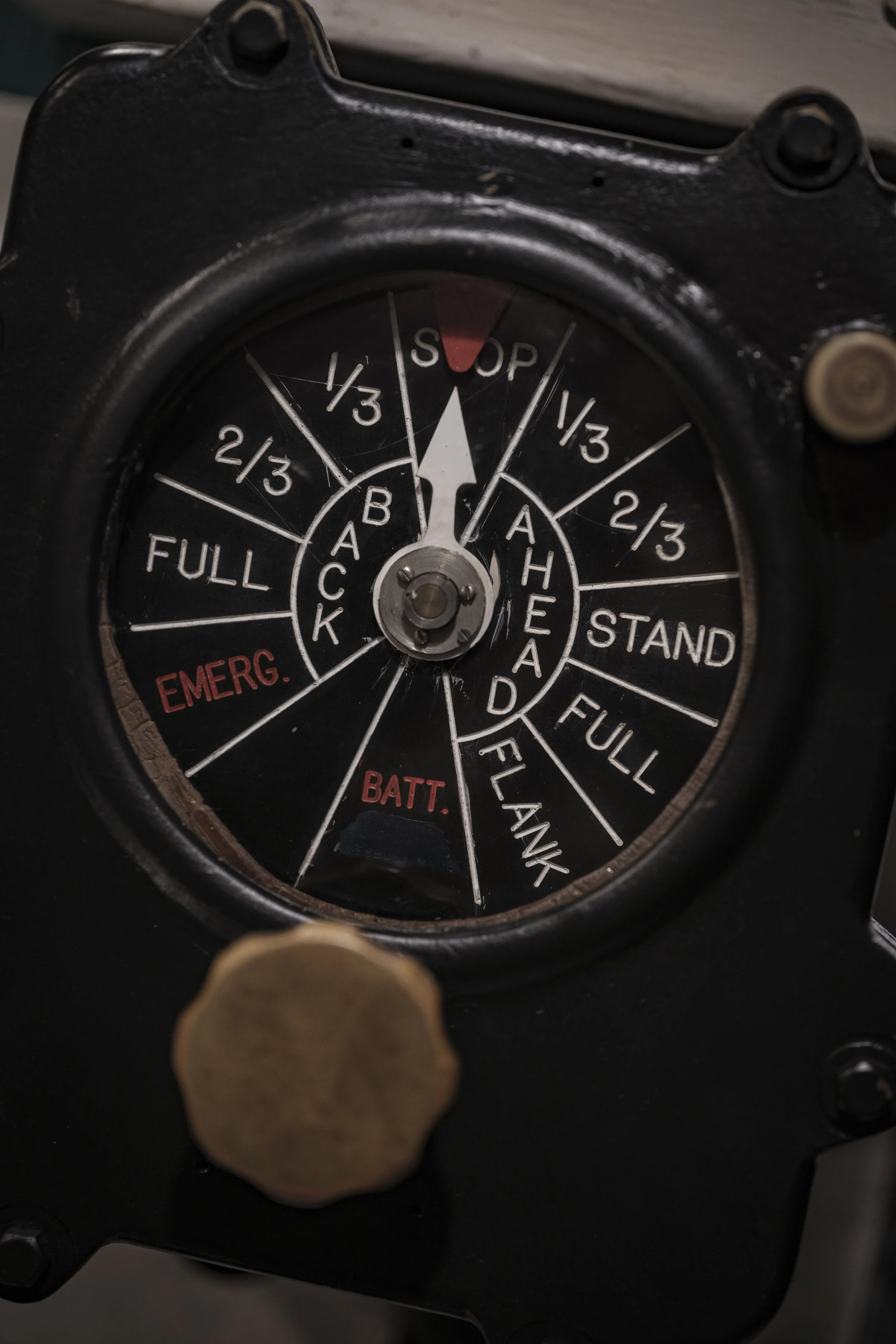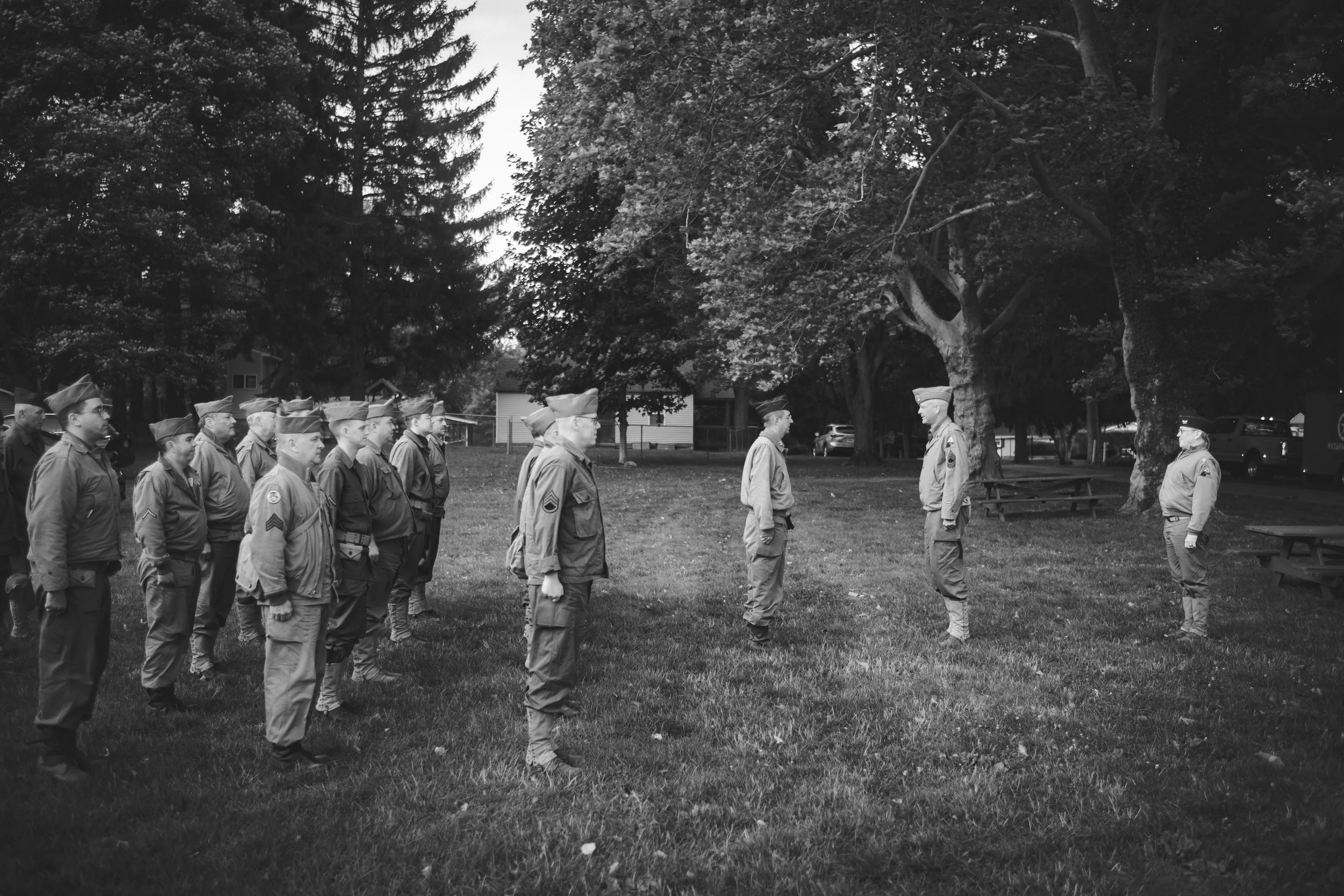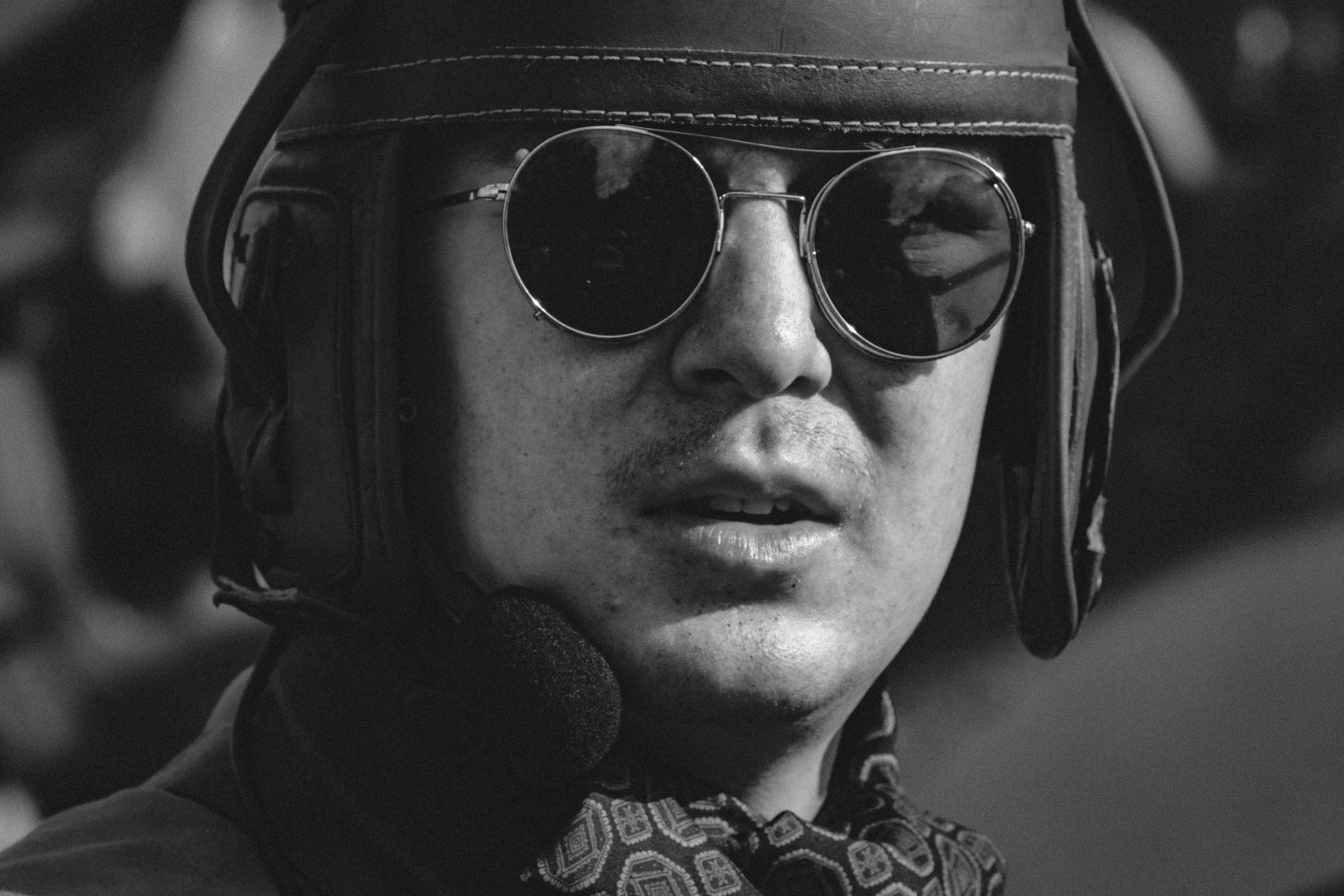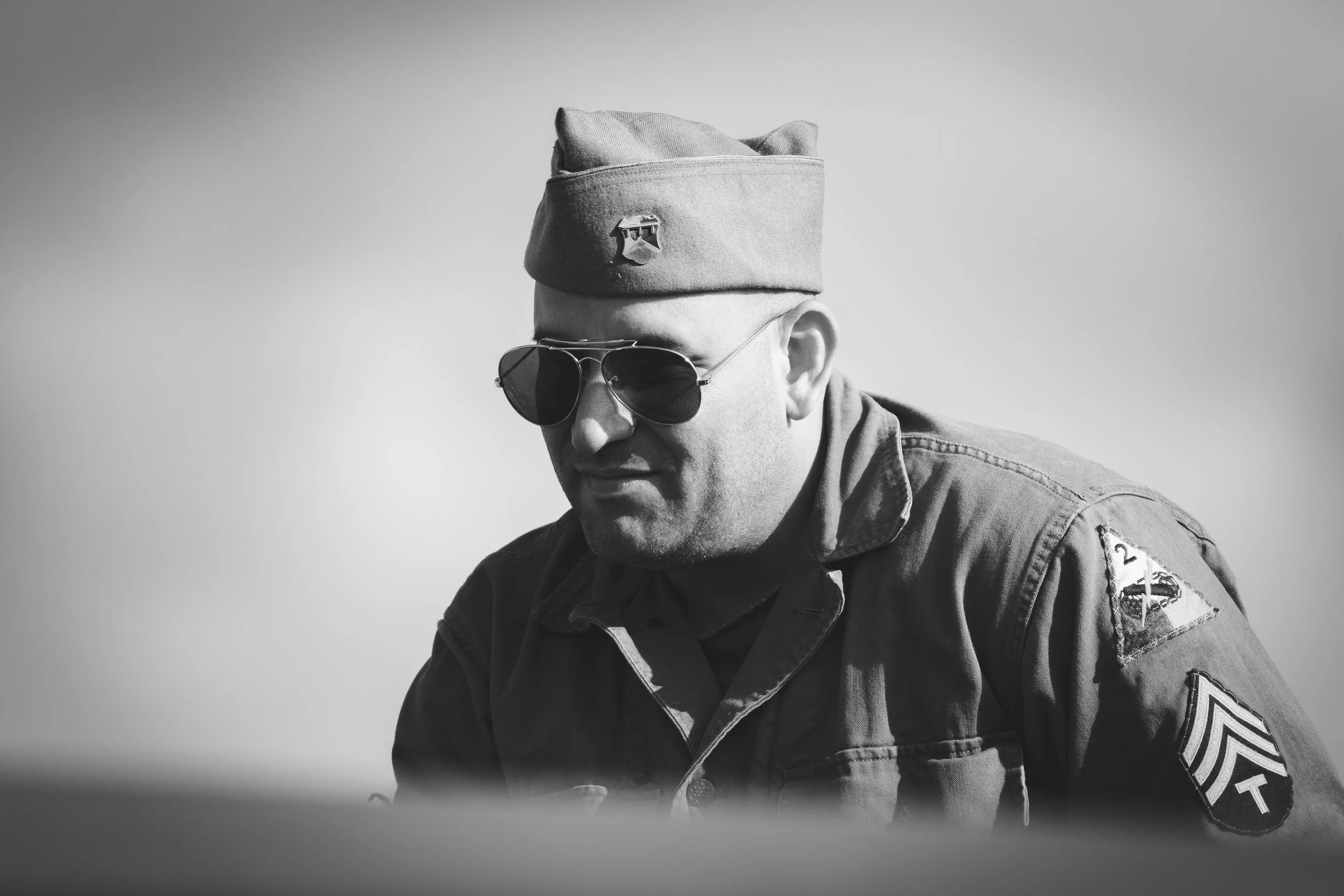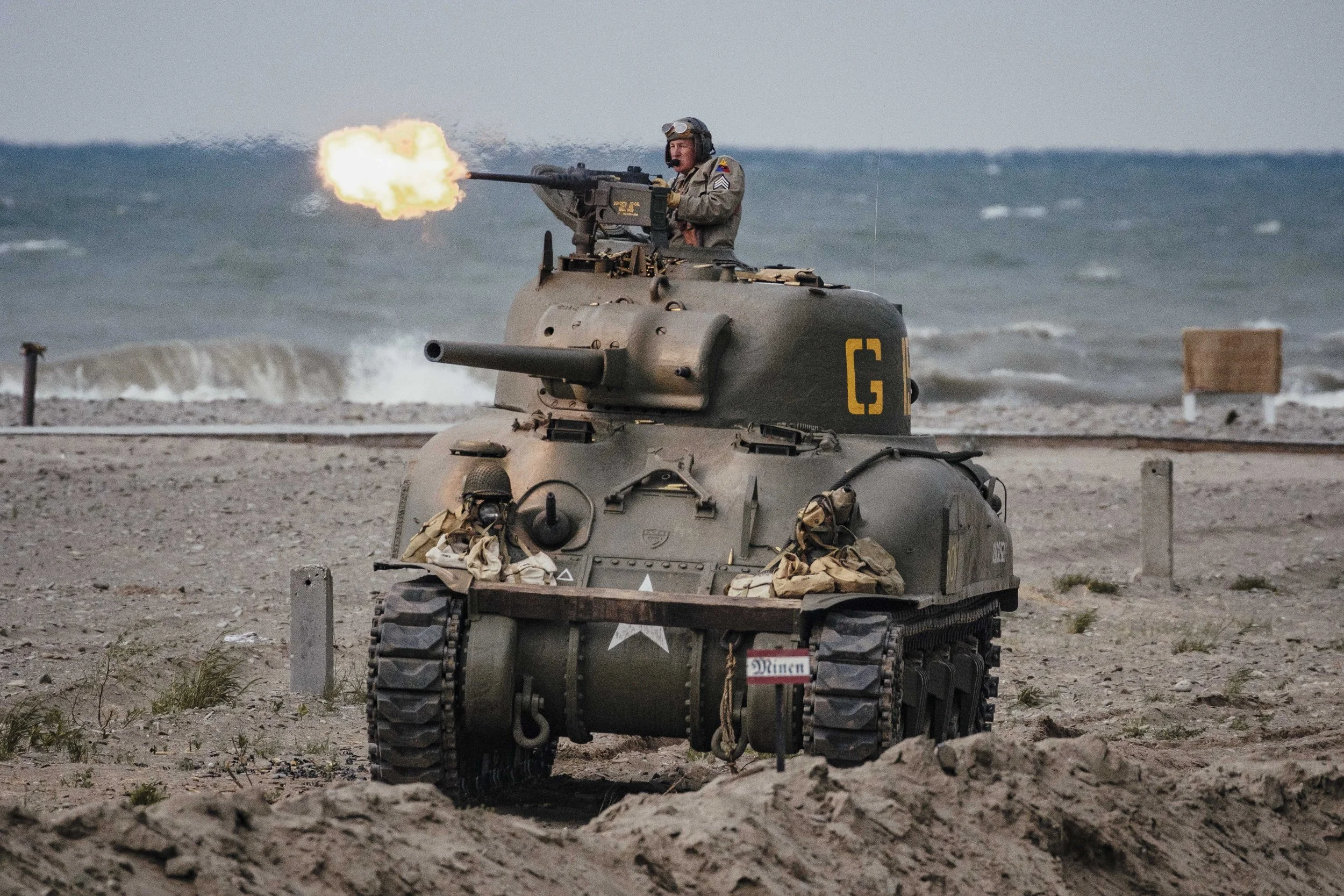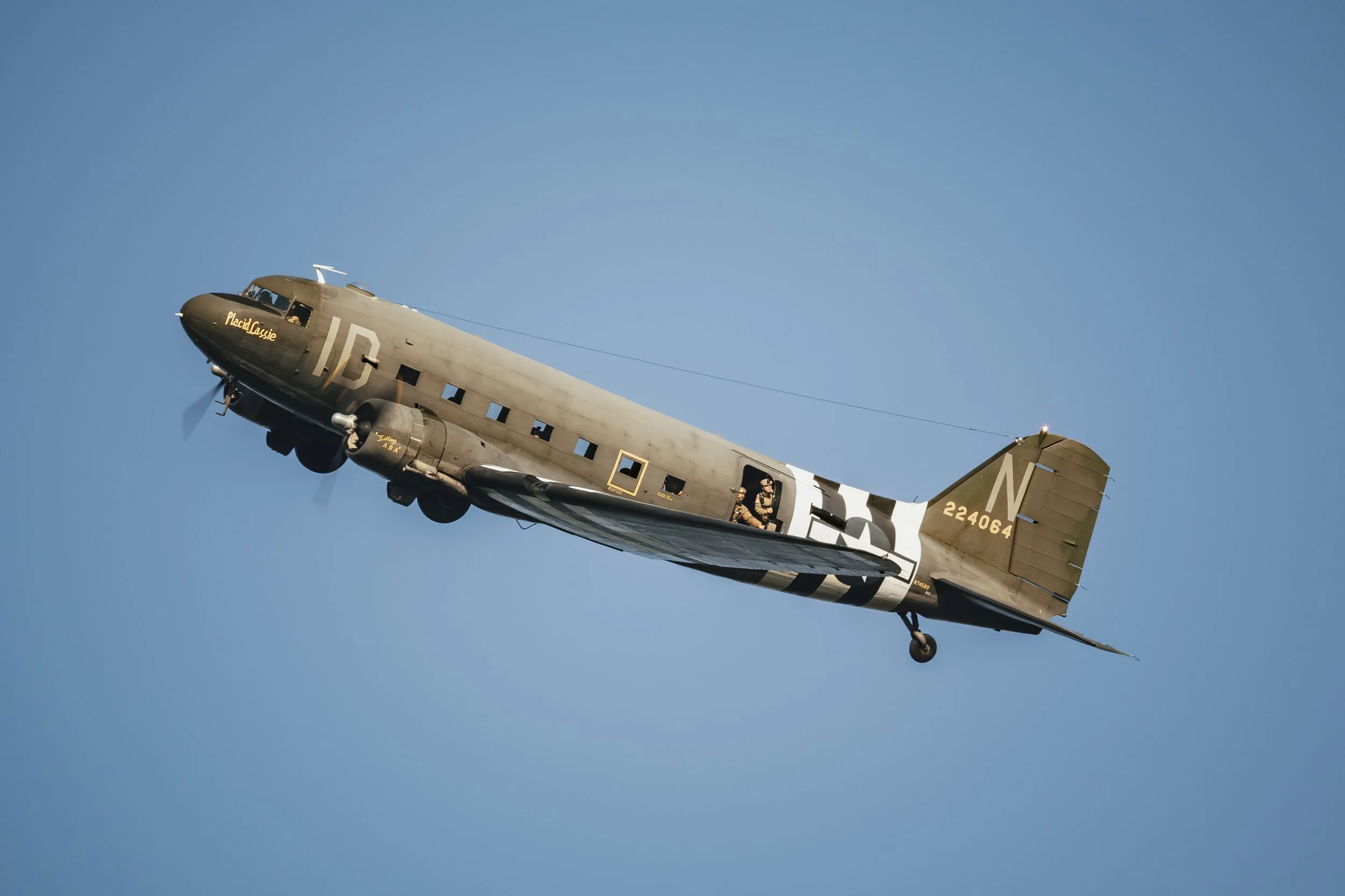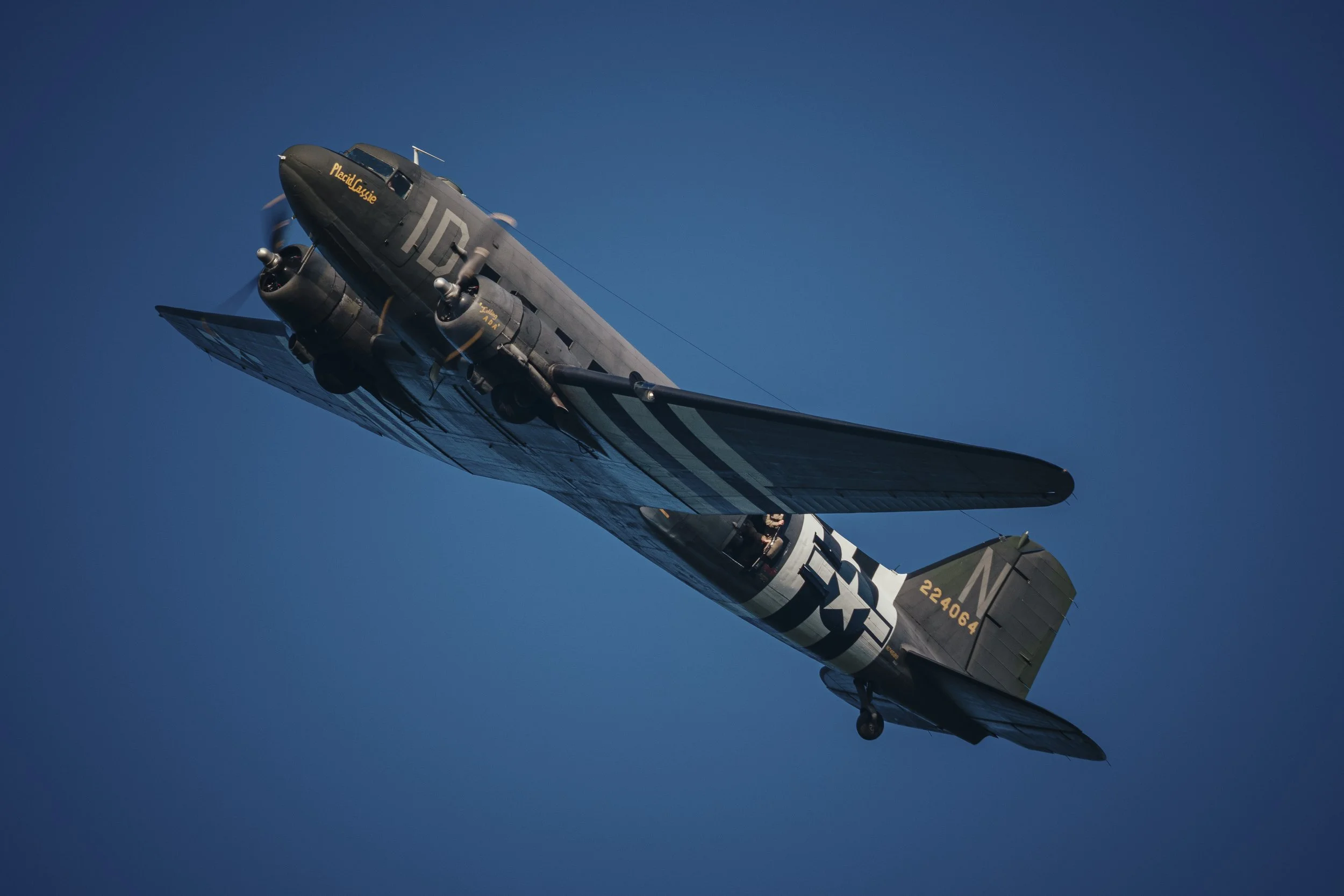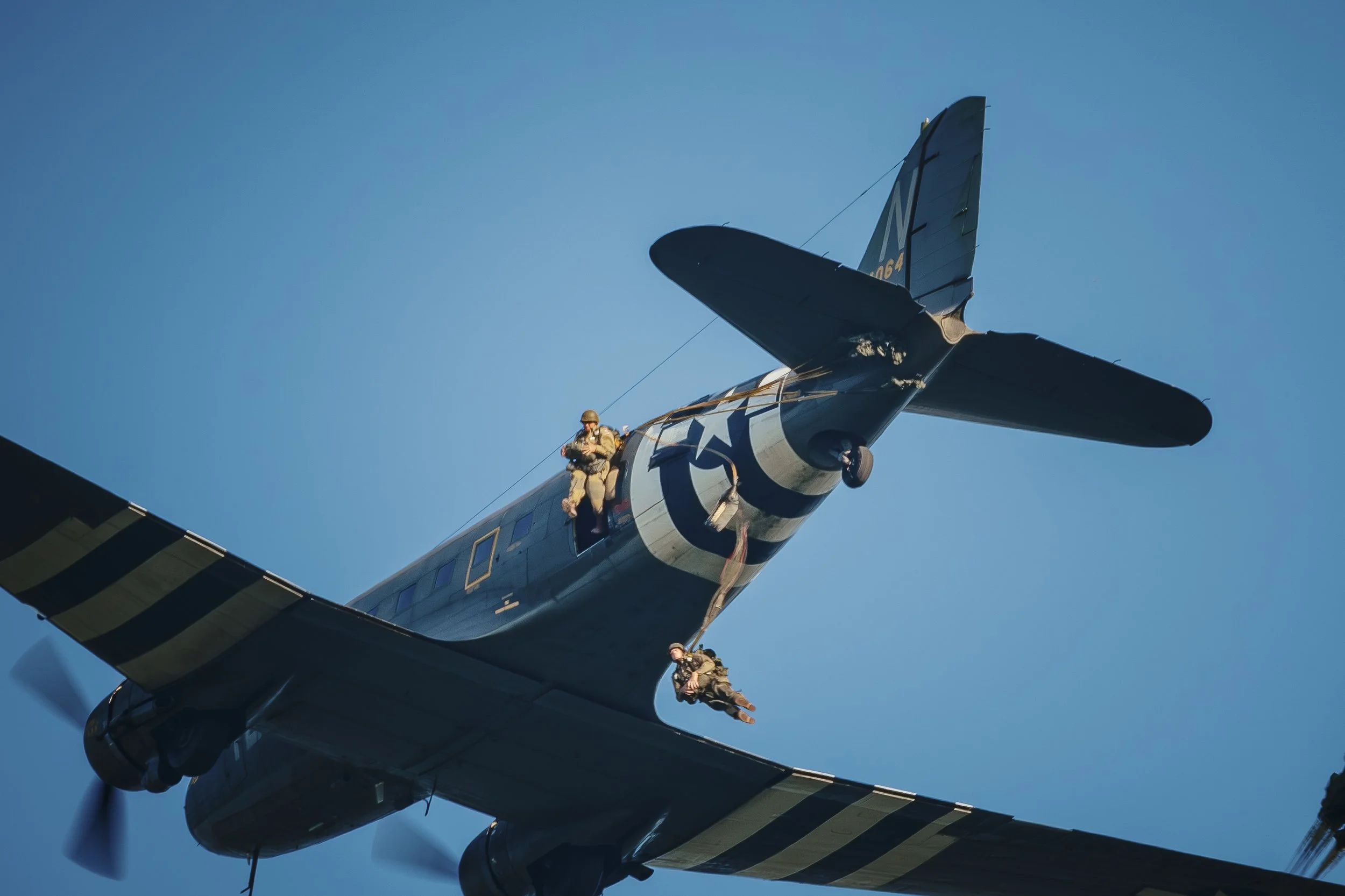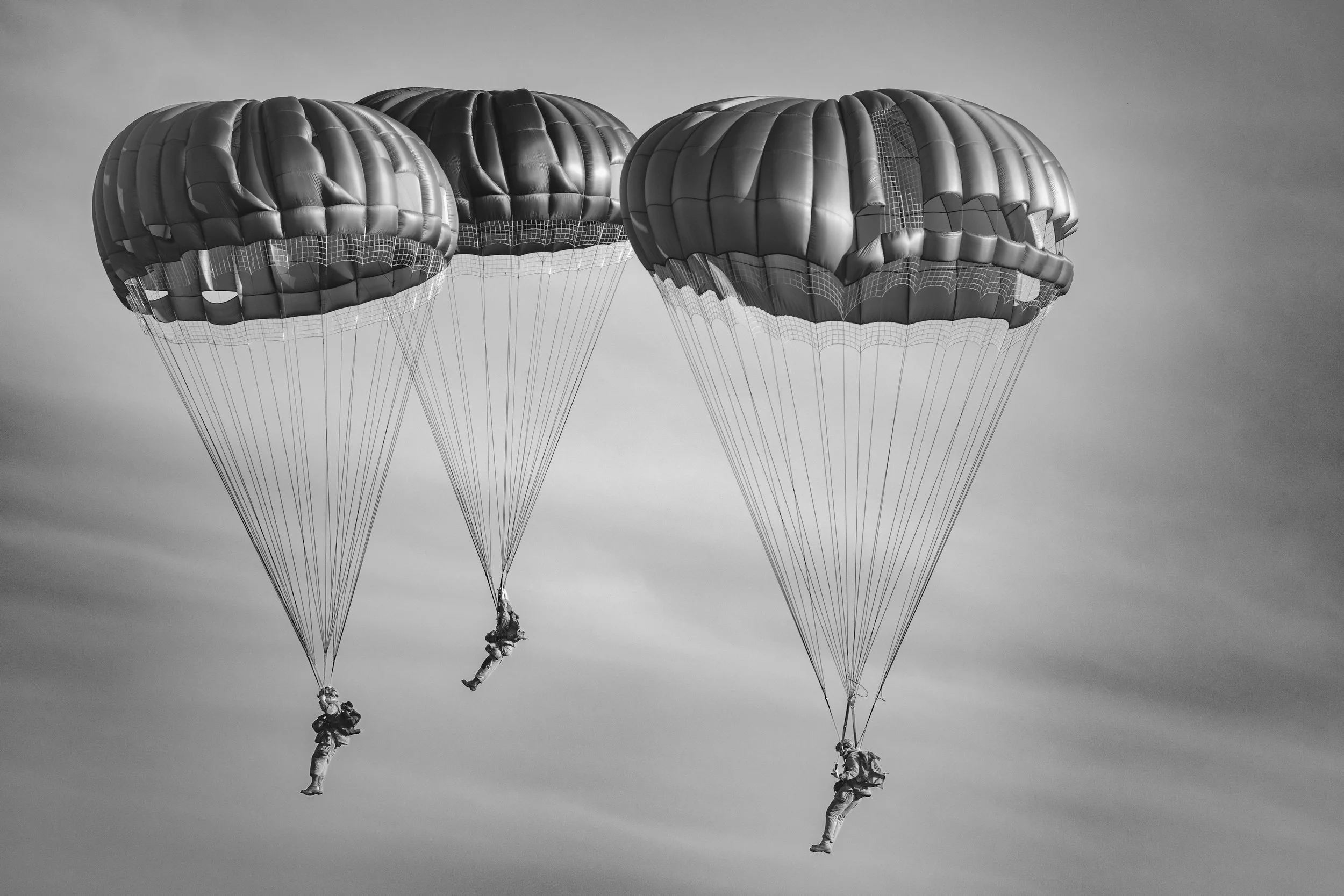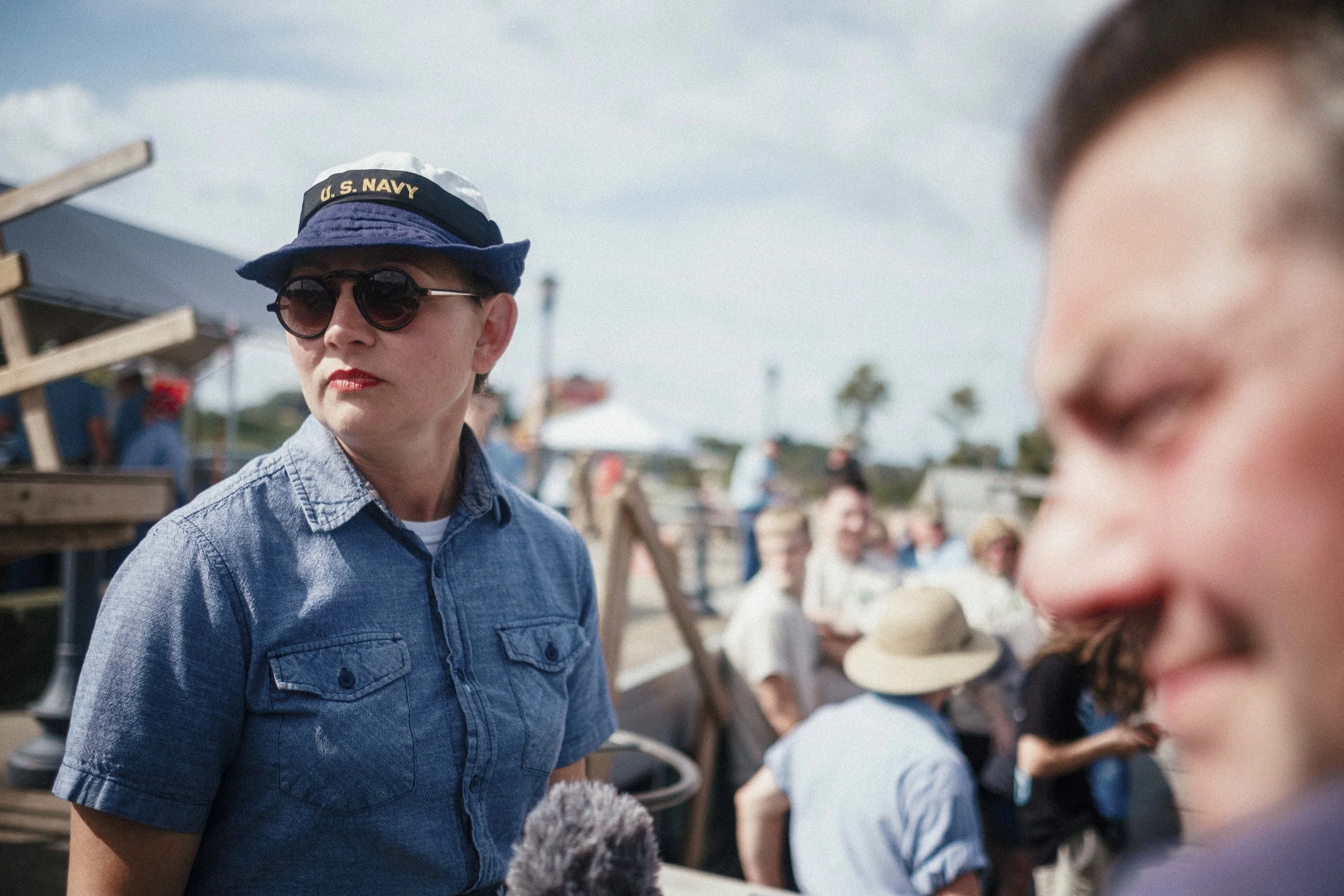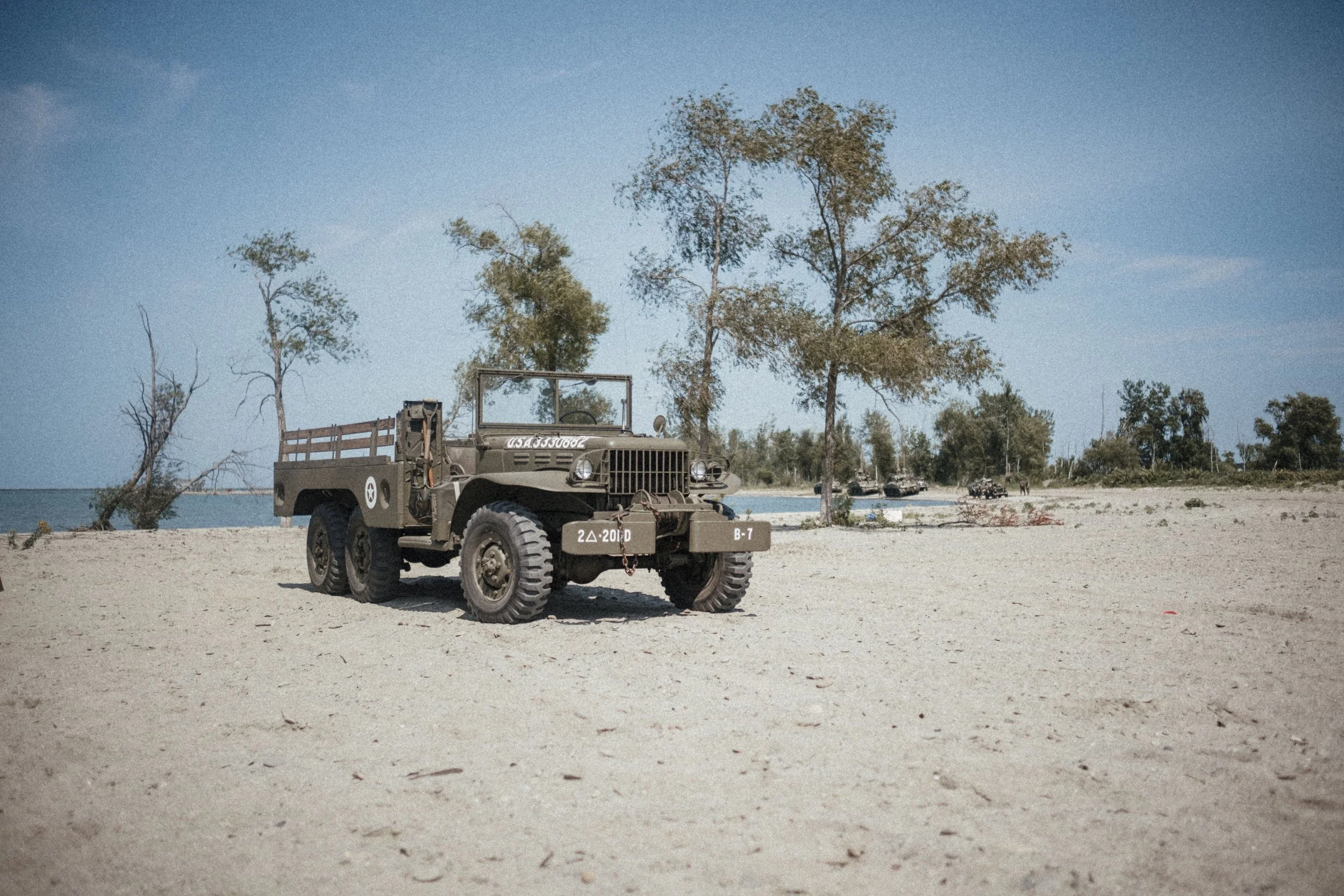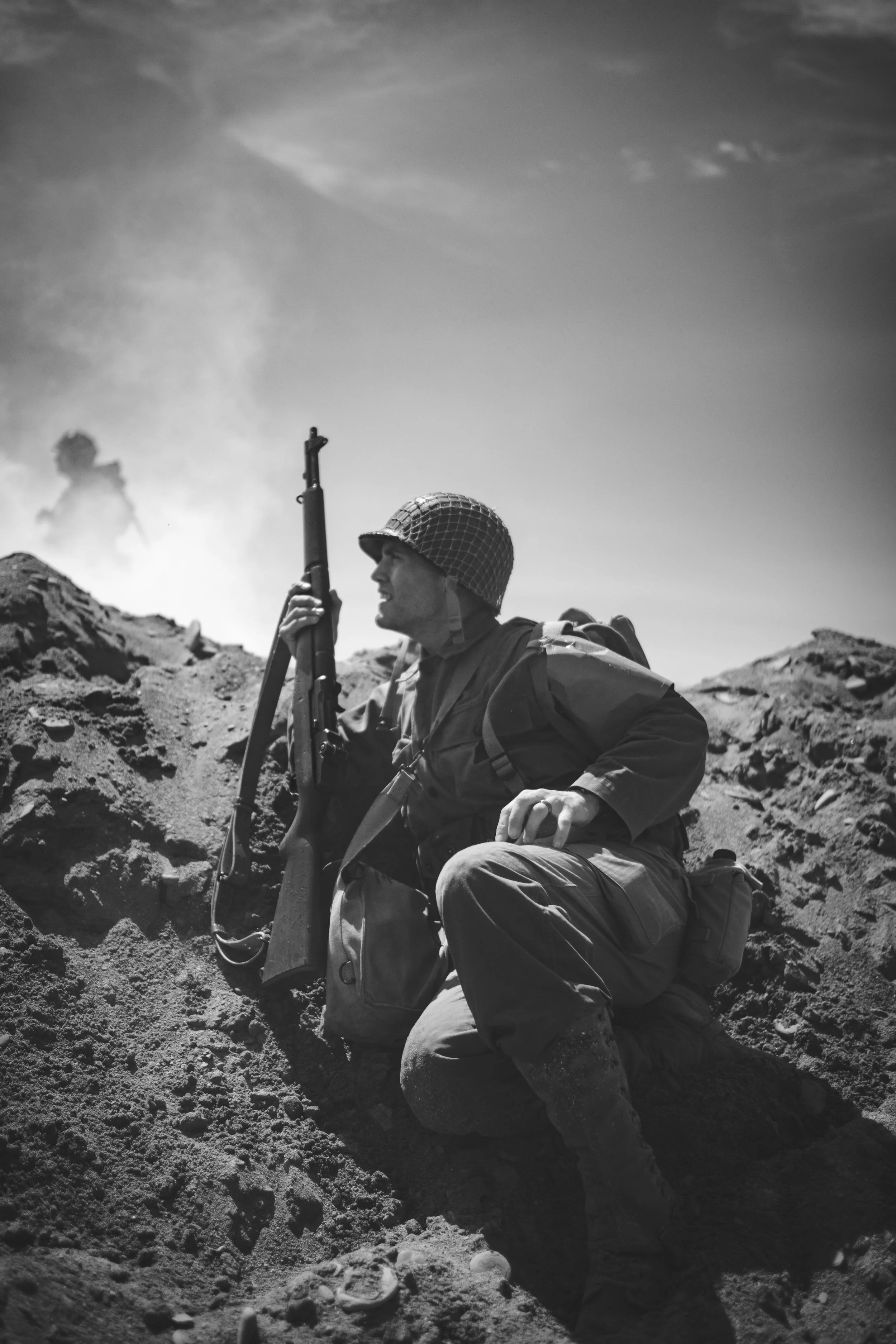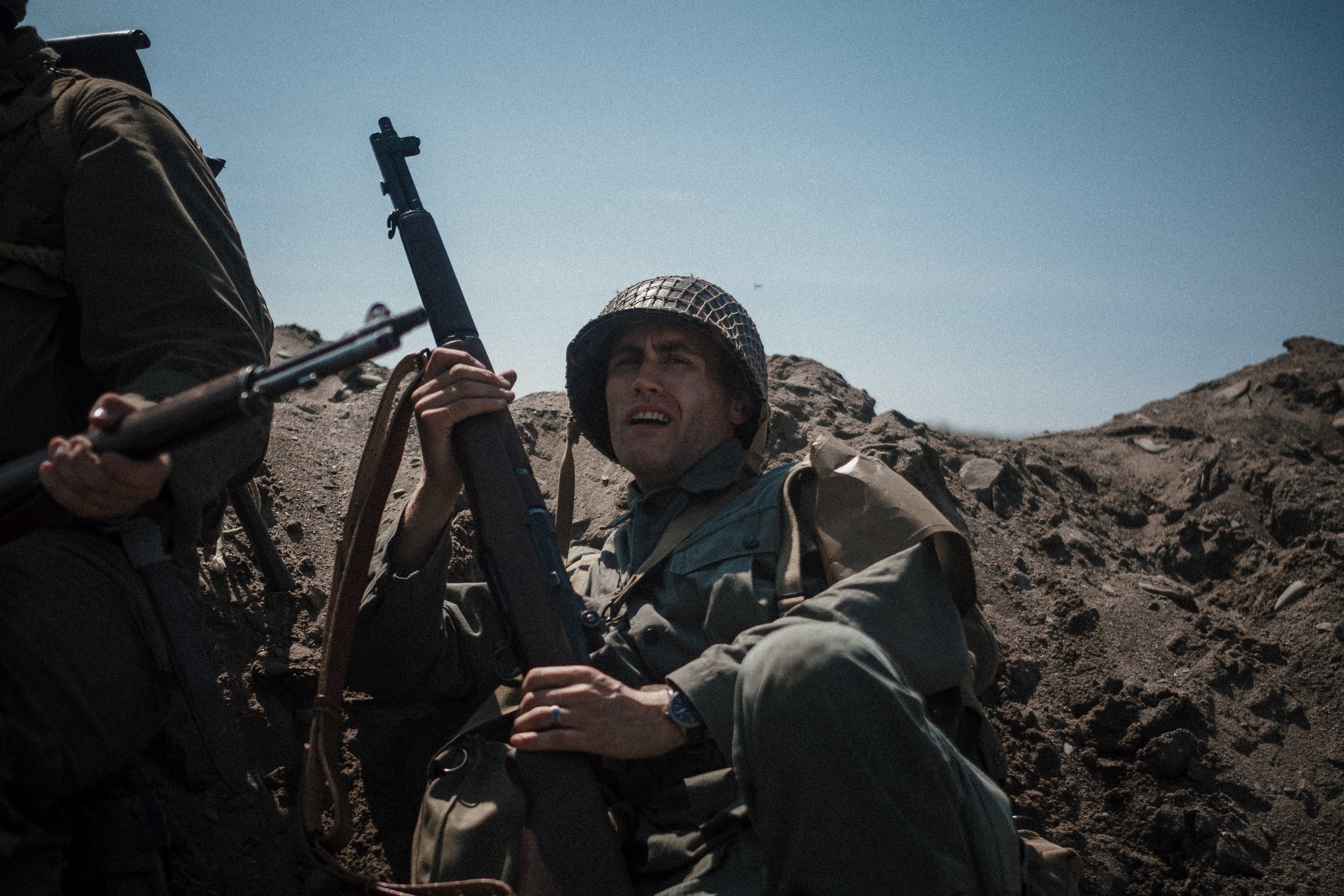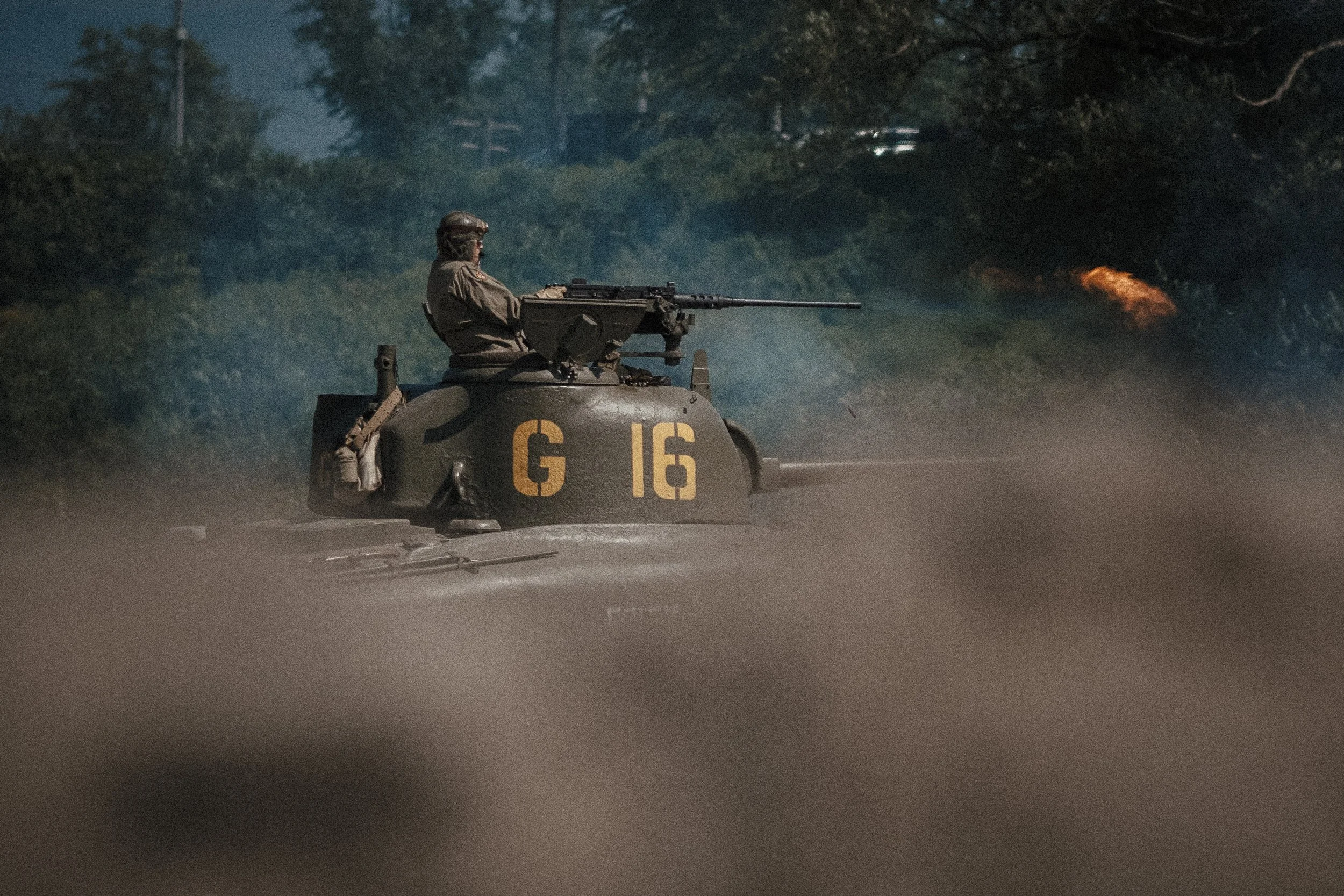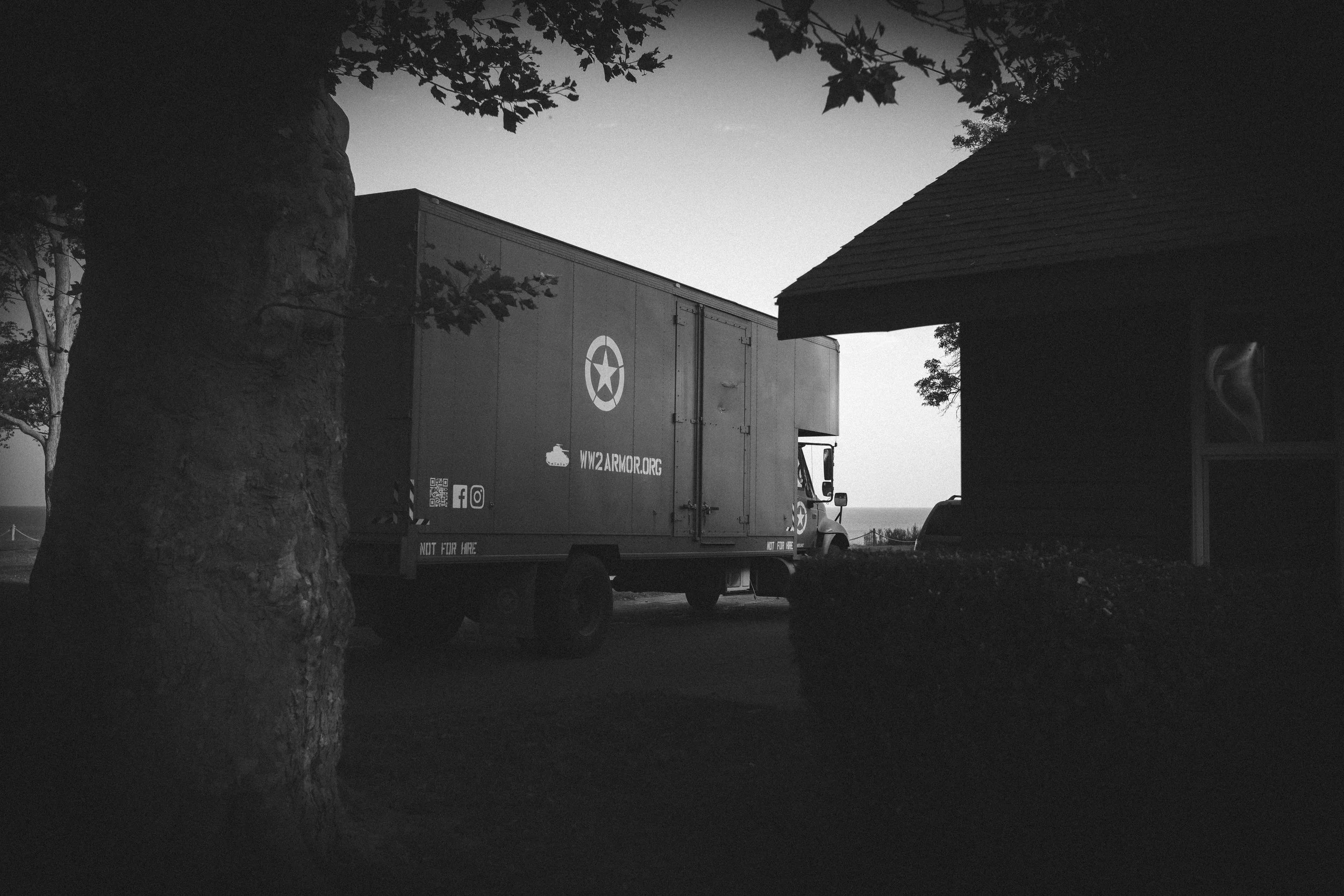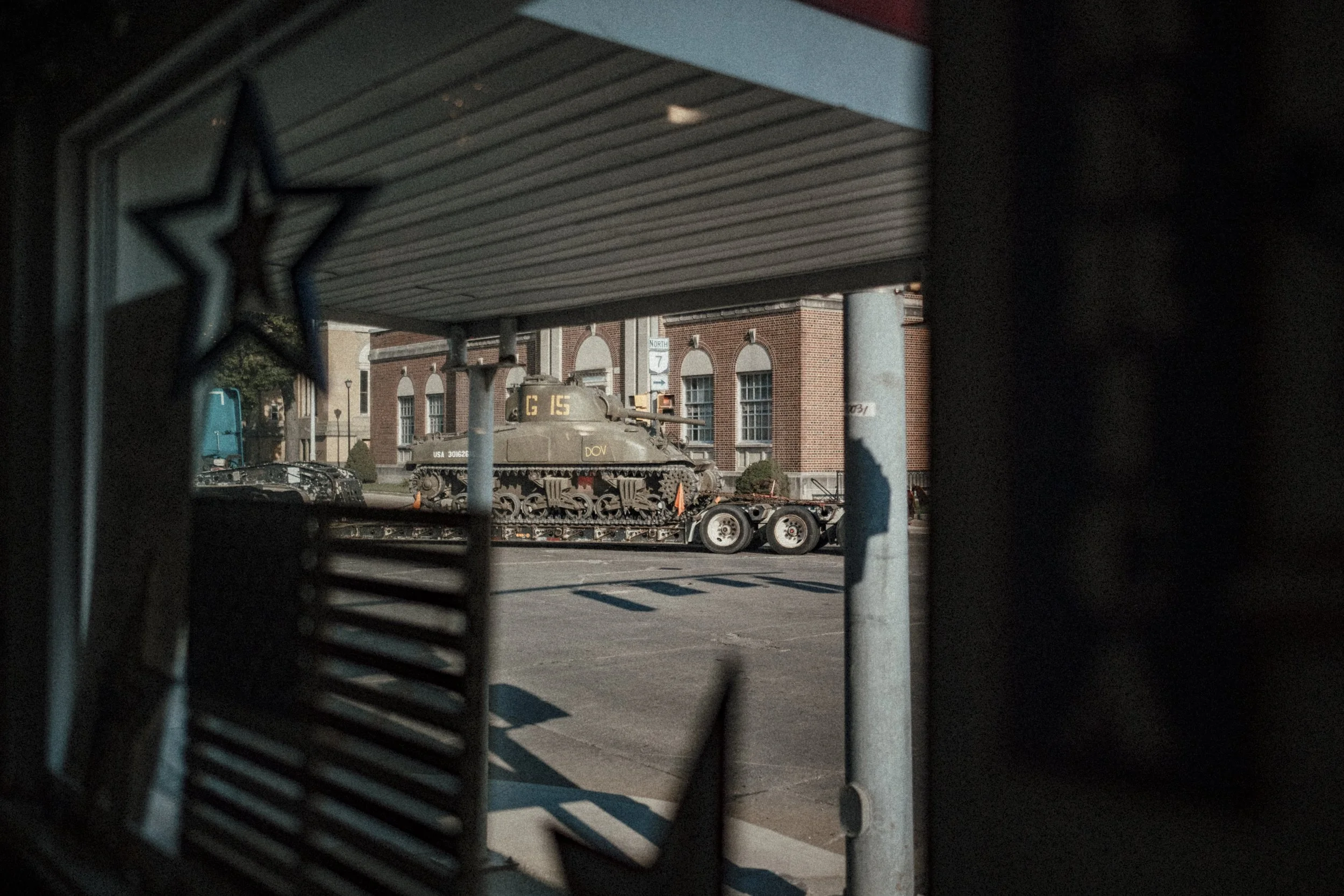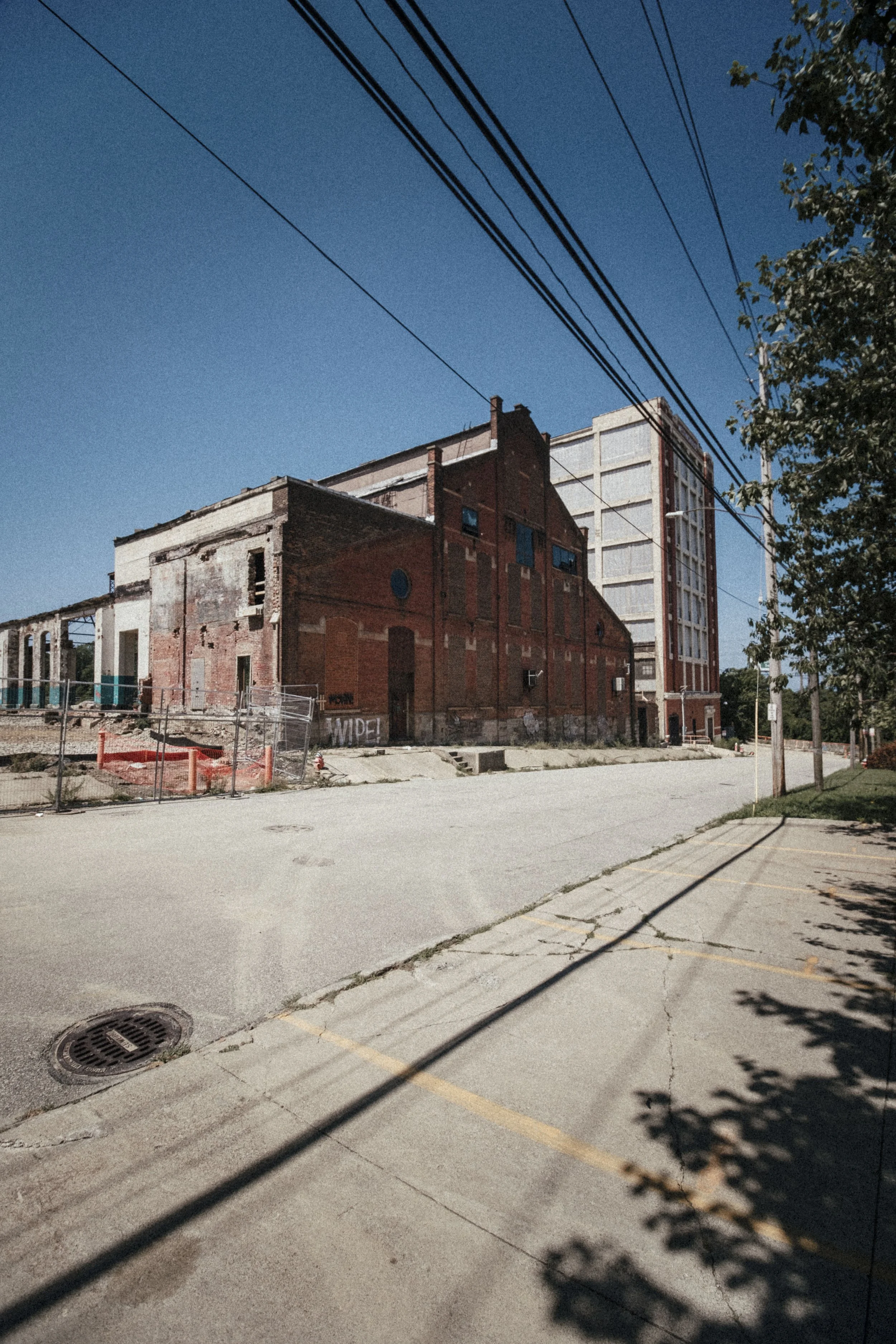
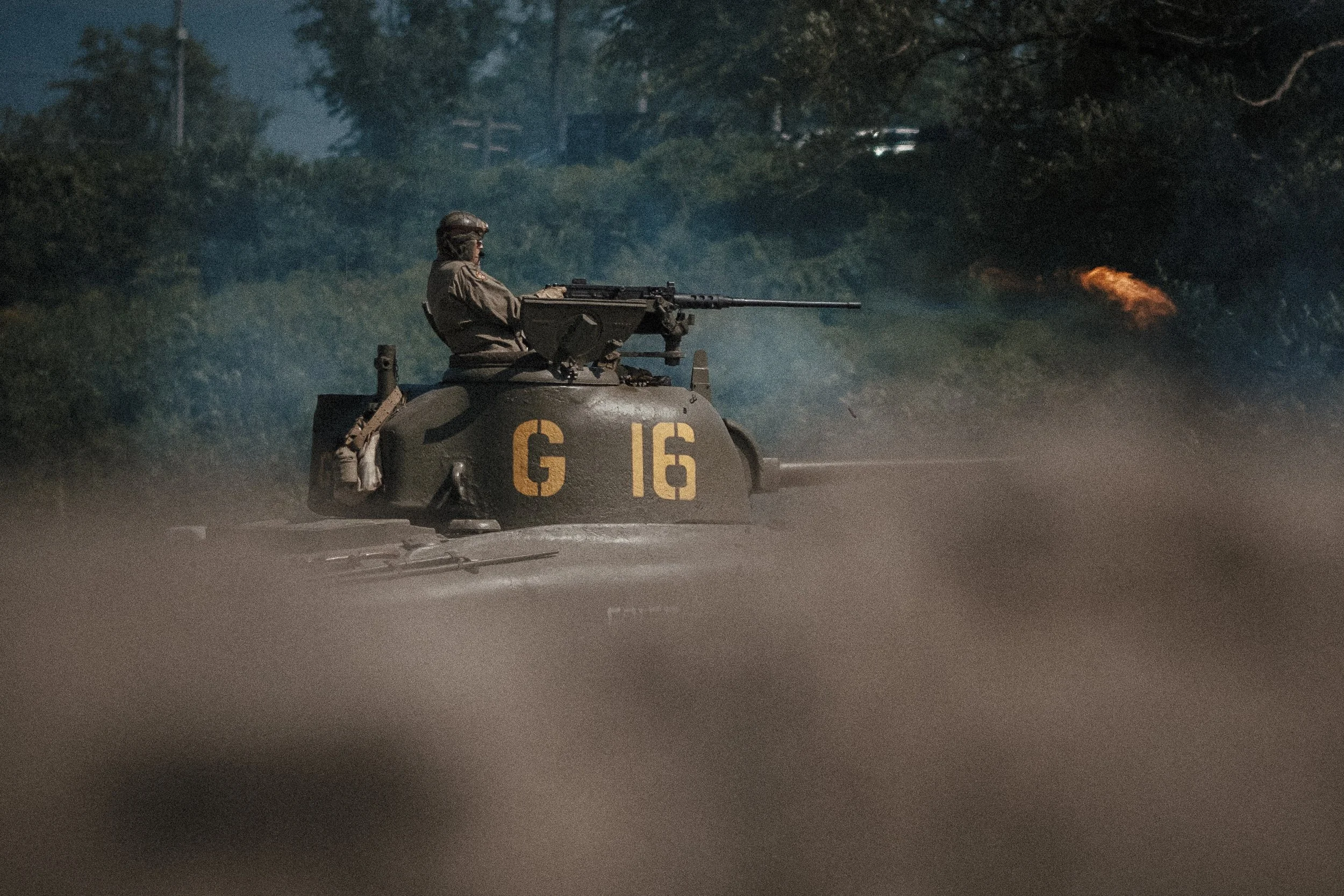
As the photographer for the WWII Armor living history group, D-Day Ohio always feels like stepping into a fragment of 1944. At dawn, I move between the vehicles; Shermans, halftracks, scout cars, capturing crewmen checking gear, adjusting helmets, and waking the machines that anchor the display. Engines rumble, radios crackle, and everything has that gritty, pre-mission energy that makes even my photography feel like period Signal Corps frames.
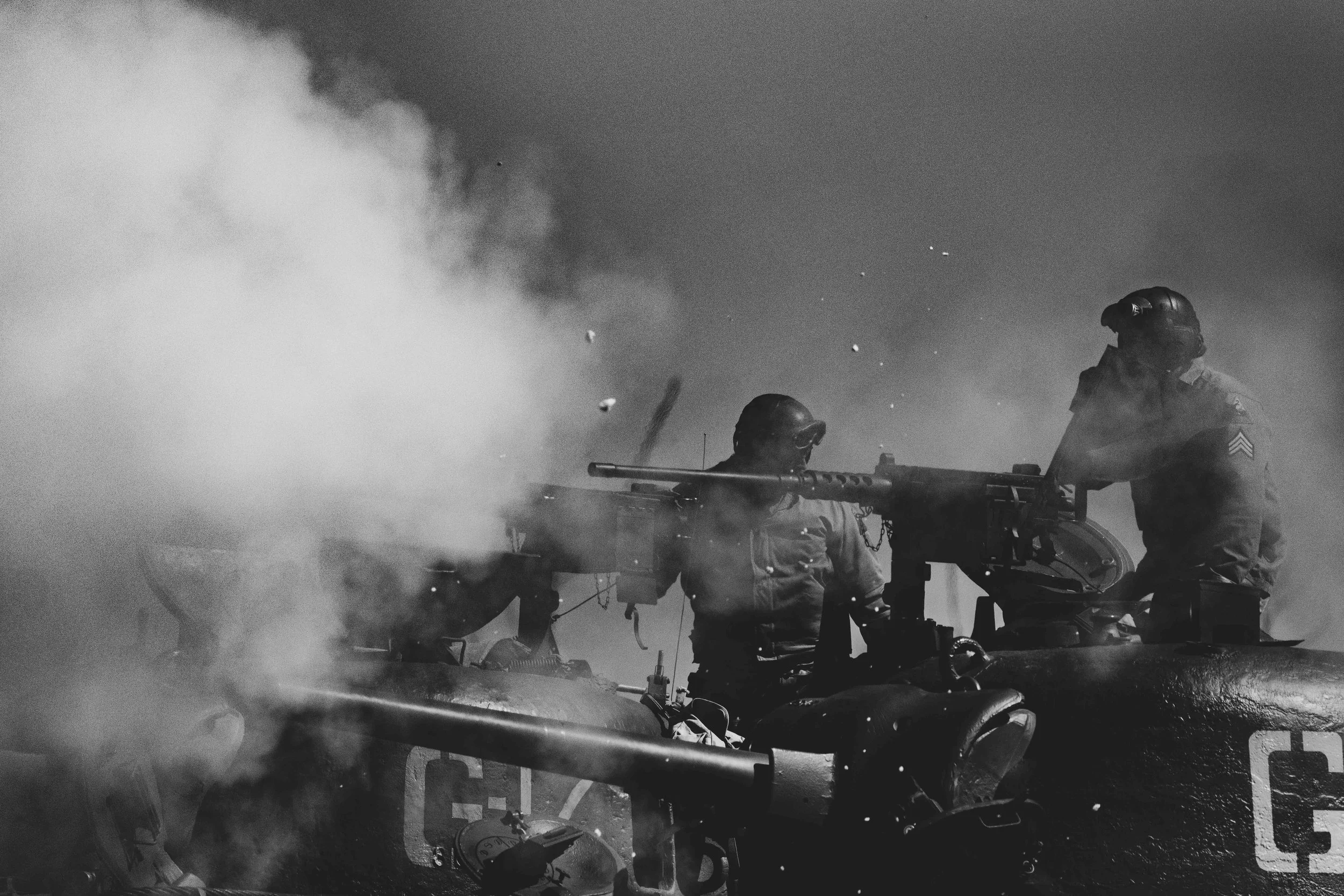
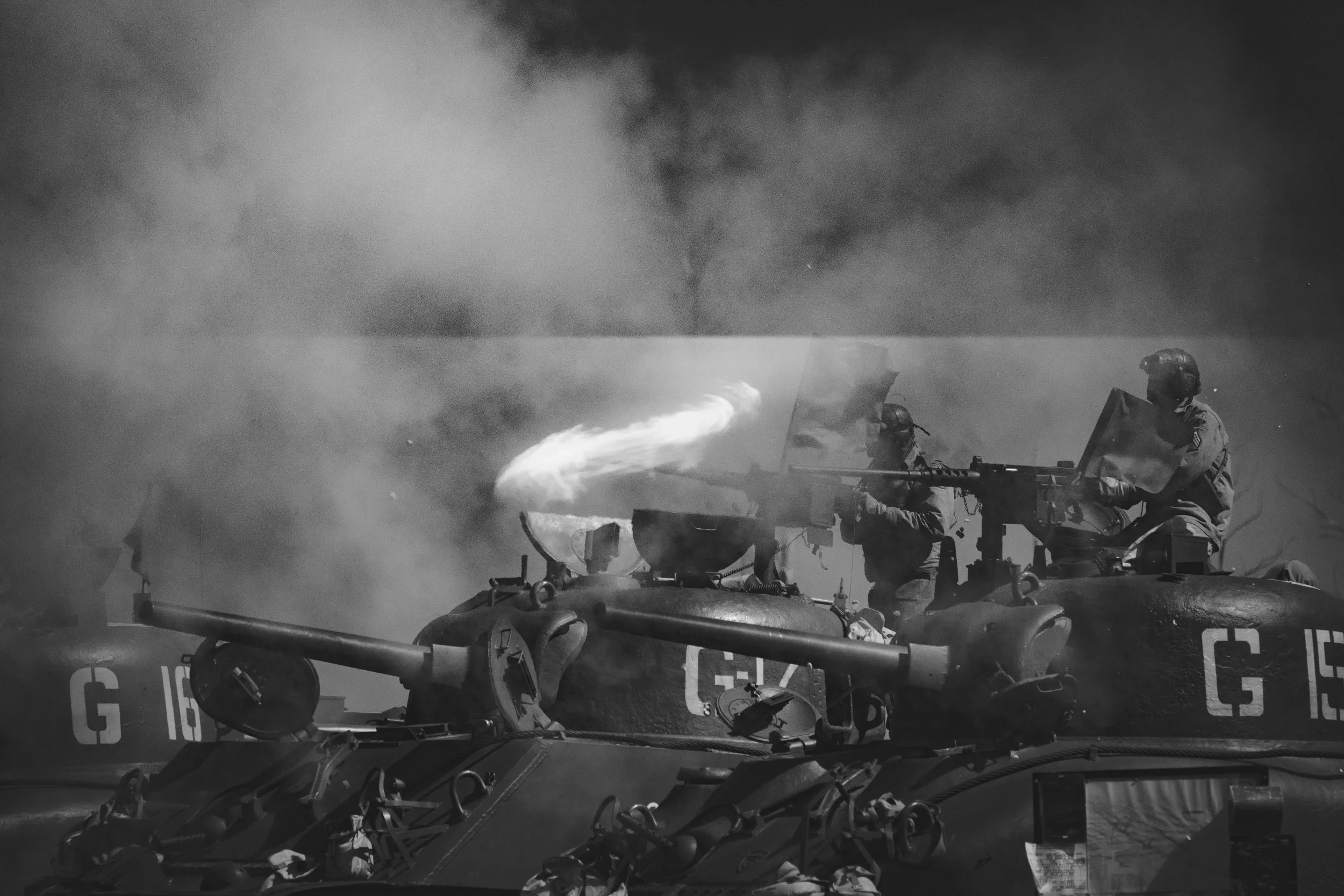
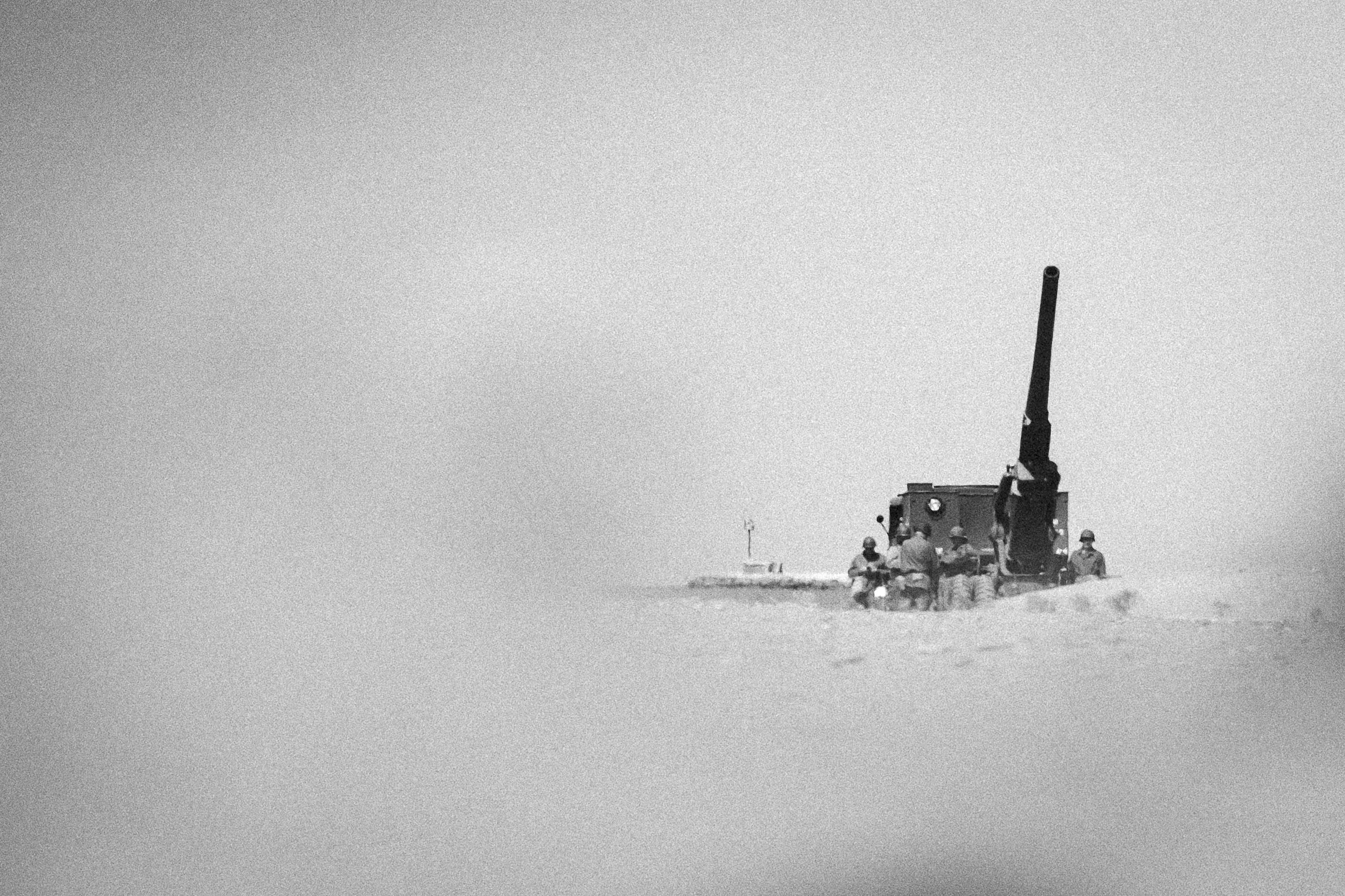
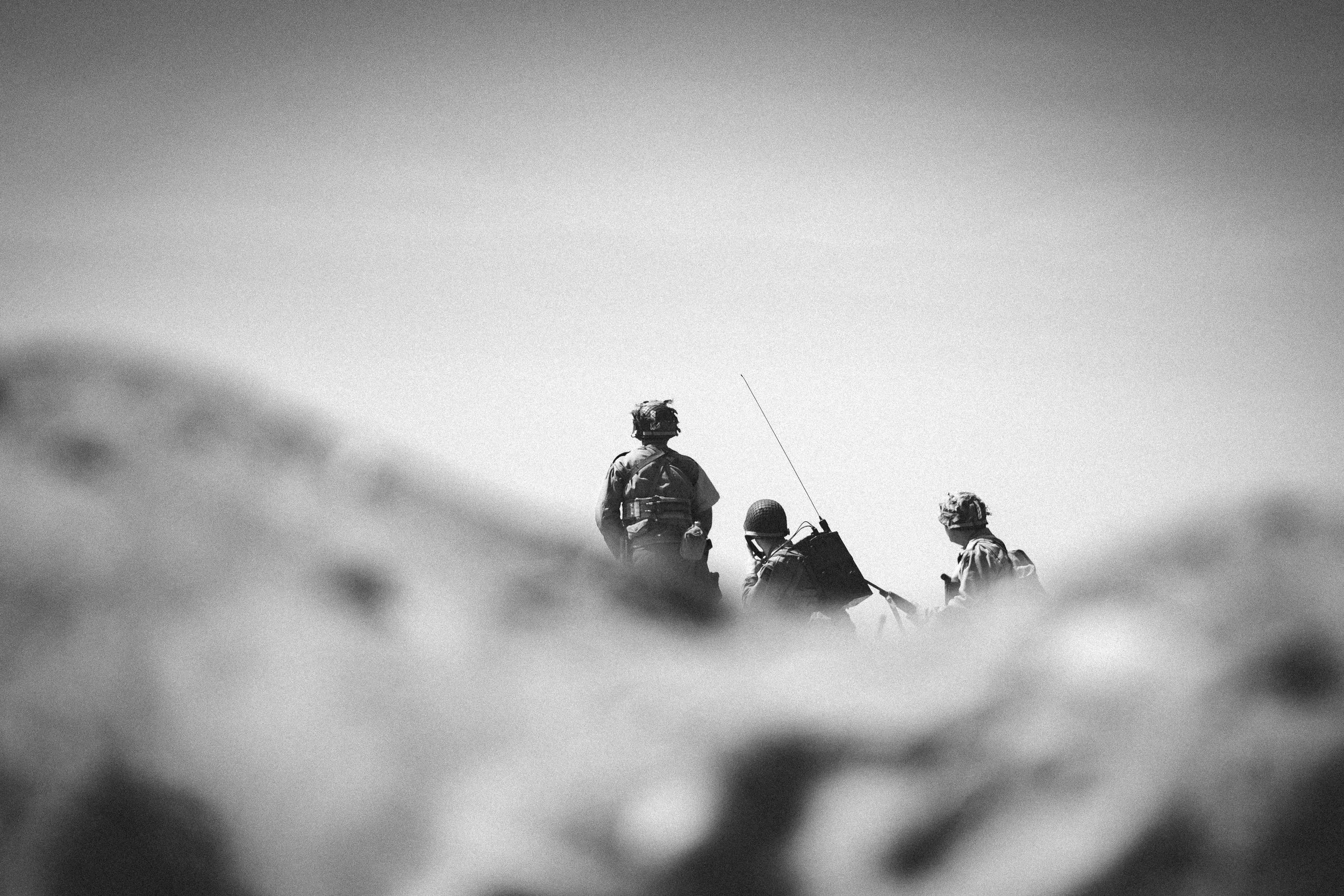
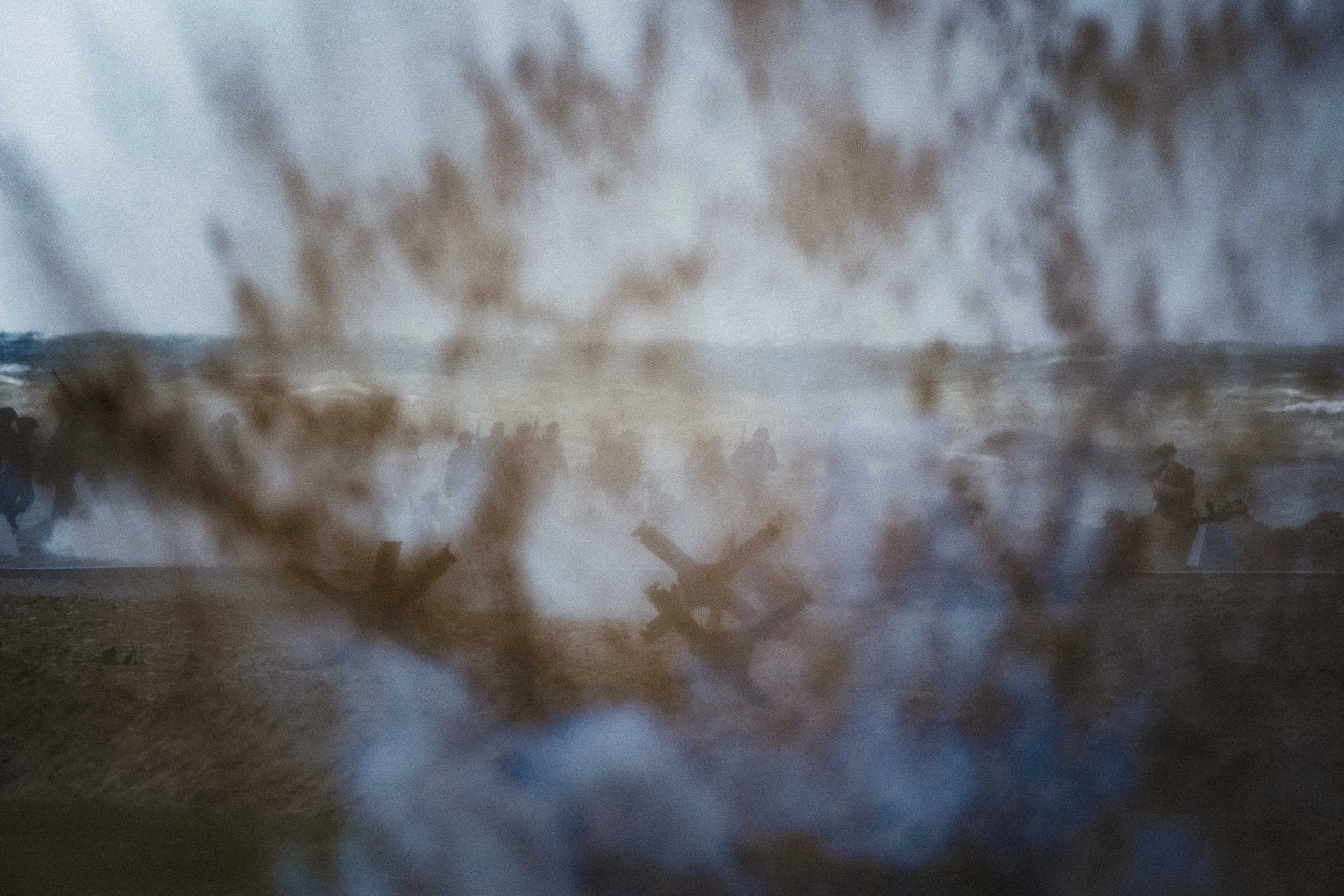
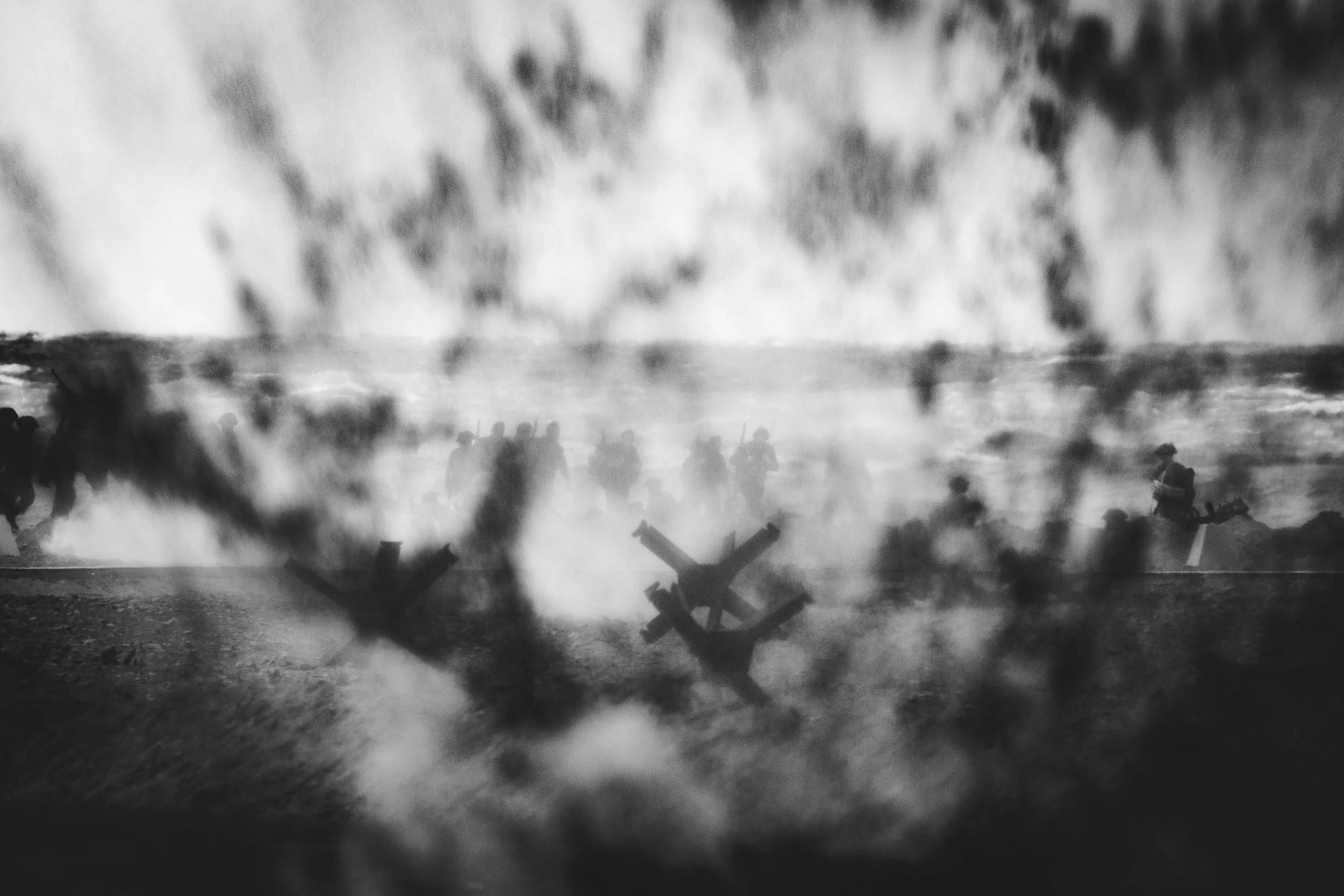
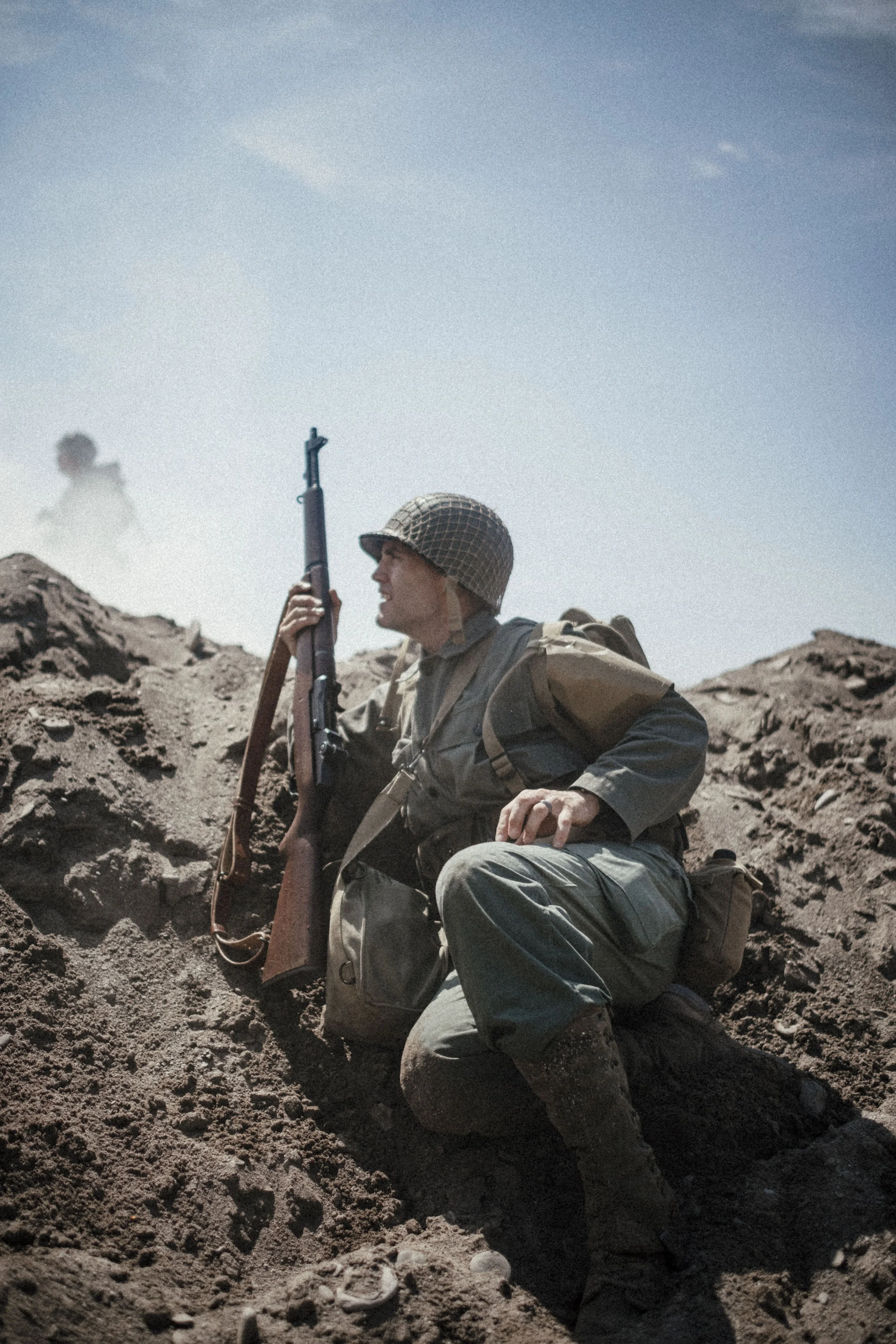
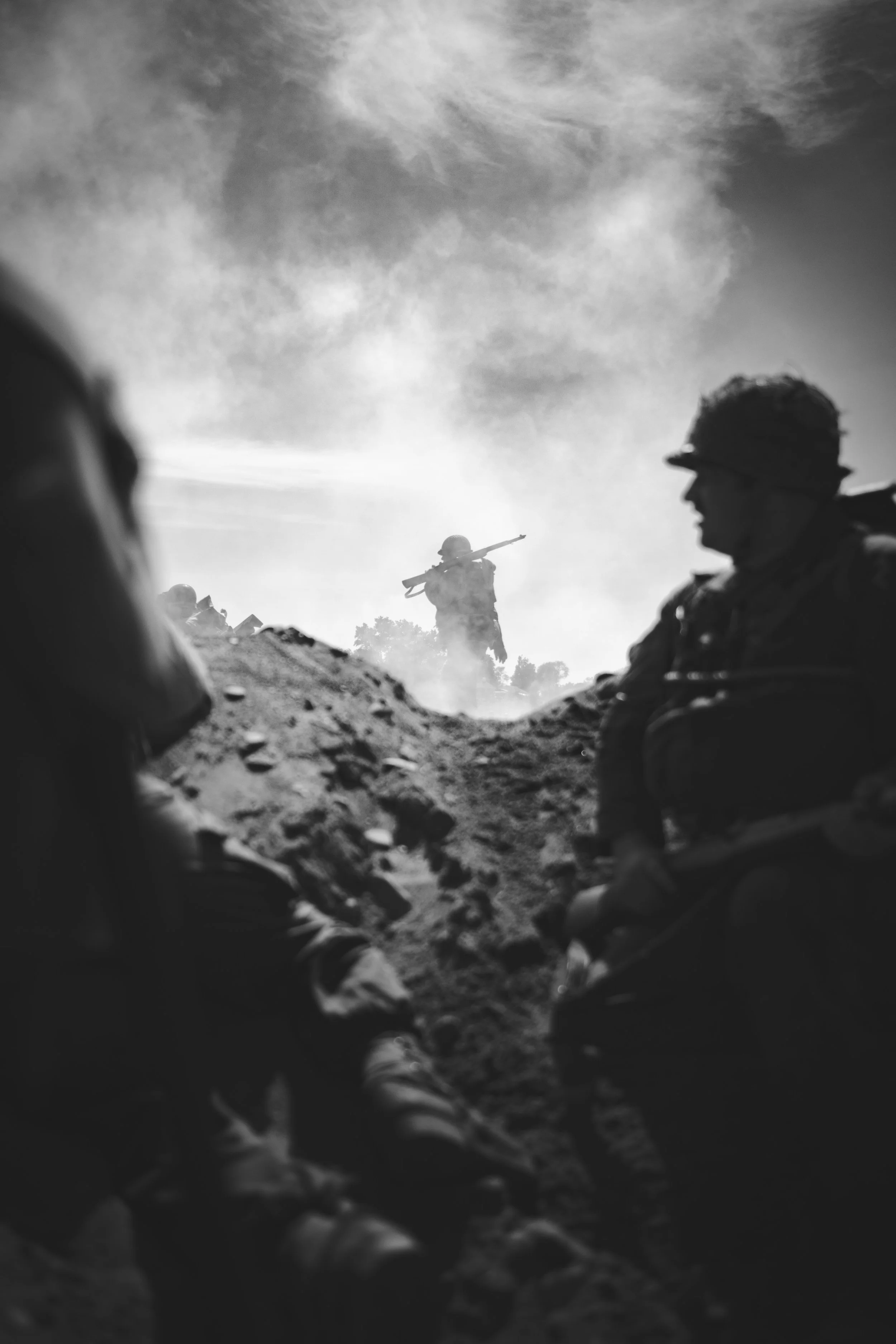
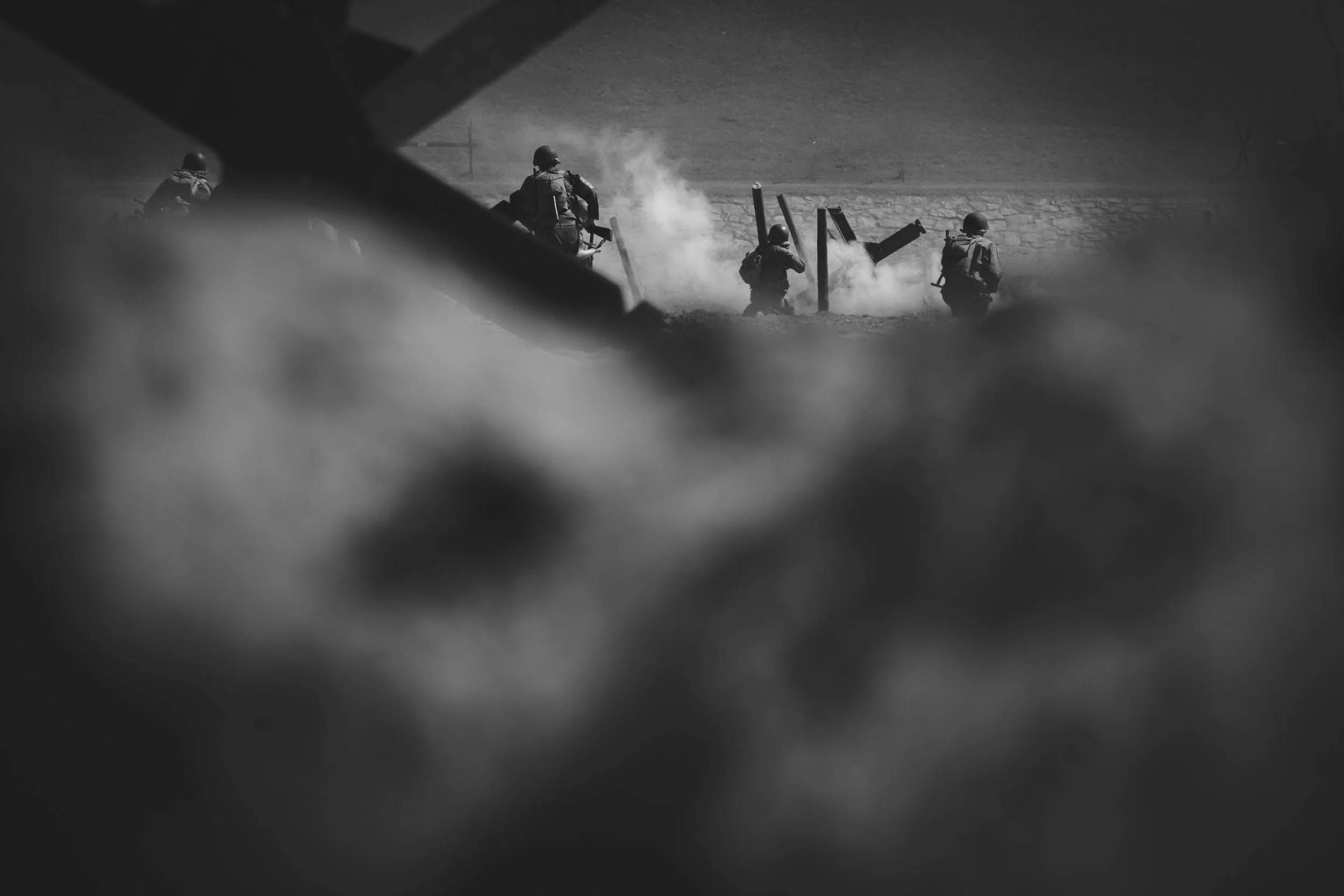
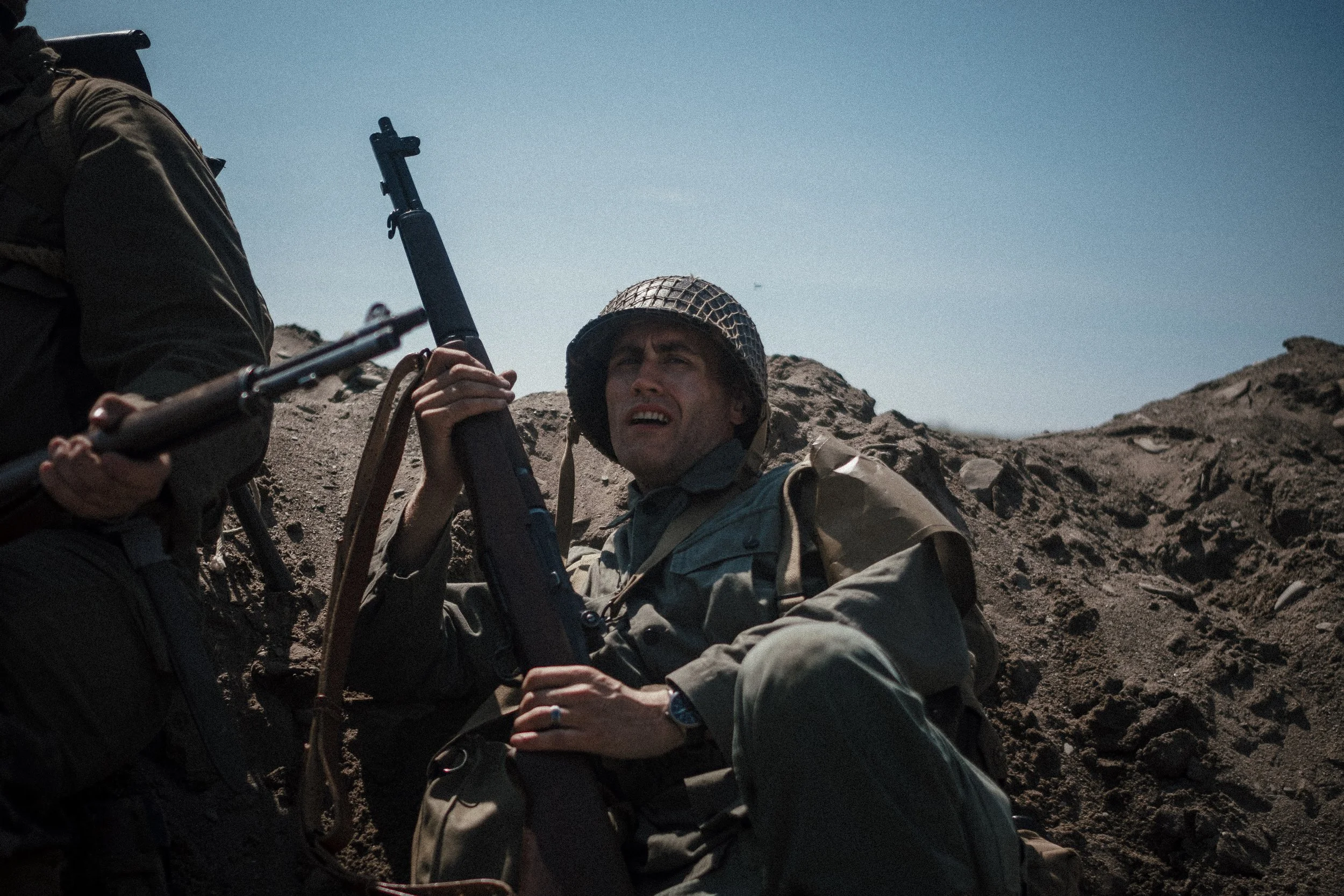
When we roll toward the beach, I run alongside the armor, framing silhouettes in the rising light and catching spectators’ reactions as they line the route. But the landing is where it becomes surreal. Higgins boats appear through the chop, the ramps slam down, and I’m positioned in a shell hole in the sand to catch the mix of chaos and choreography, smoke blooming, blanks cracking, troops pushing forward.
Some shots hit with an almost eerie authenticity: a medic leaning over a casualty, an NCO signaling through drifting smoke, a tank commander scanning ahead. For a moment, the reenactment fades and the history feels close enough to touch.
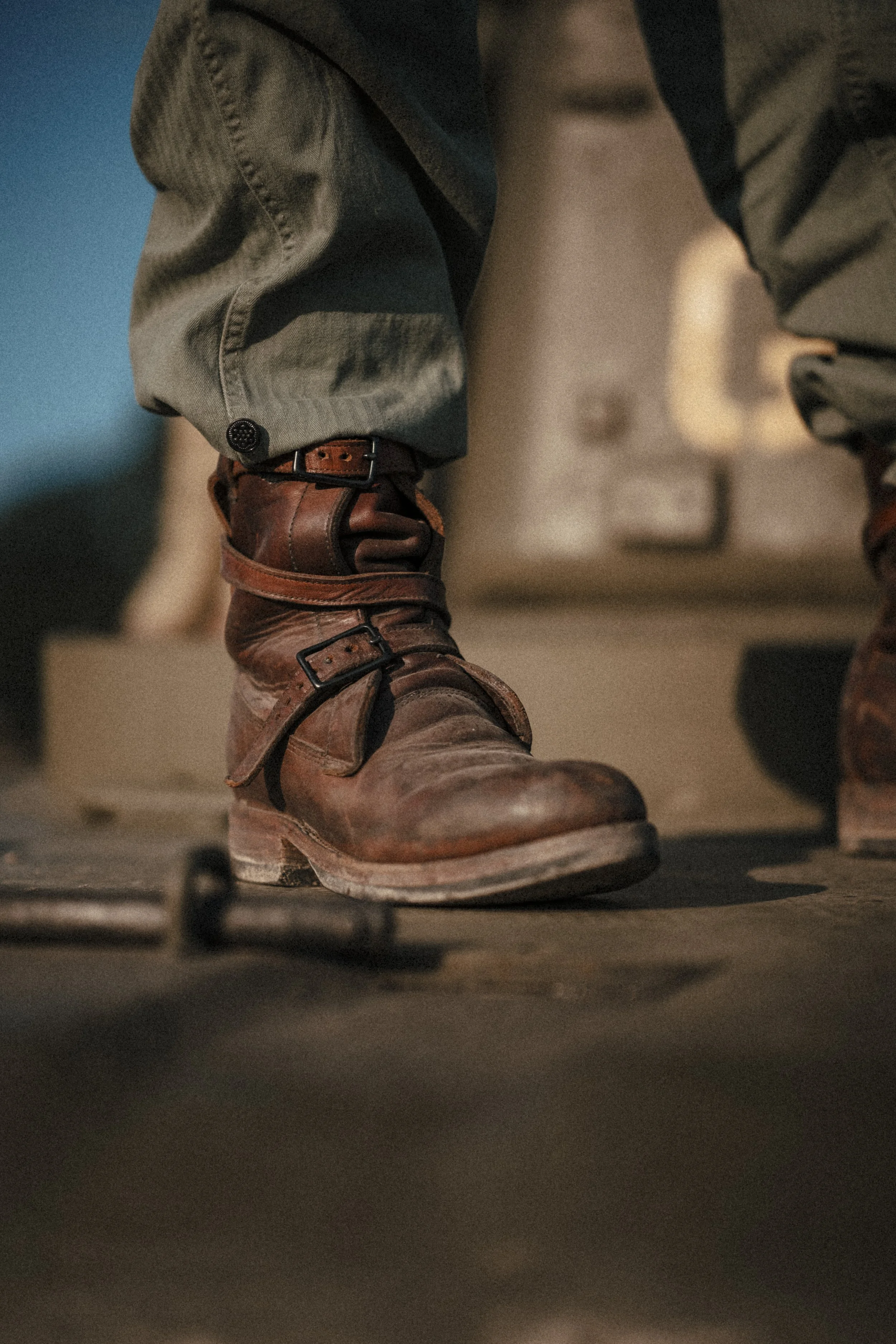
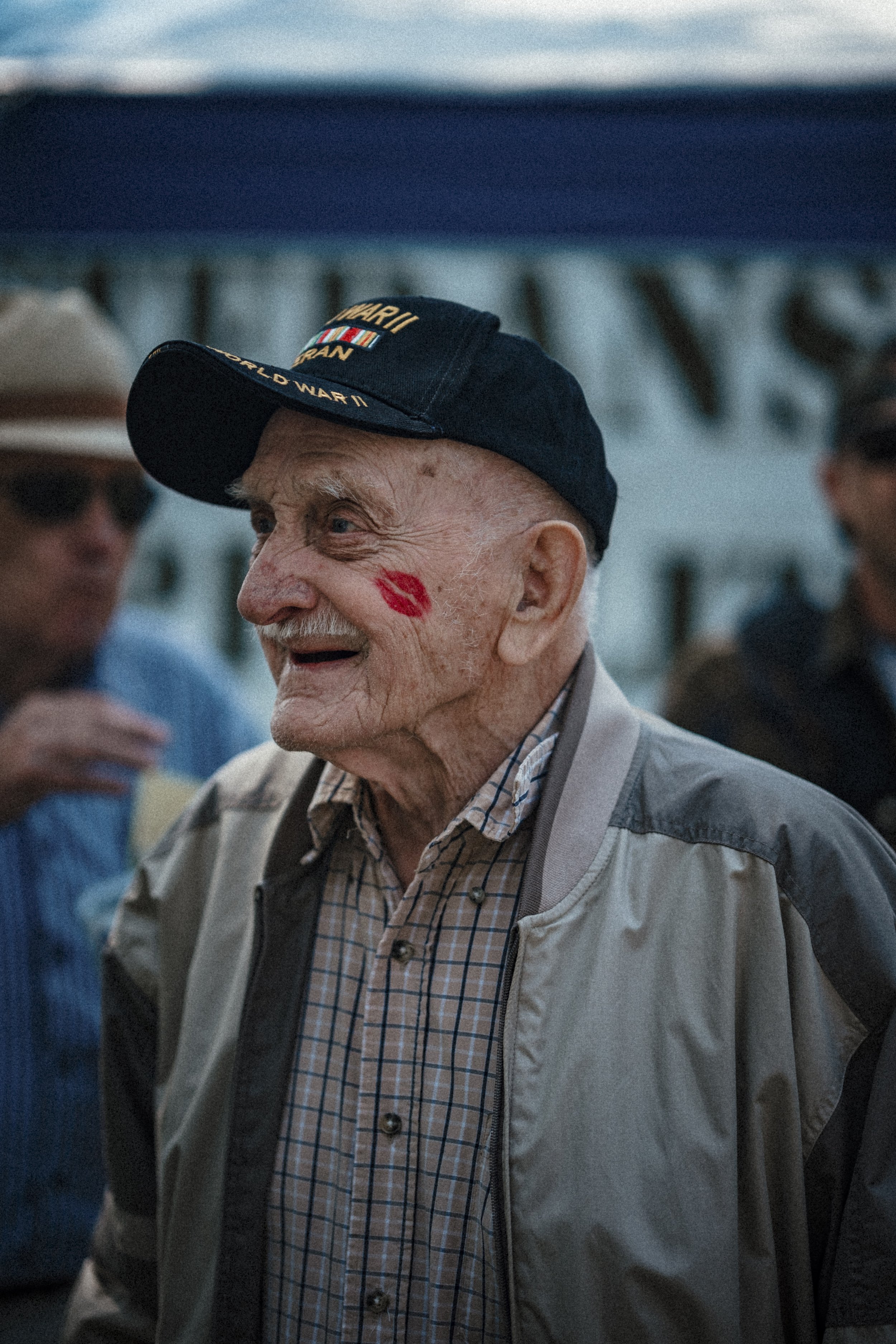
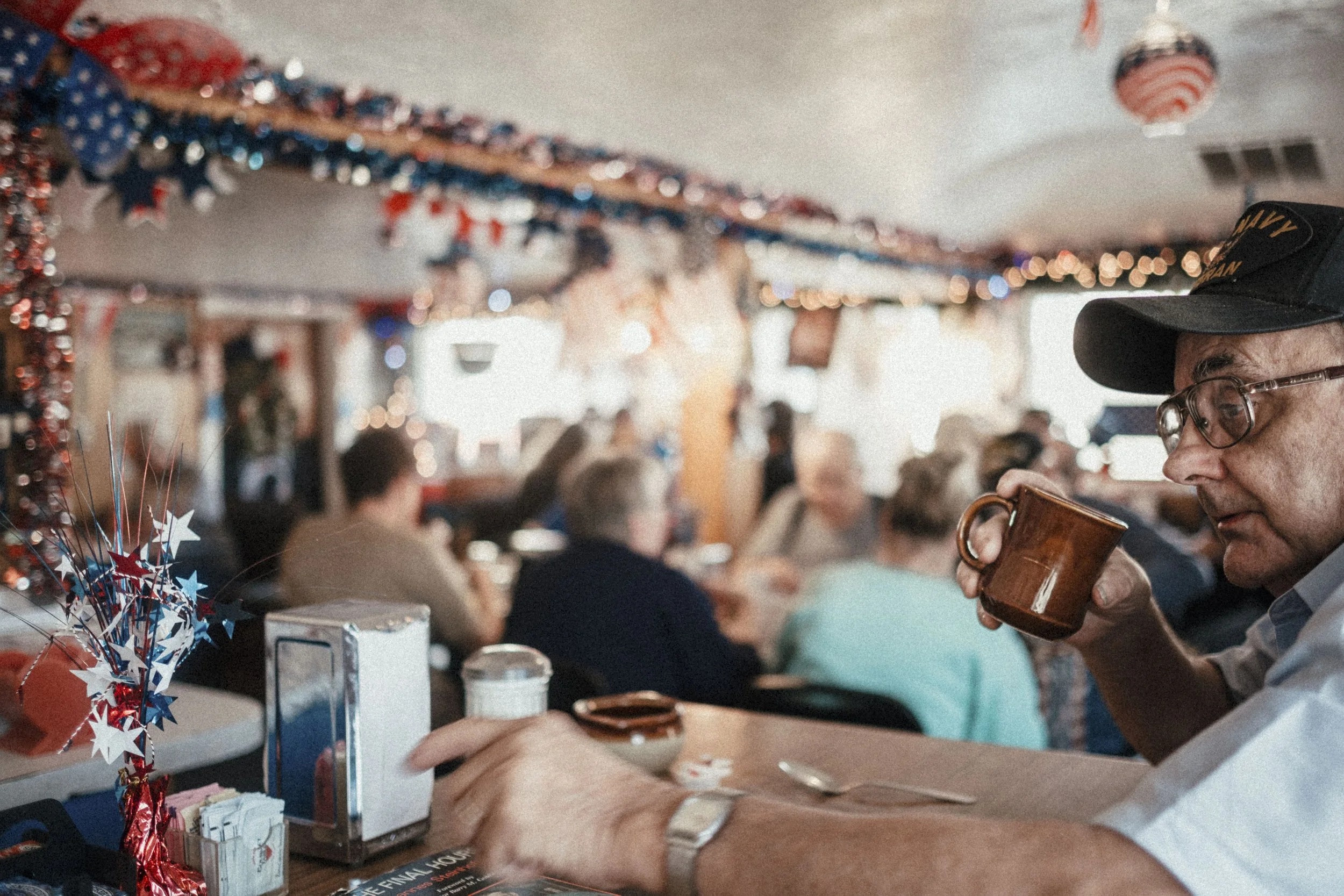
By the end, my memory cards are full and my authentic clothing and boots are caked with sand, but the most meaningful moments come afterward, when visitors or veterans’ families study a photo and say it resembles something from their own history. That’s why I shoot D-Day Ohio: to honour the real men who lived these scenes and to help keep their stories visible.
D-DAY CONNEAUT